Beauty & Care
Skincare is far more than a collection of products lined up on a bathroom shelf. It represents a dynamic relationship between your skin and everything it encounters—from the makeup you apply in the morning to the invisible pollutants you absorb throughout the day. Understanding this relationship transforms beauty routines from guesswork into informed, effective rituals.
Think of your skin as a sophisticated ecosystem. Just like any ecosystem, it thrives when conditions are balanced and suffers when disrupted. The topics we explore here—cleansing science, makeup preparation, pore health, brightening strategies, and environmental defense—are interconnected chapters of the same story. Master one, and the others become easier to understand.
Whether you struggle with stubborn blackheads despite diligent washing, wonder why your foundation never sits right, or notice new dark spots appearing faster than you can address them, this resource provides the foundational knowledge you need. The goal is not to overwhelm you with products, but to empower you with understanding.
The Science of Effective Cleansing
Cleansing seems straightforward—apply cleanser, rinse, done. Yet this deceptively simple step accounts for more skincare problems than almost any other. The issue is not whether you cleanse, but how and what you remove.
Why Double Cleansing Changes Everything
The principle behind double cleansing rests on basic chemistry: oil dissolves oil. Your skin produces sebum, sunscreen contains oils, and makeup relies on waxy, oil-based formulas. Water-based cleansers struggle against these substances because water and oil repel each other. Using an oil-based cleanser first breaks down these stubborn layers, allowing your second cleanser to actually reach your skin.
This method matters even if you skip heavy makeup. Consider everything that accumulates daily:
- Sebum oxidized by air exposure
- Sunscreen residue (especially mineral formulas)
- Pollution particles bound to oils on your skin
- Invisible environmental debris
A foaming cleanser alone cannot efficiently dissolve these without excessive scrubbing that damages your moisture barrier.
Choosing Between Balms and Oils
When selecting your first cleanser, texture preference matters more than marketing claims. Cleansing balms offer controlled application—they stay put and melt slowly upon skin contact. Oils spread quickly and rinse faster but can create sink splatter. Both work identically on a molecular level; the choice comes down to your bathroom habits and patience level.
Common Mistakes That Sabotage Results
Three errors undermine even the best cleansing routine:
- Neglecting the hairline—Product buildup along this zone triggers forehead breakouts that seem mysterious until you trace their origin
- Rubbing instead of pressing—Aggressive movements around the eyes pull delicate skin and can cause lash fallout
- Leaving mascara overnight—Beyond cosmetic raccoon eyes, this causes lash brittleness and potential eye infections
Preparing Your Skin for Flawless Makeup
Foundation can only look as good as the surface beneath it. No primer or expensive formula compensates for poorly prepared skin. The hours before makeup application matter as much as the application itself.
Addressing Texture Before Coverage
Flaky, uneven skin creates patches where foundation clings and separates. The solution lies in gentle exfoliation—but not the scrubbing kind. Physical scrubs create micro-tears and uneven surfaces. Enzymatic exfoliants, derived from papaya or pineapple, dissolve dead cells uniformly without abrasion. Applied the night before a special event, they create the smooth canvas that makes foundation appear seamless.
The Moisturizer-Primer Compatibility Rule
Here is a principle that prevents countless makeup mishaps: match your moisturizer base to your primer base. Silicone-based primers (those with dimethicone) layer poorly over water-based moisturizers, causing pilling and separation. Water-based primers require water-based hydration underneath. Check ingredient lists—if dimethicone or cyclomethicone appears in the first five ingredients, the product is silicone-based.
SPF and Foundation Timing
Sunscreen needs time to form a protective film before anything covers it. Applying foundation immediately after SPF creates patchiness and reduces sun protection. The ideal wait time falls between five and ten minutes—long enough for the sunscreen to set, short enough to maintain your morning schedule. During this pause, work on eye makeup or hair to use time efficiently.
Understanding Pore Congestion and Breakouts
Perhaps no skincare frustration matches the confusion of persistent blackheads despite twice-daily cleansing. If washing solved pore congestion, dermatologists would have much shorter appointment books. The reality involves understanding what actually blocks pores and how daily habits contribute without your awareness.
Why Washing Twice Daily Falls Short
Blackheads form when sebum mixes with dead skin cells inside the pore, then oxidizes upon air exposure—creating that characteristic dark appearance. Surface cleansing does not reach inside pores. Products containing salicylic acid penetrate the pore lining because they are oil-soluble, unlike water-soluble ingredients that stay on the surface.
Hidden Pore Cloggers in Your Routine
Congestion sources often hide in unexpected places:
- Hair conditioner—Sleeping with conditioner residue on your pillowcase transfers occlusive ingredients to your cheeks and jawline
- Coconut oil—Despite its natural reputation, its molecular structure makes it highly comedogenic for acne-prone skin
- Post-gym sweat—Allowing sweat to dry creates a breeding ground for bacteria; a quick rinse or micellar wipe prevents this cascade
The Exfoliation Paradox
Ironically, aggressive exfoliation causes more breakouts. When you strip the skin barrier, it responds with inflammation and increased oil production—worsening the congestion you tried to fix. Signs of over-exfoliation include redness, stinging when applying products, and increased sensitivity. If these appear, step back to gentle cleansing and barrier repair before resuming actives.
Brightening and Pigmentation Management
Sun spots, melasma, and post-inflammatory hyperpigmentation represent the skin’s memory of damage. Fading them requires patience, the right ingredients, and—critically—preventing new damage while treating existing spots.
Ingredients That Deliver Results
Not all brightening agents work equally or safely. Lemon juice, a popular home remedy, causes photosensitivity and uneven results. Arbutin, derived from bearberry plants, inhibits melanin production without irritation. Vitamin C neutralizes free radicals that trigger pigmentation, while retinol accelerates cell turnover to bring fresher skin to the surface.
Prescription options like hydroquinone work faster but require medical supervision for safe long-term use. Over-the-counter alternatives suit maintenance after initial correction.
Prevention as Primary Strategy
Treating spots while allowing new ones to form creates an endless cycle. Consistent SPF application remains the single most effective brightening strategy, particularly in high UV index conditions. Often-forgotten factors also matter: heat from saunas or hot environments can trigger melasma even without sun exposure.
Realistic Timelines
Cell turnover takes approximately 28 days in younger skin and longer with age. Expect minimum six to twelve weeks before visible improvement from any brightening ingredient. Vitamin C shows results faster than retinol for surface discoloration, while retinol better addresses deeper textural changes.
Defending Your Skin Against Environmental Damage
Modern skin threats extend beyond UV rays. Pollution, blue light from screens, and particulate matter challenge skin in ways previous generations never faced. Building defense does not require ten product layers—it requires strategic ingredient selection.
Understanding Invisible Threats
PM2.5 particles—fine particulate matter found in urban pollution—measure small enough to penetrate pores and trigger oxidative stress deep in skin tissue. Traditional dust sits on the surface; these particles embed themselves. Blue light from screens may contribute to pigmentation, though research continues to evolve on exact mechanisms.
Building an Efficient Shield
Antioxidants neutralize the free radicals pollution generates. Rather than layering multiple products, choose formulas combining complementary ingredients:
- Vitamin C—Morning application provides daytime defense
- Ferulic acid—Stabilizes Vitamin C and doubles its effectiveness
- Niacinamide—Strengthens the skin barrier against environmental penetration
Nighttime Repair Strategies
While you sleep, skin shifts into repair mode. This is the optimal window for ingredients that detoxify accumulated damage. Peptides, retinoids, and antioxidants like resveratrol support cellular recovery. Heavy smog days require thorough evening cleansing—gentle milk cleansers, though pleasant, may not remove pollution particles as effectively as oil-based alternatives.
Beauty and skincare ultimately represent a dialogue between understanding and action. Each section explored here connects to the others: effective cleansing prevents pore congestion, proper preparation ensures makeup performs as intended, and environmental defense preserves the results of brightening treatments. Start where your concerns feel most pressing, then build outward. The articles within this category explore each topic in depth, offering specific techniques, product guidance, and solutions tailored to particular challenges.

How to Protect Your Skin From City Smog Without Layering 10 Products?
Effective urban skin defense is not about using more products, but deploying a precise molecular strategy that targets pollution’s specific biological effects. Pollutants like PM2.5 are lipophilic, meaning they dissolve in oils, allowing them to bypass the skin’s surface and…
Lire la suite
Can You Really Fade Sun Spots After 40 Without Lasers?
Fading sun spots after 40 isn’t about harsh treatments, but outsmarting the hidden cellular triggers—like heat and blue light—that worsen them daily. Common pigmentation triggers go beyond the sun; heat from a sauna or even ambient blue light from screens…
Lire la suite
Why Do You Keep Getting Blackheads Despite Washing Your Face Twice a Day?
The frustrating truth is that your diligent cleansing is likely being neutralized by invisible skincare saboteurs hiding in your daily routine. Pore-clogging ingredients from your hair care and even « good » habits like exercise can transfer to your face, causing congestion….
Lire la suite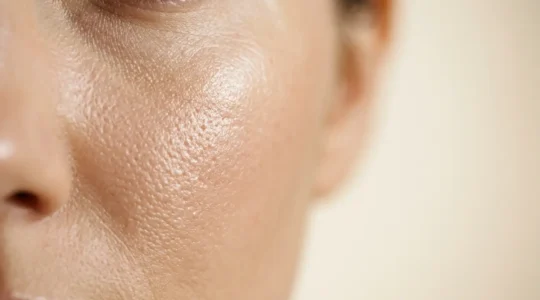
How to Prep Flaky Skin So Foundation Doesn’t Look Cakey?
Forget the endless cycle of scrubbing and piling on primer. Achieving a truly flawless foundation finish on dry, flaky skin isn’t about the products you use, but the surface architecture you build. The secret lies in understanding the molecular compatibility…
Lire la suite
Why Sleeping in Mascara Causes More Than Just Raccoon Eyes?
The common belief that sleeping in makeup is a minor cosmetic issue is clinically false. It is an active process of nightly chemical sabotage. Makeup formulations, particularly mascara, create a lipophilic matrix that binds environmental toxins like city pollution directly…
Lire la suite
Is Double Cleansing Necessary If You Don’t Wear Heavy Makeup? An Esthetician’s Honest Answer
The biggest misconception is that double cleansing is about makeup; in reality, it’s a non-negotiable step for removing invisible, oil-based impurities that single cleansers leave behind. Oil cleansers dissolve what water-based cleansers can’t: sunscreen, excess sebum, and environmental pollution. A…
Lire la suite