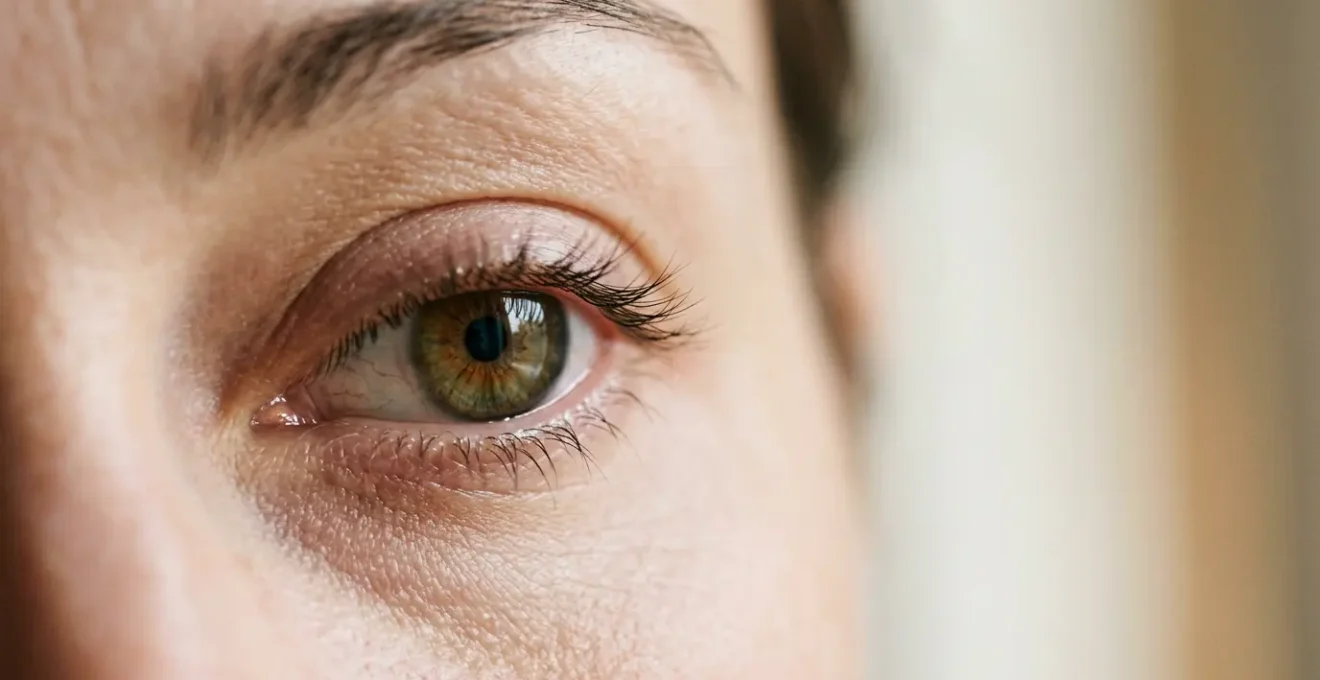
The common belief that sleeping in makeup is a minor cosmetic issue is clinically false. It is an active process of nightly chemical sabotage. Makeup formulations, particularly mascara, create a lipophilic matrix that binds environmental toxins like city pollution directly to the skin and lash follicles, accelerating an oxidative cascade that leads to premature aging, structural damage, and chronic inflammation. This is not about vanity; it is about cellular pathology.
The decision is often made in a state of exhaustion, a silent negotiation at the end of a long day. The brief, tedious task of makeup removal is weighed against the immediate reward of sleep. For many, skipping this routine seems like a harmless shortcut, with the only consequence being a smudged pillowcase and the dreaded « raccoon eyes » in the morning. This perspective is dangerously incomplete. The standard warnings about clogged pores or potential styes barely scratch the surface of the physiological insult occurring.
From a clinical standpoint, the issue is not merely the presence of pigment on the skin overnight. The true danger lies in the chemical interaction between modern cosmetic formulas, the skin’s own sebum, and an increasingly toxic urban environment. The question is not whether you will get a pimple. The question is: do you understand the mechanism by which you are actively accelerating cellular aging and inflicting micro-trauma on delicate structures like your eyelash follicles every time you forgo cleansing?
This analysis will move beyond superficial advice and delve into the dermatological and ophthalmological science. We will dissect the process of micropollutant adhesion, the physics of frictional lash loss, and the chemical rationale for specific cleansing methods. The goal is to replace vague fears with a precise understanding of the consequences, enabling you to see makeup removal not as a chore, but as a critical component of preventative medicine.
This article provides a clinical breakdown of the damage that occurs when makeup is left on overnight. Explore the specific mechanisms, from how pollution binds to your skin to the only effective methods for complete removal.
Summary: The Clinical Consequences of Incomplete Makeup Removal
- Why city pollution sticks to makeup and ages you faster?
- How to use reusable pads without dragging delicate eye skin?
- Micellar Water or Wipes: Which actually cleans pores?
- The rubbing error that pulls out your eyelashes
- 3 hacks to remove waterproof makeup in under 60 seconds
- Why oil dissolves oil better than foaming soap ever can?
- The mistake of using gentle milk cleansers on heavy smog days
- Is Double Cleansing Necessary If You Don’t Wear Heavy Makeup?
Why city pollution sticks to makeup and ages you faster?
The primary function of foundation, concealer, and even mascara is to form a film over the skin. These films are composed of oils, waxes, and silicones—lipophilic (oil-loving) compounds. In an urban environment, the air is saturated with particulate matter (PM), particularly PM2.5, which consists of microscopic soot, heavy metals, and polycyclic aromatic hydrocarbons (PAHs). These pollutants are also highly lipophilic. Consequently, your makeup acts as a « lipophilic matrix, » a sticky trap that actively captures and holds these damaging particles directly against your skin’s surface for hours.
This prolonged contact is not benign. The trapped pollutants generate a massive amount of free radicals, initiating an oxidative cascade that degrades collagen and elastin, the core structural proteins of your skin. This leads to accelerated signs of aging. The connection is clinically proven; one systematic review confirms a 3.2% increase in wrinkle severity for every 10 μg/m3 increment in long-term PM2.5 exposure. Furthermore, the inflammation triggered by these pollutants stimulates melanocytes, resulting in hyperpigmentation. Indeed, research found that exposure to PM2.5 soot was associated with 22% more pigment spots on the forehead.

Sleeping in this « smog mask » of makeup and pollutants means you are marinating your skin in a pro-inflammatory, pro-aging chemical soup. This creates an environment of chronic, low-grade inflammation that compromises the skin barrier, disrupts cellular turnover, and directly contributes to a loss of firmness and an increase in visible spots and lines. The damage is cumulative and significant.
How to use reusable pads without dragging delicate eye skin?
The periorbital skin is the thinnest on the human body, measuring approximately 0.5mm thick. It lacks the density of sebaceous glands and collagen found elsewhere, making it exquisitely vulnerable to mechanical stress. The most common error in makeup removal is aggressive rubbing and dragging, which creates microscopic tears in the dermis, breaks down delicate capillaries, and contributes to long-term skin laxity and wrinkles. Using reusable pads, which can have more surface texture than cotton balls, requires an even more disciplined technique to prevent this damage.
The correct method is not based on friction but on solvent action. The goal is to allow the cleanser to do the work of dissolving the makeup, not to physically scrub it off. This requires a specific, multi-step protocol based on patience and chemical principles.
- Full Saturation: The pad must be completely saturated with an appropriate cleanser (micellar water or an oil-based formula). A damp pad will not hold enough product and will encourage you to apply more pressure, causing friction.
- The 30-Second Press: Close the eye and press the saturated pad gently but firmly against the lashes and lid. Hold it there, without any movement, for a minimum of 20 to 30 seconds. This is the critical step. This duration allows the cleanser’s solvent properties to break down the hardened waxes, polymers, and pigments in mascara and eyeliner.
- The Downward Wipe: After the hold, wipe downwards in a single, gentle, fluid motion. Follow the direction of lash growth. This will carry away the dissolved makeup.
- The Fold and Refine: Fold the pad to a clean section and use it for a final, targeted wipe if any residue remains. Never drag the pad horizontally back and forth across the eye.
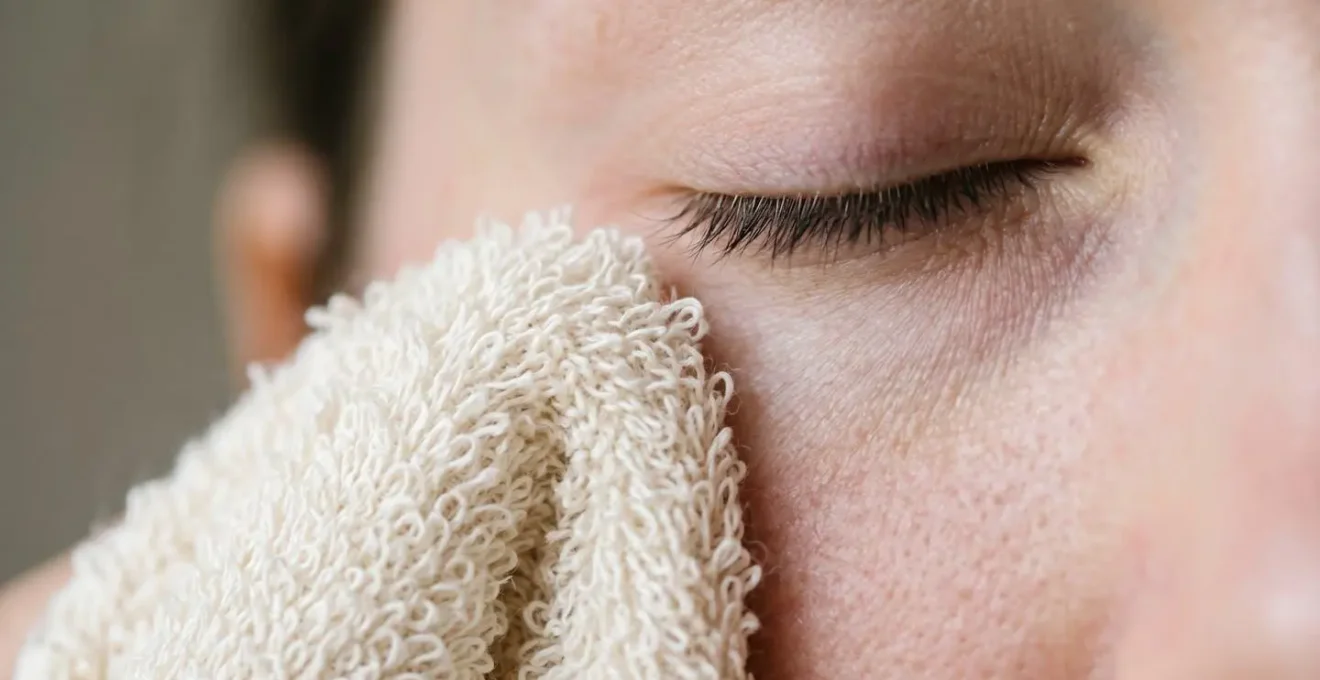
This « soak, press, and melt » technique transforms the removal process from a damaging physical act to an effective chemical one. It respects the fragility of the eye area, preserves the integrity of the skin, and prevents the premature formation of fine lines caused by repeated mechanical stress.
Micellar Water or Wipes: Which actually cleans pores?
The debate between micellar water and makeup wipes is not one of preference, but of fundamental chemical efficacy. From a clinical perspective, they operate on entirely different principles, and only one is designed for true cleansing. A makeup wipe is essentially a piece of cloth saturated with a cleansing solution that often contains detergents, emulsifiers, and high levels of preservatives and fragrances to prevent microbial growth in the packaging. Its primary action is mechanical.
When you use a wipe, you are primarily smearing the mixture of makeup, oil, and environmental pollutants across your face. While the wipe does pick up some of the debris, it also redeposits a significant amount, along with the wipe’s own chemical formula, into pores and fine lines. As skincare expert Cassandra Bankson explains, makeup wipes don’t remove makeup effectively but rather smear it across the face, leaving a residue of irritants and comedogenic material behind. This is not cleansing; it is superficial relocation of dirt.
Micellar water, conversely, is a suspension of « micelles. » A micelle is a tiny, spherical cluster of surfactant molecules. The head of the molecule is hydrophilic (water-loving), and the tail is lipophilic (oil-loving). When a cotton pad soaked in micellar water is applied to the skin, these micelles reorganize. The lipophilic tails are drawn to the oils in makeup, sebum, and grime, trapping them inside the micelle sphere. The hydrophilic heads remain on the outside, allowing the entire structure—with the dirt encapsulated inside—to be lifted away cleanly from the skin without disrupting the skin’s lipid barrier.
Therefore, micellar water performs a true cleanse by encapsulating and removing impurities. Makeup wipes largely redistribute them. For the purpose of actually cleaning pores and removing the daily accumulation of lipophilic substances, micellar water is the only scientifically sound option of the two.
The rubbing error that pulls out your eyelashes
Lashes are not inert decorations; they are biologically active hairs with a complex life cycle. This cycle consists of three phases: anagen (growth), catagen (transition), and telogen (resting/shedding). According to research, the anagen phase, where the lash is actively growing and firmly rooted, lasts 4-10 weeks, but only about 40% of upper lashes are in this phase at any given time. This biological reality is why the common habit of aggressive rubbing during mascara removal is so damaging.
When mascara is left on overnight, it hardens. The polymers and waxes form a stiff, brittle cast around each delicate lash. During removal, particularly when done impatiently, this hardened mascara acts as an abrasive. The friction from rubbing not only causes the lash shaft to bend and break, but it also exerts a pulling force on the follicle. This mechanical stress can prematurely rip lashes out of the follicle. If a lash is ripped out during its anagen phase, the follicle is traumatized. This is not the same as a lash naturally shedding at the end of its telogen phase.
Case Study: Mascara-Induced Follicular Trauma
A 2025 study highlighted that mascara left on overnight doesn’t just weaken the lash shaft, making it brittle; the aggressive rubbing required for its removal is the primary culprit for « traction alopecia » of the eyelashes. This constant, premature yanking of lashes from their growth phase can damage the follicle itself. Over time, repeated follicular trauma can lead to follicle miniaturization, where the follicle shrinks and begins to produce a weaker, thinner lash. In severe, chronic cases, the follicle can be permanently damaged, ceasing to produce a lash altogether. This results in visibly sparser, thinner lashes that are not just a cosmetic concern but a sign of underlying structural damage.
Therefore, the « rubbing error » is not simply about lash breakage. It is an act of inflicting repeated, low-grade trauma on the hair follicle, which can lead to a progressive and potentially permanent reduction in lash density and health. The solution is not to rub harder, but to use a method that dissolves the mascara completely, allowing it to be wiped away with zero pulling force.
3 hacks to remove waterproof makeup in under 60 seconds
Waterproof mascara is formulated with robust polymers, waxes, and silicones that are specifically designed to repel water (hydrophobic) and adhere strongly to the lashes. A standard water-based or micellar cleanser lacks the chemical affinity to efficiently break these bonds, leading to the frustrating and damaging cycle of rubbing and pulling. The key to rapid and safe removal is to leverage chemistry, specifically the principle of « like dissolves like, » by using lipophilic (oil-based) solvents. The following methods are not « hacks » in the colloquial sense; they are applications of sound chemical principles to maximize efficiency and minimize follicular trauma.
These techniques focus on maximizing the contact between the oil-based solvent and the waterproof formula, using warmth to increase reaction speed, and employing tools for targeted application. All three can achieve complete removal in under a minute when executed correctly, eliminating any excuse for sleeping in makeup due to stubbornness of the product.
Action Plan: Rapid Waterproof Makeup Removal
- The ‘Oil First’ Method: Apply a pure cleansing oil or balm directly onto dry lashes with your fingertips. Gently massage the lashes between your thumb and index finger. You will feel the mascara « melt » and dissolve. This directly applies the solvent to the problem area. Afterwards, use a pad soaked in micellar water to perform a final wipe, removing the oil and all dissolved makeup residue cleanly.
- Harnessing Gentle Heat: Run a reusable pad under warm—not hot—water. Wring it out completely so it is just damp and warm. Add your oil-based cleanser to this warm pad. The gentle heat helps to soften the waxes and polymers in the mascara much faster, significantly reducing the time needed for the solvent to work and minimizing the need for any rubbing.
- Targeted Dissolving with a Lash Brush: Use a clean, disposable or sterilized spoolie (mascara wand). Dip it into a cleansing oil. Brush the oil through your lashes exactly as if you were applying mascara, from root to tip. This ensures every single lash is coated with the solvent, dissolving the product with maximum efficiency and no pulling. Wipe away the residue with a pad.
By substituting brute force with chemical intelligence, even the most resilient waterproof makeup can be removed gently and swiftly. This approach not only saves time but, more importantly, preserves the health of the delicate periorbital skin and lash follicles.
Why oil dissolves oil better than foaming soap ever can?
The principle that governs effective makeup removal is one of the most fundamental concepts in chemistry: « like dissolves like. » This refers to the polarity of substances. Water is a polar molecule. Oils, sebum, waxes, silicones, and the organic pigments found in makeup are non-polar, or lipophilic. Because of this fundamental difference in chemical structure, water alone cannot effectively bond with and remove these oily substances. Foaming soaps and cleansers attempt to bridge this gap with surfactants.
Surfactants have a two-part structure that can interact with both oil and water, but harsh surfactants like sulfates (e.g., Sodium Lauryl Sulfate) are indiscriminate. They are so effective at stripping oils that they remove not only the makeup and excess sebum but also the essential lipids that form the skin’s protective barrier (the stratum corneum). This stripping action compromises barrier function, leading to transepidermal water loss (TEWL), dehydration, and irritation. In fact, research has found that when the skin barrier is compromised, the accumulation of other harmful lipophilic substances can increase significantly, creating a vicious cycle of damage.
Lipophilic refers to a chemical or substance that has an affinity towards oil particles and a lack of attraction towards water molecules. Makeup, sunscreen, and skin’s sebum are non-polar substances, making oil-based cleansers the perfect solvent through the principle of ‘like dissolves like.’
– Taylor & Francis Knowledge Centers, Chemical Engineering Reference on Lipophilic Substances
An oil-based cleanser, however, is chemically similar to the makeup and sebum it is tasked with removing. It is a lipophilic solvent. When massaged onto the skin, it seamlessly merges with and dissolves the non-polar compounds of makeup, sunscreen, and oxidized sebum without the need for harsh, stripping surfactants. The process is gentle and highly efficient, lifting away the grime without disrupting the skin’s essential fatty acid balance. This is why oil cleansing is not just a trend, but a chemically superior method for the first step of cleansing.
The mistake of using gentle milk cleansers on heavy smog days
Cleansing milks are often positioned as a gentle alternative for sensitive or dry skin. Structurally, they are oil-in-water emulsions, meaning tiny droplets of oil are suspended in a larger base of water. While this formulation feels soothing and provides some cleansing power for light impurities, its low oil content makes it fundamentally inadequate for days involving heavy exposure to urban pollution, or for removing resilient products like modern sunscreens.
As established, city pollutants (PM2.5) are lipophilic and bind tenaciously to the oils in both your makeup and your own sebum, forming a stubborn film. A milk cleanser, with its relatively low ratio of oil to water, simply lacks the necessary solvent power to effectively break down this dense, lipophilic mixture. It may remove the surface layer of dirt, but it often fails to dissolve the microscopic pollution particles that have become enmeshed with the skin’s oils.
Case Study: Insufficient Solvent Power
A 2021 study demonstrated that PM2.5 particles can carry large amounts of absorbed pollutants, oxidants, and organic compounds. These particles are less than 2.5 micrometers in diameter, allowing them to potentially lodge in pores. Milk cleansers, with their limited lipophilic phase, can fail to fully solubilize the stubborn film created by heavy-duty SPF, sebum, and adhered city pollutants. This can leave behind a microscopic, pro-inflammatory film, effectively trapping the smallest and most damaging pollution particles against the skin overnight, negating the purpose of cleansing.
On days of high pollution or when wearing water-resistant sunscreen, relying on a low-solvent-power cleanser is a critical error. It creates a false sense of cleanliness while potentially leaving the most harmful microscopic aggressors on the skin. In these scenarios, a pure oil or balm cleanser with high solvent power is not optional; it is a required first step to ensure all lipophilic debris is fully dissolved and removed before a second, water-based cleanse.
Key takeaways
- Makeup acts as a sticky trap for city pollution, creating a « smog mask » that accelerates skin aging and hyperpigmentation.
- Aggressive rubbing during makeup removal causes follicular trauma and permanent lash loss; the non-negotiable ‘soak and press’ method relies on chemical dissolution, not friction.
- The ‘like dissolves like’ principle is a chemical law: only oil-based cleansers possess the solvent power to effectively break down modern sunscreen, sebum, and pollutants.
Is Double Cleansing Necessary If You Don’t Wear Heavy Makeup?
The question reveals a common misconception: that cleansing is only about removing « makeup. » A proper cleansing routine has two targets: oil-soluble (lipophilic) impurities and water-soluble (hydrophilic) impurities. Even on a day with no makeup, your skin is covered in a film of lipophilic impurities that a water-based cleanser alone cannot adequately remove.
This film is composed of several things. First is your own sebum, which your skin produces continuously. Throughout the day, this sebum oxidizes on contact with the air, becoming more comedogenic. Second, if you are in an urban environment, this sebum acts as a natural binder for the lipophilic pollutants we’ve discussed. Third, and most critically, is sunscreen. Modern sunscreens, particularly those offering high, water-resistant protection, are specifically engineered to form a persistent, adhesive film on the skin. The UV filters themselves are often lipophilic. A 2024 environmental science review confirmed that many UV filters are lipophilic, meaning they resist being broken down by water-based formulas and can accumulate on the skin.
Attempting to remove this tenacious, oily film of oxidized sebum, pollutants, and sunscreen with only a water-based cleanser (like a foaming gel or cream) is chemically inefficient. It’s like trying to wash a greasy pan with just water. You might remove some surface grime, but the underlying oily residue remains.
The « double cleanse » is the logical, clinical solution to this two-part problem. The first cleanse, with an oil or balm, is the dedicated lipophilic step. Its sole purpose is to dissolve the stubborn film of sunscreen, sebum, and pollutants. Once that oil-based film is broken down and emulsified, it can be rinsed away. The second cleanse, with a gentle water-based formula, can then effectively clean the skin itself, removing any remaining water-soluble impurities like sweat and dirt. Therefore, double cleansing is not a « deep clean » for heavy makeup days. It is the fundamental, correct method for cleansing skin that exists in the modern world and is protected by modern sunscreen, whether makeup is worn or not.
Therefore, the clinical recommendation is unequivocal. Adopt a non-negotiable double cleansing routine, starting with an oil-based formula, every single night. Your long-term cellular health depends on it.