Blog
Your personal style communicates more about you than words ever could. Before you speak in a meeting, before you shake someone’s hand, before you introduce yourself on a video call, your appearance has already made an impression. This isn’t about vanity or following trends—it’s about strategic self-presentation that aligns with who you are and where you’re going.
Whether you’re navigating a career transition, building authority in your industry, or simply tired of staring at a closet full of clothes with nothing to wear, understanding the principles of intentional dressing transforms daily decisions into effortless choices. This resource explores the intersection of personal branding, professional success, practical wardrobe management, and the psychology behind why certain outfits make you feel invincible while others leave you second-guessing yourself all day.
From curating a signature look that evolves with your life stages to mastering the art of looking polished in casual settings, from understanding how camera sensors perceive your outfit choices to building a functional capsule wardrobe—each concept builds upon the others to create a cohesive approach to personal style that serves your real life.
Why Building a Signature Style Matters After 30
The relationship with clothing fundamentally shifts as you move through different life phases. What worked in your twenties—the experimental phases, the trend-chasing, the impulse purchases—begins to feel hollow. The closet fills with mismatched pieces despite considerable spending, and getting dressed becomes a source of daily frustration rather than self-expression.
The Problem With Copying Influencers
Scrolling through perfectly curated feeds creates an illusion that style can be purchased outfit by outfit. However, copying influencers directly undermines personal brand confidence because those outfits were built for someone else’s body, lifestyle, and objectives. The disconnect between an influencer’s aesthetic and your daily reality leads to closets full of pieces that photograph beautifully but feel wrong when worn to actual meetings, school pickups, or client dinners.
Finding Your Core Aesthetic
A thorough closet audit reveals patterns you might not consciously recognize. The pieces you reach for repeatedly, the colors that make your complexion glow, the silhouettes that feel like armor—these clues point toward your authentic aesthetic. This process typically takes about three hours of honest evaluation, categorizing items into what genuinely serves your current life versus what represents aspirational purchases or past identities.
Minimalism Versus Maximalism
Neither approach is inherently superior. The question isn’t which trend to follow, but which philosophy aligns with your daily routine and cognitive style. Minimalists thrive on decision reduction and visual calm. Maximalists find energy in layering, pattern mixing, and expressive accessorizing. Understanding your position on this spectrum prevents forcing yourself into a wardrobe philosophy that creates resistance rather than ease.
How Your Outfit Impacts Professional Success
Research consistently demonstrates that clothing influences not only how others perceive you but how you perceive yourself. This phenomenon, sometimes called enclothed cognition, explains why certain outfits seem to unlock different versions of your capabilities.
The Power Outfit Technique
Specific garments can genuinely shift cognitive performance and confidence levels. Wearing clothing associated with competence and authority activates those mental frameworks, essentially tricking your brain into accessing confident behavioral patterns. This isn’t superficial—it’s neurological. The key lies in identifying which specific pieces create this effect for you personally, as power dressing varies significantly between individuals and industries.
Color Psychology in Professional Settings
The navy versus black debate for consultants reflects deeper questions about trust signaling and authority projection. Navy tends to communicate approachability alongside competence, while black projects formality and decisiveness. Bold prints versus neutrals creates another strategic consideration—patterns can signal creativity and confidence, but the wrong choice risks appearing aggressive or distracting in high-stakes negotiations.
Natural Fibers and Stress Reduction
For those in high-pressure roles, fabric choices extend beyond aesthetics into genuine wellbeing considerations. Natural fibers like cotton, wool, silk, and linen regulate temperature more effectively, reduce skin irritation, and some research suggests they may influence cortisol levels throughout stressful workdays. When you’re presenting to executives or managing crises, uncomfortable synthetic materials add unnecessary friction.
Commanding Presence in Video Meetings
Remote and hybrid work has created entirely new considerations for professional presentation. Camera sensors, lighting conditions, and the cropped frame of video calls demand different strategies than in-person dressing.
Why Jewel Tones Outperform Pastels on Camera
Webcam sensors compress color information differently than the human eye perceives it in person. Saturated jewel tones—emerald, sapphire, ruby—maintain their depth and richness through digital compression. Pastels often wash out, making you appear faded or tired regardless of how fresh you actually feel. This technical reality should inform your video meeting wardrobe entirely separately from in-person choices.
The Busy Pattern Mistake
Fine stripes, intricate checks, and detailed prints create a visual phenomenon called moiré effect on camera—a distracting shimmer that pulls attention away from your message. The camera essentially can’t process the pattern accurately, creating visual noise. Solid colors or larger-scale prints eliminate this distraction entirely.
Strategic Accessory Placement
Necklaces and earrings serve a specific function in video framing: they draw the viewer’s eye toward your face and add visual interest to the limited frame visible on screen. A statement necklace that might feel excessive in person becomes the perfect focal point for presentations. The cropped nature of video calls means accessories must be positioned within the visible frame to have any impact.
The Art of Elevating Basic Pieces
High-end style isn’t about price tags—it’s about execution. Understanding why certain styling choices transform inexpensive basics into sophisticated looks unlocks wardrobe potential you may already own.
Why the French Tuck Works
This simple technique of partially tucking the front of a shirt while leaving the back loose dramatically changes silhouette perception. It creates waist definition, adds intentionality to casual pieces, and breaks the visual monotony of fully untucked or fully tucked alternatives. The silhouette shift can make a basic tee appear deliberately styled rather than default.
The Tailoring Factor
The most common error that makes basics look cheap isn’t the fabric or brand—it’s fit. Spending a few dollars on basic alterations (hemming sleeves, adjusting waist, shortening pants) transforms mass-market pieces into custom-feeling garments. Proper fit signals intentionality in a way that expensive materials cannot overcome if sizing is wrong.
Footwear as Genre Shifter
The same jeans and sweater combination reads entirely differently with sneakers versus loafers versus heeled boots. Shoes function as the genre indicator for any outfit, signaling casual, professional, evening, or athletic contexts. Investing in versatile footwear that can shift between contexts maximizes outfit possibilities without adding clothing pieces.
Capsule Wardrobes: Living With Less
The concept of radically limiting wardrobe size—often to 33 items or fewer—challenges conventional thinking about clothing while offering surprising benefits in decision fatigue, travel efficiency, and creative styling.
The 33-Item Challenge
Surviving three months with only 33 wardrobe items including shoes and accessories forces confrontation with consumption habits. Participants consistently report that after initial adjustment, the limitation feels liberating rather than restrictive. The mental energy previously spent on endless options becomes available for more meaningful decisions.
Creating Multiple Outfits From Minimal Pieces
Ten carefully chosen pieces can theoretically create 30 or more distinct outfit combinations. The mathematics work through intentional selection: neutral bases that mix with everything, pieces that layer effectively, and items that transform based on accessories. Wardrobe apps help visualize combinations you might not naturally pair, revealing untapped potential in existing clothing.
The Same-Outfit Fear
Workplace anxiety about being seen in identical clothing twice in one week reflects cultural conditioning more than practical reality. Studies suggest colleagues rarely notice or remember specific outfit repetition. Releasing this fear allows focus on developing a recognizable visual identity rather than costume-like variety that may actually confuse professional contacts trying to remember you.
Navigating Casual-Professional Boundaries
Modern professional environments increasingly blur traditional dress code lines, creating confusion about what polished-casual actually requires.
Dark Versus Light Denim
The wash of jeans carries significant formality coding. Dark, clean denim reads as smart-casual and often passes in business settings where light-wash would appear too weekend-oriented. Understanding this gradient allows jeans to function across contexts that rigid dress code thinking might exclude them from.
The Layering Completion Technique
Adding a single layer—an open button-down over a tee, a vest over a blouse, a structured cardigan over a casual dress—transforms outfits from appearing lazy to deliberately relaxed. This third piece signals that thought went into the combination, even when the underlying components are entirely casual.
Bag Selection as Professional Signal
The difference between a backpack and a structured crossbody or tote shifts perception from student to professional without changing any clothing. Bags carry strong contextual associations, and selecting appropriately for meeting contexts can elevate otherwise casual outfits into appropriate professional territory.
Personal style development isn’t a destination but an ongoing conversation between your evolving identity and the practical demands of your life. The principles explored here—signature style curation, professional dressing strategy, video presence optimization, basic elevation, capsule efficiency, and casual-professional navigation—provide frameworks rather than rigid rules. Your unique combination of these elements creates a visual identity that serves your specific goals while remaining authentically you.

How to Spot Hidden Hormone Disruptors in Your Daily Body Lotion?
The innocent-looking term « Fragrance » on your lotion label is often a legal loophole hiding dozens of unlisted chemicals, including hormone-disrupting phthalates. Long-chain parabens (like propylparaben) are significantly more disruptive to hormones than their short-chain relatives, yet both are often grouped…
Lire la suite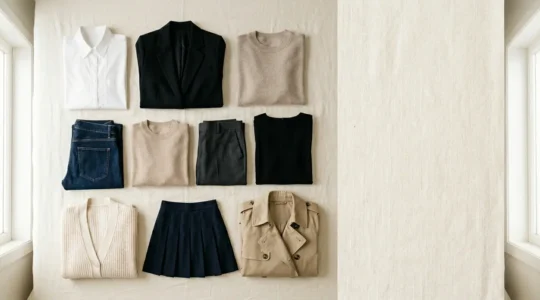
How to Create 30 Different Outfits From Just 10 Pieces of Clothing
Generating dozens of outfits from a few items isn’t about having the ‘right’ clothes, but using the right ‘system’. Style is combinatorial: each look is a formula of item + layer + shoe + accessory. Changing one variable creates a…
Lire la suite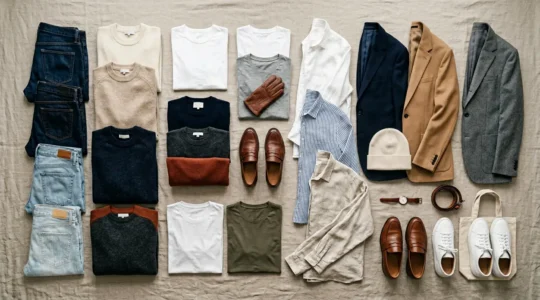
Can You Survive With Only 33 Items in Your Wardrobe for 3 Months?
Successfully completing a 33-item wardrobe challenge isn’t about having the perfect clothes; it’s about mastering the mental game against boredom and social anxiety. Scientific concepts like the ‘Spotlight Effect’ prove people notice your repeat outfits far less than you think….
Lire la suite
How to Look Polished in Jeans and Sneakers for a Casual Client Meeting?
The secret to mastering casual client meetings isn’t a specific uniform, but signaling professionalism through intentional choices. Swap basic items for those with better structure and material (e.g., dark wash denim over light wash, leather sneakers over canvas). Use a…
Lire la suite
How to Make a $20 White T-Shirt Look Like a Million Bucks
The secret to making affordable clothes look expensive has nothing to do with logos or price tags; it’s about mastering the unspoken language of proportion, texture, and fit. A simple « French tuck » radically alters your silhouette, making an outfit look…
Lire la suite
Beyond the Blazer: Command Virtual Authority with Strategic Top-Up Dressing
True virtual authority isn’t about wearing your best office attire on camera; it’s about understanding how your webcam translates color, pattern, and shape into a language of leadership. Your physical outfit is not what colleagues see. They see a digital…
Lire la suite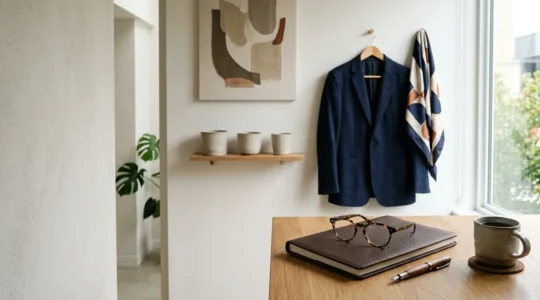
How to Build a Visual Identity That Gets You Promoted in Creative Industries?
A strong visual identity is your most potent, non-verbal tool for securing promotions and higher-value projects. Consistency signals reliability and builds equity, making you a cognitively « easy » and trustworthy choice for decision-makers. Strategic color choices and a single « trademark » accessory…
Lire la suite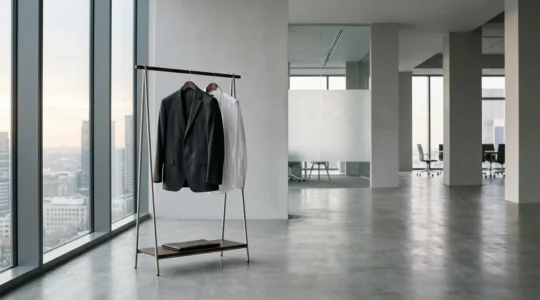
Why Does Your Outfit Impact Your Negotiation Success More Than You Think?
Success isn’t about ‘faking it till you make it’; it’s about using your clothes to genuinely embody the authority you need to succeed. The science of « enclothed cognition » proves that what you wear directly alters your thought processes and cognitive…
Lire la suite
How to Curate a Signature Style After 30 (and Quit Fast Fashion for Good)
The secret to a signature style isn’t buying more timeless pieces; it’s decoding the ‘style data’ you already own. Your most-worn items reveal your true aesthetic, while ‘wardrobe orphans’ define your boundaries. Aligning your clothing budget with your actual life—not…
Lire la suite