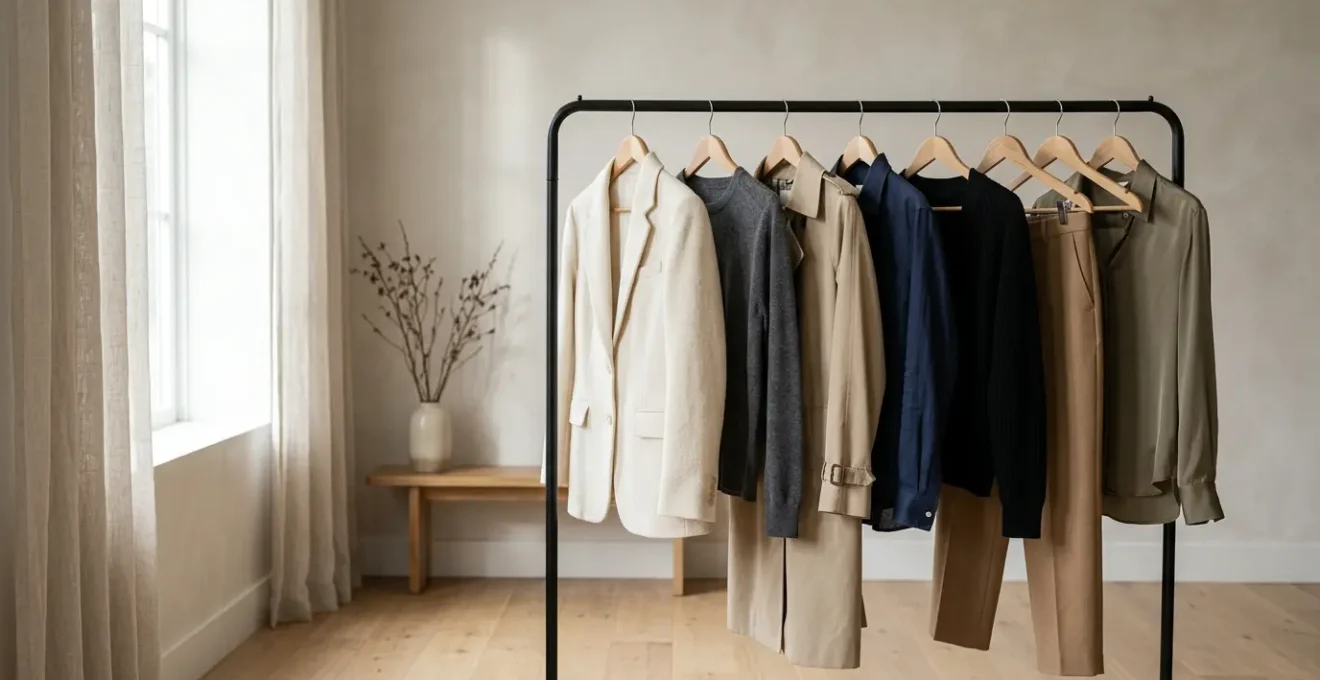
The secret to a signature style isn’t buying more timeless pieces; it’s decoding the ‘style data’ you already own.
- Your most-worn items reveal your true aesthetic, while ‘wardrobe orphans’ define your boundaries.
- Aligning your clothing budget with your actual life—not a fantasy one—is the key to eliminating waste.
Recommendation: Stop looking outward for inspiration and start by performing a strategic audit of your closet. It’s the most powerful step toward building a wardrobe that feels like you.
For many professional women over 30, the daily ritual of getting dressed is a quiet source of frustration. You open a closet overflowing with clothes, yet the feeling that you have « nothing to wear » is overwhelming. You’ve followed the advice: you’ve bought the « classic » trench coat, tried to emulate influencer looks, and maybe even splurged on sale items that seemed too good to pass up. Yet, the result is a collection of mismatched items that don’t feel cohesive, authentic, or representative of the capable person you are. Your wardrobe feels less like a tool for self-expression and more like a museum of past identities and impulse buys.
The common response to this problem is to look outward—for another trend, another « must-have » list, another influencer to copy. But what if the true solution lies not in adding more, but in understanding what’s already there? What if your closet isn’t a problem to be solved, but a dataset to be analyzed? This is the fundamental shift from being a passive consumer to becoming the lead strategist of your own personal brand. Building a signature style has less to do with fashion and more to do with self-data analysis. It’s about discovering the powerful patterns hidden within your own habits, successes, and even your shopping mistakes.
This guide will walk you through that strategic process. We will move beyond the superficial « buy this, not that » advice to give you a durable framework for style discovery. We’ll start by deconstructing why the influencer model fails, then dive into a practical audit of your existing wardrobe. From there, we’ll explore how to align your style with your real life, avoid costly shopping errors, and finally, build your wardrobe on five pillars that will outlast any trend cycle.
Table of Contents: A Strategic Guide to Building Your Signature Style
- Why copying influencers destroys your personal brand confidence?
- How to audit your closet in 3 hours to find your core aesthetic?
- Minimalism vs. Maximalism: Which aligns with your daily routine?
- The shopping mistake that leaves you with mismatched items despite spending $500
- 3 ways to evolve your style when changing careers or becoming a mother
- Why changing your look every month confuses potential clients?
- How to draw a pie chart of your life to stop buying party clothes you never wear?
- What Are the 5 Pillars of a Wardrobe That survives Every Trend Cycle?
Why copying influencers destroys your personal brand confidence?
In the digital age, it’s tempting to use influencer feeds as a shopping catalogue. You see a perfectly curated outfit and think, « I could wear that. » The problem is that this approach outsources your style decisions to someone else’s life, body type, and brand partnerships. This creates an authenticity gap—a disconnect between the image you project and who you truly are. When an outfit is a copy, it rarely feels right because it lacks personal resonance. It’s a costume, not an expression of self.
This feeling isn’t just in your head; it’s a growing sentiment. Consumers are becoming increasingly wary of sponsored content that lacks genuine connection. According to a BoF-McKinsey survey, there is a noted decline in consumer reliance on influencers, with many seeking more authentic forms of brand discovery. This skepticism reflects a deeper need for trust and personal alignment, which is impossible to achieve when your wardrobe is an echo of someone else’s. True style confidence comes from within, from making choices that are rooted in your own personality and lifestyle.
Ultimately, a personal brand—whether you’re a freelancer, an executive, or an entrepreneur—is built on consistency and authenticity. When your style changes with every trending post, you create a sense of visual instability. It subtly communicates a lack of a clear point of view. Building a strong, confident personal brand starts with a wardrobe that is a consistent and authentic extension of your identity, not a revolving door of borrowed aesthetics.
How to audit your closet in 3 hours to find your core aesthetic?
The most valuable style information you can find is not in a magazine, but hanging in your own closet. Most people, however, only wear a fraction of what they own. In fact, research shows that consumers typically wear only 20-30% of their wardrobe regularly. That unworn 70-80% is not just clutter; it’s data. Performing a closet audit is an act of « wardrobe forensics »—a systematic investigation into what works for you, what doesn’t, and most importantly, why.
This process isn’t about guilt or judgment. It’s a strategic analysis to uncover your « style DNA. » By physically handling every item, you are forced to confront the reality of your purchases and habits. You’ll begin to see patterns: the impulse buys still with tags on, the « fantasy self » outfits for a life you don’t lead, and the small handful of items you reach for again and again. These MVPs (Most Valuable Pieces) are the key. They hold the code to your true aesthetic in their fit, fabric, and feel.
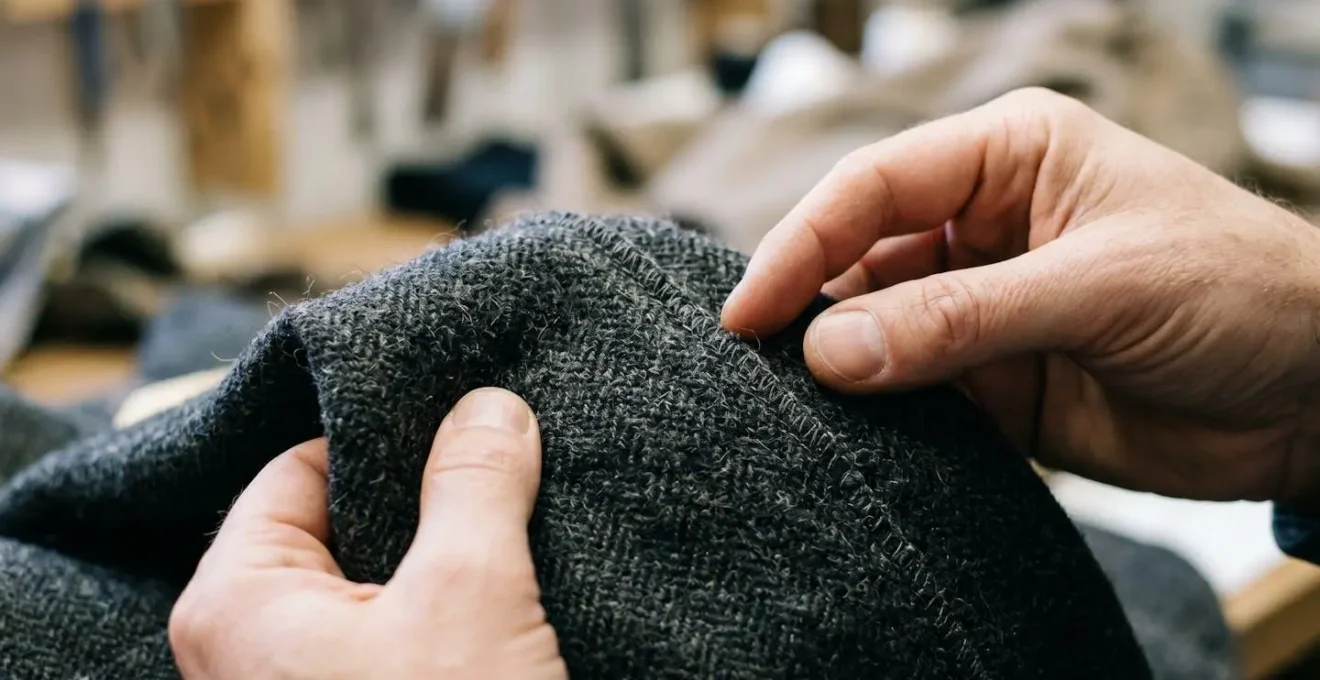
Conversely, the « wardrobe orphans »—those items that have no companions—are equally important. They define your style boundaries by showing you what to avoid. By treating your closet as an information-rich dataset, you shift from a mindset of lack to one of strategic insight. This audit provides the foundational knowledge needed to stop making random purchases and start building a cohesive, functional, and joyful wardrobe.
Your Wardrobe Audit Action Plan
- Points of Contact & Context: List all the contexts where you need to be dressed in a typical month (e.g., corporate office, client meetings, weekend errands, school pickup). This defines your real-world needs.
- Data Collection: Pull every single piece of clothing out. Create piles based on wear frequency: « Weekly, » « Monthly, » « Rarely, » and « Never. » This is a non-negotiable inventory of what you actually have.
- Coherence Analysis: Focus on the « Weekly » pile. Identify the common threads in these MVP items. Are they a certain fabric (e.g., stretch cotton), a specific silhouette (e.g., A-line), or a consistent color family? This is your core aesthetic.
- Emotional & Mnemonic Audit: Analyze the « Rarely » and « Never » piles (your ‘wardrobe orphans’). For each item, ask why it goes unworn. Is it uncomfortable? Does it represent a ‘fantasy self’? This negative data is crucial for defining your style boundaries.
- Strategic Integration Plan: Based on your analysis, create a specific, written list of « missing links »—items that would connect your orphans to your MVPs and serve your actual life contexts. This becomes your only shopping list.
Minimalism vs. Maximalism: Which aligns with your daily routine?
The style world often presents a false dichotomy: you are either a minimalist, with a spartan closet of neutral basics, or a maximalist, delighting in bold patterns and vibrant colors. But these labels are not just about aesthetics; they are about energy, mindset, and practicality. Choosing a side isn’t about what’s more « stylish, » but about what framework best supports the demands of your daily life. A high-powered lawyer with long hours may find a minimalist wardrobe to be a tool for efficiency, reducing decision fatigue in the morning. A creative director, on the other hand, might see a maximalist approach as a vital form of self-expression and professional storytelling.
As one style analysis aptly puts it, the divide is about how you source your energy. Understanding this is key to finding your authentic approach.
The minimalist-maximalist divide isn’t about right or wrong—it’s about energy. Minimalists often find peace in simplicity and view their wardrobe as a tool for efficiency. Maximalists, on the other hand, see fashion as a canvas for creativity and self-expression.
– Bits & Bangles Fashion Analysis, Minimalist vs Maximalist Style: How to Find Your Fashion Sweet Spot
The most sophisticated approach, however, often lies in the middle. You don’t have to choose one camp permanently. A « modular style » allows you to operate from a minimalist base for efficiency while layering in maximalist elements for expression. This hybrid model offers the best of both worlds: a foundation of reliable, easy-to-wear pieces complemented by statement accessories or unique items that add personality without creating chaos.
Case Study: The Modular Style of Christie Tyler
Fashion content creator Christie Tyler exemplifies a powerful hybrid approach that defies the minimalist/maximalist binary. According to an analysis in Marie Claire, her strategy is built on a core wardrobe of high-quality, minimalist pieces in neutral tones. This serves as a clean, efficient base. She then strategically introduces maximalist, high-impact accessories—like a single oversized earring with an all-black outfit or a uniquely detailed brooch on a simple blazer. This « modular » method allows her to maintain a look of effortless authority during a busy work week while allowing for creative expression when desired. It proves that a signature style can be both practical and personal, without being locked into a single aesthetic.
The shopping mistake that leaves you with mismatched items despite spending $500
The most common and costly shopping mistake is item-based shopping. This happens when you buy a piece in isolation because you love it on its own, without a clear plan for how it integrates into your existing wardrobe. You might find a beautiful, vibrant blouse or a pair of trendy trousers on sale, but when you get them home, you realize they don’t work with anything else you own. They become « wardrobe orphans, » beautiful but lonely items that contribute to the « nothing to wear » feeling. This habit is why you can spend hundreds of dollars and still feel like your closet is disjointed.
The antidote to this is outfit-based shopping. This requires a strategic mindset shift. Before any purchase, you must apply the « Rule of Three »: can you mentally create at least three distinct outfits with this new item using pieces you already own? If the answer is no, you are likely buying another orphan. This discipline forces you to see your wardrobe as an interconnected system, not a collection of individual objects. Every new piece should be a strategic acquisition that multiplies your outfit possibilities, not just one that adds to the clutter.
This approach is about maximizing your « Aesthetic ROI » (Return on Investment). A $300 blazer worn 50 times with a dozen different outfits has a far greater ROI than a $75 trend-driven top worn only twice. It’s not about spending less; it’s about spending smarter. By shopping with a pre-defined list of strategic gaps identified during your closet audit, and by rigorously applying the Rule of Three, you transform shopping from an impulsive, often disappointing activity into a deliberate act of curation that builds a cohesive and functional wardrobe.
3 ways to evolve your style when changing careers or becoming a mother
Major life transitions, like a career change or becoming a mother, are fundamentally identity shifts. Your old wardrobe may suddenly feel irrelevant or impractical for your new reality. The key to navigating this is not to discard everything and start from scratch, but to evolve your style thoughtfully and strategically. One of the most significant pressures during these times is financial, with a recent report showing that over three in five Americans say that the rising cost of living has made them more mindful of their clothing purchases. A strategic evolution is both emotionally and economically intelligent.
First, build a ‘bridge’ wardrobe. Instead of a complete overhaul, identify 5-7 key pieces that can function in both your old and new life. A well-structured knit blazer, a pair of premium dark-wash jeans, or elegant flat shoes can bridge the gap between a formal office and a more casual work-from-home setup, or from pre- to post-baby life. This creates a stable foundation while you figure out your new needs.
Second, define your new ‘Style North Star’. Acknowledge the identity shift and give your new style a name or a core feeling. Are you moving from « Corporate and Formal » to « Creative Authority »? Or from « Preppy and Polished » to « Effortless Comfort »? This ‘North Star’ acts as a powerful filter for all future decisions, ensuring that as you evolve, you do so with intention and cohesion. It’s not just about what’s practical; it’s about what feels authentic to the person you are becoming.
Finally, focus on low-effort, high-impact evolution. The quickest way to update your look without replacing your entire wardrobe is to focus on the « outer shell » and accessories. A new, modern coat, a signature piece of jewelry, a great handbag, or a stylish pair of glasses can instantly transform a simple base uniform like a t-shirt and trousers. This strategy allows your style to evolve at the same pace as your life, without the pressure of a total reinvention.
Why changing your look every month confuses potential clients?
In the professional world, your style is a form of non-verbal communication. It’s the visual component of your personal brand, and it speaks volumes before you even say a word. When your look is constantly in flux—bohemian one week, minimalist the next, and edgy the week after—you send a confusing message. While variety can be fun, a lack of stylistic consistency can subtly undermine a client’s or colleague’s confidence. It can project instability, a lack of a clear point of view, or even unreliability.
The power of a signature style lies in its visual consistency. Think of it as your personal logo. A consistent aesthetic creates instant recognition and builds trust over time. When people know what to expect from you visually, it creates a sense of predictability and authority that they subconsciously transfer to your work. They trust that the quality and nature of your output will be as reliable as your presentation. This principle is a cornerstone of brand psychology; inconsistent branding creates cognitive dissonance and erodes trust.
This doesn’t mean you must wear the same uniform every day. It means having recurring elements that tie your looks together. This could be a consistent color palette, a go-to silhouette that flatters your body, a signature accessory, or a particular way of styling your hair or makeup. These unifying threads create a cohesive narrative. They tell the world that you are intentional, self-aware, and in command of your personal brand. A constantly shifting aesthetic, driven by trends, communicates the opposite.
Case Study: The Power of Visual Consistency in Branding
An analysis from the brand French Connection highlights this exact principle. Their style guide emphasizes that a signature style is built on consistency. While it’s natural for style to evolve, having recurring elements is what creates a memorable and authoritative personal brand. The guide explains that these consistent visual cues function like a personal logo, creating instant recognition and mental recall. When clients can’t predict your visual presentation, it can subtly undermine their confidence in your ability to deliver predictable, high-quality work. This aligns perfectly with established branding psychology, which shows that a stable visual identity is fundamental to building long-term trust.
How to draw a pie chart of your life to stop buying party clothes you never wear?
One of the biggest reasons for wardrobe dissatisfaction is a mismatch between the clothes you own and the life you actually lead. This is your « Style Debt »: the gap between your fantasy life wardrobe and your reality. You might have a closet full of cocktail dresses and high heels, but if your real life consists of 80% office work and weekend errands, those fantasy items are generating debt in the form of clutter, guilt, and wasted money. The Life Pie Chart is a simple but profoundly effective tool to close this gap.
Start by drawing a circle. This circle represents 100% of your time in a typical week. Divide it into slices based on your main activities. For example: 50% Corporate Work, 20% Home/Casual, 15% Parenting/Kids’ Activities, 10% Social/Evenings Out, and 5% Exercise. Be brutally honest. This chart is your reality. Now, this pie chart becomes your new, non-negotiable budget allocation guide. If 50% of your life is work, then roughly 50% of your wardrobe and clothing budget should be dedicated to supporting that category.
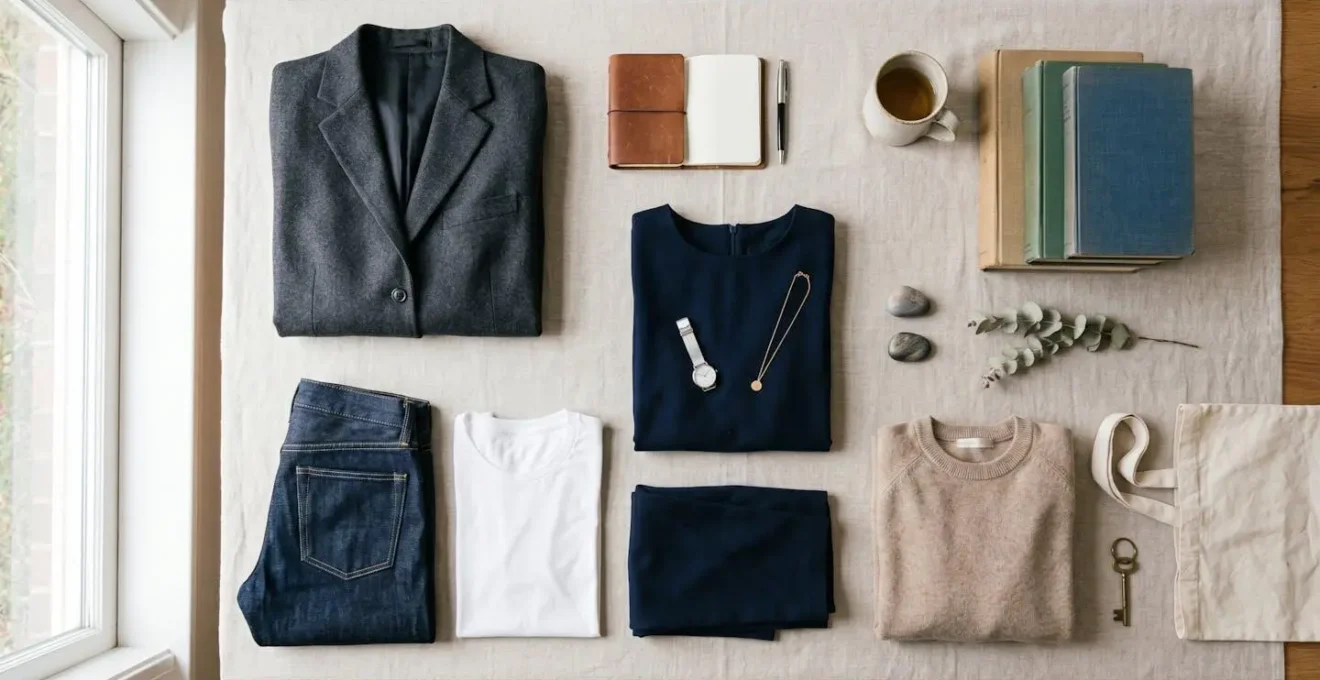
The next step is to draw a second pie chart representing the current breakdown of your closet. The visual discrepancy between the two charts is often startling. You may find that 40% of your wardrobe is for « Social/Evenings Out, » a slice that only represents 10% of your actual life. This visual evidence makes it impossible to ignore your Style Debt. This data-driven approach is proven to curb impulsive shopping; studies show that implementing a systematic wardrobe audit reduces impulse fashion purchases by an average of 40%. Your pie chart is the most personal audit tool you have. It empowers you to invest in pieces that serve multiple slices of your life, maximizing both their financial and functional value.
Key Takeaways
- A signature style is not found in stores; it’s uncovered by analyzing your own closet as a dataset.
- Align your wardrobe with your real life, not a fantasy one, by using a « life pie chart » to guide your spending.
- Focus on « Aesthetic ROI » by investing in pieces that can be worn in multiple ways across different areas of your life.
What Are the 5 Pillars of a Wardrobe That survives Every Trend Cycle?
Building a wardrobe that is immune to the frantic cycle of trends is the ultimate goal of developing a signature style. It’s not about having « boring » clothes; it’s about having a curated system of pieces that are timeless *for you*. This foundation rests on five interconnected pillars. Mastering them means you will always feel confident and put-together, regardless of what’s happening on the runways. This is the path to long-term satisfaction and an end to wasteful consumption.
Pillar 1 – Impeccable Fit: This is the most critical element. It’s not about the size on the tag, but how a garment drapes on your unique body. An inexpensive item that is tailored to perfection will always look more luxurious and timeless than a high-end piece that fits poorly. A relationship with a good tailor is the single best investment you can make in your style.
Pillar 2 – Superior Fabric: Develop your « material literacy. » Learn to assess the quality of a fabric by its feel, the density of its weave, and how it recovers when stretched. A superior fabric—be it a sturdy cotton, a resilient wool, or a fluid silk—not only lasts longer but also hangs better, instantly elevating your look. This knowledge empowers you to judge quality independent of the price tag or brand name.
Pillar 3 – A Cohesive Personal Color Palette: A strategic, limited palette of 5-7 core and accent colors is the unifying force of a great wardrobe. It ensures that almost every piece can be mixed and matched, creating an exponential number of outfit possibilities from a limited number of items. This is the secret to a « closet full of outfits, » not just a closet full of clothes.
Pillar 4 – Enduring Silhouettes: Reframe the idea of « timeless basics » into « enduring silhouettes. » Instead of a generic list, find *your* version of classic shapes that align with your personality and body type. Perhaps your enduring silhouette is not a classic trench, but a cropped leather jacket; not a simple crewneck, but an elegant boatneck. These are the architectural cornerstones of your style.
Pillar 5 – Personal Resonance: Finally, a piece is only timeless if it brings you joy and confidence. It must resonate with your authentic personality. Your wardrobe should be a source of strength and self-expression, not just a practical uniform. This is the « joy mandate »—if you don’t love it and feel like yourself in it, it has no place in your timeless wardrobe.
By moving beyond trends and focusing on these five pillars, you take control of your narrative. Start today by applying these principles to your next wardrobe decision, and begin the rewarding journey of building a style that is truly and timelessly your own.