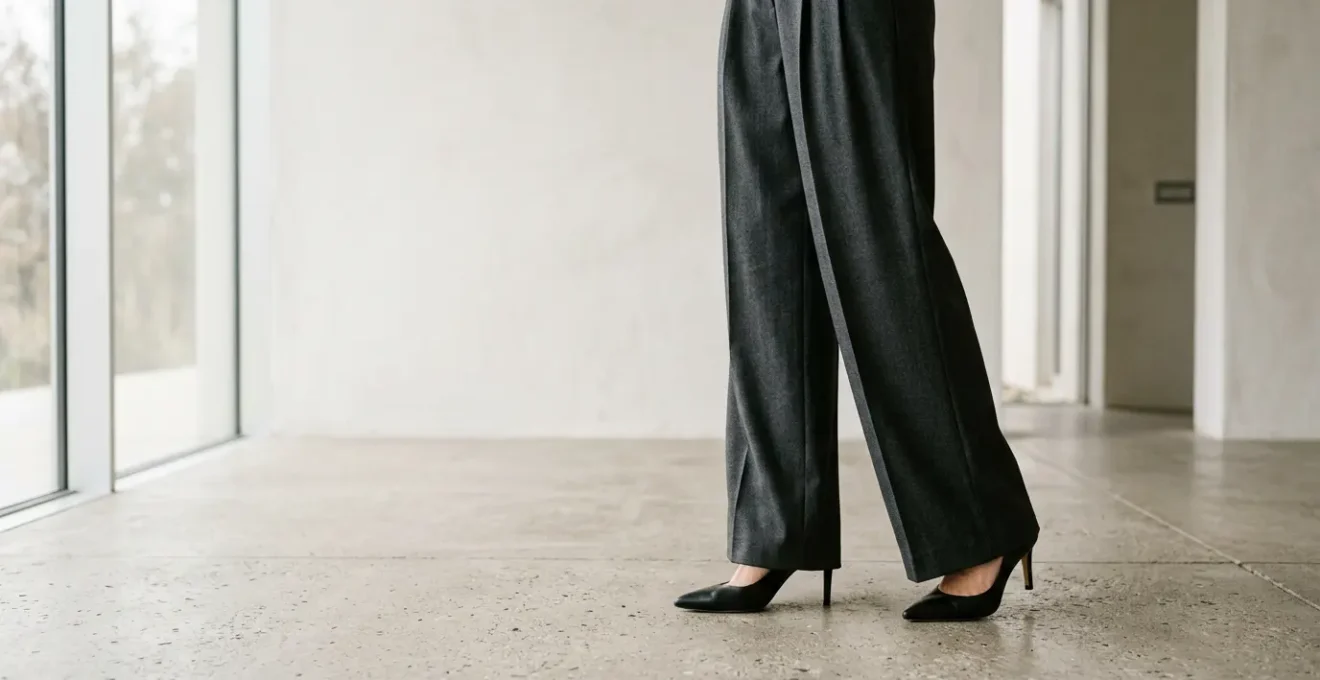
The key to flawlessly wearing wide-leg trousers isn’t the pants, but mastering the interaction between hemline, fabric, and footwear.
- Proportion is king: Use high-waisted cuts and strategic tucks to define your waist and create an elongated silhouette.
- Fabric dictates the shoe: Pair stiff, structured fabrics with substantial footwear, and flowing materials with more delicate options.
Recommendation: Stop looking for a single ‘perfect’ shoe and start building outfits based on these principles of visual balance.
The transition from the reliable comfort of skinny jeans to the flowing silhouette of wide-leg trousers can be intimidating. For many women, the excitement of this chic trend is quickly replaced by practical frustrations: hems dragging on the ground, feeling shorter or wider than you are, or simply looking like you’re drowning in fabric. It’s a common struggle that leaves many wondering if they can pull off the look at all.
The standard advice you’ll find is often too simplistic— »just wear heels » isn’t a universal solution. This ignores the critical dialogue between fabric weight, occasion, and your unique body shape. The real secret to mastering wide-leg pants doesn’t lie in finding one magic pair of shoes. It’s about understanding the core principles of silhouette architecture—a set of rules that empower you to create intentional, flattering, and comfortable looks every single time.
This guide moves beyond generic tips. We will deconstruct the art of styling wide-leg trousers into eight actionable principles. From the non-negotiable power of a high waist to the fatal hemline error that can visually cut you in half, you’ll learn how to think like a stylist. You’ll gain the confidence to not only choose the right shoes but to build complete, harmonious outfits that make the wide-leg trend work beautifully for you.
This article provides a complete roadmap to mastering wide-leg trousers. Below, you will find a summary of the key principles we will cover, from establishing proportions to selecting the right footwear for any context.
Summary: Mastering the Art of Wide-Leg Trousers
- Why high-waisted cuts are non-negotiable for wide-leg styles on short torsos?
- How to choose between stiff denim and flowing crepe for office wear?
- Puddle Hem vs. Ankle Crop: Which is more practical for rainy cities?
- The untucked shirt mistake that ruins your waistline definition
- 3 ways to wear thermal layers under wide-leg pants without bulk
- The hemline error that cuts your legs in half visually
- Sneakers vs. Loafers: Which turns jeans into a work-appropriate outfit?
- How to Dress for Your Body Shape Without Hiding Under Baggy Clothes?
Why high-waisted cuts are non-negotiable for wide-leg styles on short torsos?
For those with a shorter torso, the primary goal when styling wide-leg trousers is to reclaim and elongate the leg line. This is a game of proportional geometry, and the high-waisted cut is your most powerful tool. By sitting above your natural waist, a high-rise pant visually redraws your proportions, assigning more length to your legs and creating the coveted « one-third torso, two-thirds legs » silhouette that is fundamental to balanced dressing. It effectively raises your perceived waistline, making your legs appear miles long.
Ignoring this principle can have the opposite effect. A low or even mid-rise wide-leg pant on a short torso creates a visual imbalance. Recent fashion anthropology research highlights this, showing that wearing a 12-inch rise on a short torso visually shortens legs by 15%. This happens because the horizontal line of the waistband is placed lower, truncating the legs and making the torso appear longer in comparison, which disrupts the overall harmony of the silhouette.
To maximize this leg-lengthening effect, pair your high-waisted trousers with a top that is either tucked in or cropped. This keeps the high waistband visible and reinforces the new, higher waistline you’ve established. The shoe choice then becomes the final touch to this architectural effort.
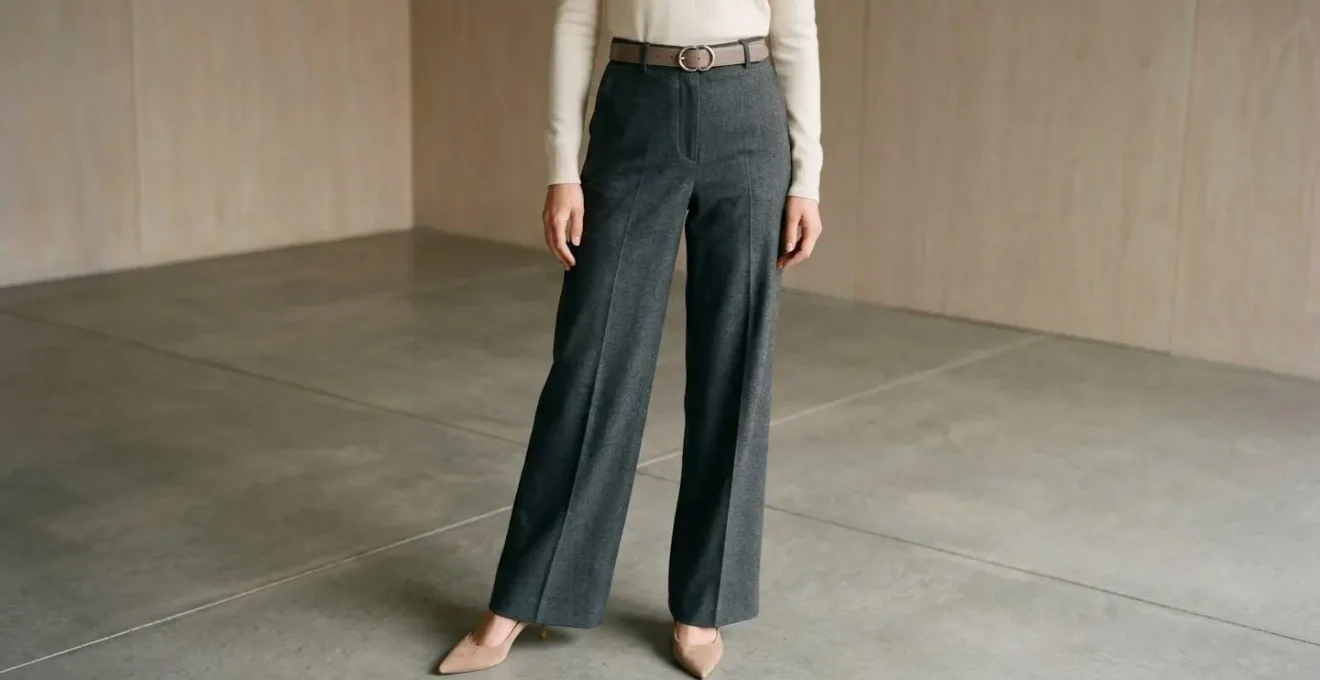
As you can see in this visual representation, a pointed-toe shoe extends the visual line of the leg even further, preventing the wide hem from creating a blocky finish. It’s a deliberate strategy to ensure the eye travels uninterrupted down the length of the body, creating an elegant and elongated look. The high waist does the structural work, and the shoe provides the finishing flourish.
How to choose between stiff denim and flowing crepe for office wear?
The choice between a structured fabric like stiff denim and a fluid one like crepe is not just about personal preference; it’s a strategic decision that dictates your entire office look, especially your footwear. The core principle here is the fabric-footwear dialogue: heavier, more rigid materials require a shoe with enough visual weight to act as an anchor, while lighter, flowing fabrics pair best with delicate footwear that complements their movement. This balance is crucial for maintaining a polished and professional appearance.
A 2026 styling guide from Wardrobe Oxygen demonstrates that heavier denim, typically 12-16oz, holds a distinct shape and requires a substantial shoe to ground the look. Think block heels, platform loafers, or chunky-soled boots. These options provide a solid foundation that prevents the stiff hem of the jeans from overpowering a more delicate shoe. Conversely, lightweight fabrics like silk or crepe create elegance through movement. Pairing them with stilettos or fine-strap sandals allows the fabric’s drape to be the star, creating a fluid line from waist to floor that signals sophistication in a corporate setting.
The following matrix, based on analysis from a comprehensive guide by Wardrobe Oxygen, breaks down the ideal pairings for different professional environments. It clarifies how fabric choice directly influences your shoe selection and the overall message your outfit conveys.
| Fabric Type | Weight/Characteristics | Recommended Shoe Style | Office Environment | Movement Quality |
|---|---|---|---|---|
| Stiff Denim | 12-16oz, structured, holds shape | Block heel, platform loafer, leather sneaker | Creative agency, casual workplace | Minimal drape, resistant to creasing |
| Flowing Crepe | Lightweight, fluid drape | Stiletto pump, pointed heel, fine strap sandal | Corporate firm, formal office | Elegant movement, wrinkles when seated |
| Medium-Weight Twill | Balanced structure and comfort | Classic loafer, kitten heel | Business casual, versatile settings | Moderate drape, all-day wearability |
Ultimately, selecting the right fabric is about aligning the material’s inherent character with your workplace culture and styling goals. A stiff denim with a platform loafer communicates modern, creative confidence, while a flowing crepe with a stiletto pump projects classic, corporate authority. Understanding this interplay is key to making wide-leg trousers a powerful part of your work wardrobe.
Puddle Hem vs. Ankle Crop: Which is more practical for rainy cities?
When dressing for a rainy city, the choice between a puddle hem and an ankle-crop trouser is a battle between high fashion and stark practicality. While the dramatic, floor-sweeping puddle hem offers a certain editorial flair, it is the sworn enemy of wet pavements. The ankle-crop silhouette is unequivocally the more practical choice for navigating damp conditions. By exposing the ankle, it creates a crucial gap between your hem and the ground, preventing the fabric from soaking up water, dirt, and grime.
The material of your trousers is also a critical factor. Heavy denim, when wet, becomes cold, heavy, and takes hours to dry, wicking moisture unpleasantly up your leg. Lighter fabrics like silk or linen are even more vulnerable and can be instantly ruined by water stains. If you are committed to a longer hem on a wet day, you must create physical distance. This means relying on footwear with a significant platform or a substantial lug sole to lift the hem clear of puddles. As Fashion Stylist Rivera notes in the AOL Rainy Day Styling Guide, this can be a chic solution:
If you’re wearing wide-leg trousers or a midi skirt, tuck them into waterproof ankle boots to keep the hems dry (bonus points for a block heel for puddle protection)
– Rivera, Fashion Stylist
This « tuck-in » method is an advanced styling move that not only protects your trousers but also creates a fashion-forward, voluminous silhouette reminiscent of a balloon pant. It’s a perfect example of turning a practical constraint into a style statement. For those less daring, the best defense is a well-planned offense, starting with the right trouser length.
Your Action Plan: The Rainy Day Hem Protection Strategy
- Choose cropped trousers that hit right above the ankle to avoid dragging in puddles; this is the most practical length.
- Avoid heavy denim, as it wicks moisture and stays cold and damp all day when wet.
- For longer hems, ensure you wear lug sole boots or platform shoes to create physical distance between the hem and wet pavement.
- Consider fabric sacrifice: sturdy cotton might survive dampness, but silk, linen, or light crepe will likely be damaged.
- Immediately spot-clean dirty hems with mild soap and hang to air dry to prevent permanent staining.
The untucked shirt mistake that ruins your waistline definition
One of the most common mistakes when styling wide-leg trousers is pairing them with a long, untucked shirt. While comfortable, this combination creates a single, unbroken column of fabric that completely obscures the waistline. The result is a shapeless, often frumpy silhouette that makes the body appear wider and shorter. The voluminous nature of the pants requires a defined anchor point at the waist to maintain balance and proportion. Without it, the entire outfit lacks structure and intention.
The goal is not necessarily to wear a skin-tight top, but to ensure the waist is visibly demarcated. A full tuck is the simplest solution, creating a clean line and highlighting the high waist of the trousers. However, for a more relaxed and modern feel, the « French Tuck » offers a perfect middle ground. This technique, which involves tucking in only the front part of the shirt, provides waistline definition without the formality of a full tuck.
This styling innovation allows you to hint at your shape while maintaining a sense of ease and movement, making it an ideal solution for balancing proportions. It creates a high-low point of interest, drawing the eye to the defined waist at the front while allowing for a graceful drape at the back.
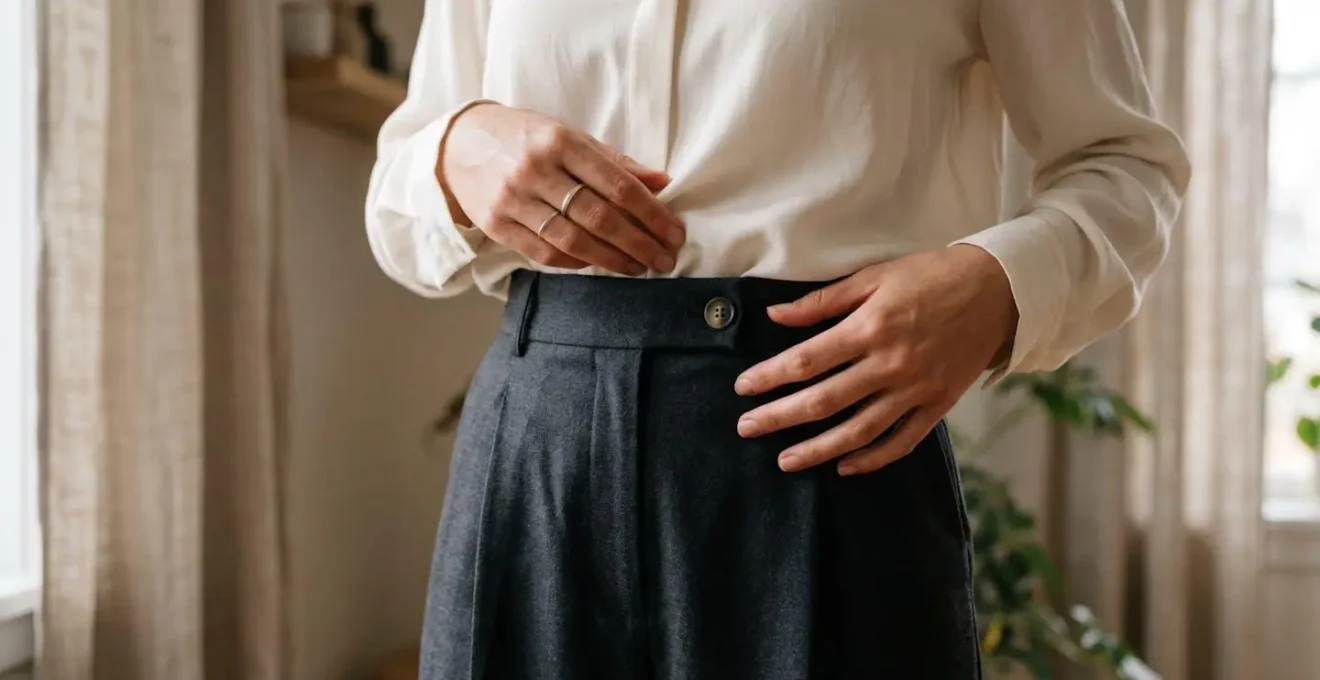
The French Tuck Technique: Tan France’s Styling Innovation
Popularized by fashion expert Tan France, the French tuck is a game-changing styling trick. As detailed in a Masterclass article on the technique, it involves tucking in just the front of a loose-fitting top. This simple action defines the waist and creates a flattering, relaxed silhouette. It works exceptionally well with high-waisted wide-leg trousers, balancing the volume of the pants by creating a clear focal point at the waist, thus avoiding the « drowning in fabric » effect.
3 ways to wear thermal layers under wide-leg pants without bulk
The beauty of wide-leg trousers is their year-round versatility, but wearing them in cold weather presents a specific challenge: how to add warmth without adding bulk. The key is to choose your base layers strategically, focusing on high-tech materials and a streamlined fit that won’t interfere with the graceful drape of your pants. Adding a bulky layer underneath can ruin the silhouette, making the trousers look lumpy and ill-fitting. Here are three foolproof methods to stay warm without compromising on style.
First, prioritize modern, high-performance fabrics. Forget thick, old-school cotton long johns. Instead, opt for ultra-thin thermal layers made from merino wool, silk, or advanced synthetic blends like Uniqlo’s HEATTECH. These materials are engineered to provide maximum warmth with minimum thickness. Merino wool is a natural insulator that is also breathable and moisture-wicking, while silk offers surprising warmth for its light weight. These high-tech options are your first line of defense against both cold and bulk.
Second, the fit of your thermal layer is paramount. Choose a style that is completely form-fitting, like a second skin. Seamless leggings or footless tights are ideal choices. The goal is to create a smooth, uninterrupted base. Any bagginess or wrinkling in the base layer will translate through the trousers, especially those made of lighter fabrics like crepe or silk. A sleek fit ensures that your wide-leg pants glide over the thermal layer without catching or bunching, preserving their intended flow and movement.
Finally, consider the length and finish of your base layer. For cropped wide-leg pants, a knee-high thermal legging or even a thick knee-high sock can provide targeted warmth without adding any bulk around the ankle, where it would be most visible. For full-length trousers, a full-length legging is fine, but ensure it’s smooth and fits snugly at the ankle. By focusing on thin fabrics, a skin-tight fit, and a seamless finish, you can easily wear thermal layers under even the most elegant wide-leg pants, staying both warm and chic.
The hemline error that cuts your legs in half visually
Beyond simply dragging on the ground, there is a more insidious hemline error that can sabotage your look: the cropped pant that ends at the widest part of your calf. This is what stylists refer to as the « visual danger zone. » When a hemline creates a strong horizontal line across the thickest point of your lower leg, it visually shortens and widens your entire silhouette. It’s a common mistake that instantly negates any leg-lengthening efforts made with high waists or pointed shoes.
The solution lies in meticulous hemline precision. According to a comprehensive styling guide, the hem of a cropped pant must land at one of two strategic points: either clearly above the widest part of the calf or, more ideally, right at the narrowest point of the ankle. This deliberate placement ensures the eye is drawn to a slimmer part of the leg, creating a more flattering and elongated line. Ankle-length pants are particularly effective as they showcase the delicate curve of the ankle, adding a touch of grace to the voluminous pant leg.
Your choice of footwear is also critical in mitigating this effect. A low-vamp shoe—one that is cut low on the foot and exposes the instep, like a classic pump or a ballet flat—is essential when wearing cropped styles. It creates an unbroken visual line from the hem to the toe, extending the leg. Conversely, pairing cropped pants with a high-vamp shoe, such as an ankle boot that meets the hem, compounds the leg-shortening problem by creating yet another horizontal line. As noted by one expert, this specific cropped length is becoming less favorable in fashion circles.
Cropped pants, ending a few inches above the ankle, are actually phasing out. Especially if they are slim pants… if you are purchasing a new pair and going to have them tailored, I’d highly recommend not going shorter than your ankle bone
– The Wardrobe Consultant, in Pant Lengths 101: Mastering Style, Fit, and Tailoring
This shift towards ankle-bone or longer lengths emphasizes the importance of a clean, uninterrupted leg line. Avoiding the mid-calf crop is not just a suggestion; it’s a fundamental rule for achieving a sophisticated and well-proportioned look with wide-leg trousers.
Sneakers vs. Loafers: Which turns jeans into a work-appropriate outfit?
The question of whether sneakers or loafers can elevate wide-leg jeans to a work-appropriate level is nuanced. The answer is: both can, but only with strict attention to detail. The specific style of the shoe, the wash of the denim, and the polish of the surrounding outfit are what make the difference. A classic leather loafer is the safer, more traditional choice, while a minimalist sneaker can work in more modern, creative environments.
Classic loafers, particularly in leather with structured details like a penny slot or a horsebit, send a clear signal of reliability and established professionalism. When paired with dark wash, well-fitting wide-leg jeans and a silk blouse or a tailored blazer, they create an outfit that is undeniably business casual. The loafer’s heritage and structured form provide a sophisticated counterbalance to the casual nature of denim.
Minimalist sneakers, on the other hand, signal a more modern, approachable, and creative vibe. To be work-appropriate, the sneaker must be impeccably clean, monochrome (ideally white or black), made of leather, and completely free of prominent logos or athletic detailing. A sleek court sneaker paired with dark jeans and a structured blazer can look sharp and contemporary in a startup or creative agency. As one styling editorial puts it, « The cleanliness of the shoe, the absence of prominent logos, and the quality of the material (leather vs. canvas) are more important than the shoe type itself. » The following table clarifies the specific formula required for each shoe to succeed in a professional context.
| Shoe Type | Specific Style Required | Professional Signal | Complete Formula | Workplace Culture |
|---|---|---|---|---|
| Classic Loafers | Leather penny loafers, structured horsebit loafers | Classic, established, reliable | Dark wash wide-leg jean + loafer + silk blouse | Traditional office, business casual |
| Minimalist Sneakers | Sleek monochrome leather court sneakers (no logos) | Modern, creative, approachable | Dark wash wide-leg jean + minimalist sneaker + structured blazer | Creative agency, startup, modern workplace |
| Elevated Sneaker | Sleek oxford-style or leather fashion sneaker | Smart-casual, contemporary | Wide-leg suiting trouser + elevated sneaker + lightweight knit | Tech company, casual Friday |
Ultimately, the loafer offers a shortcut to professionalism through its classic design, while the sneaker requires more careful curation to ensure it reads as intentional and chic, not sloppy. Both can be valid choices, but the sneaker demands a higher degree of styling precision.
Key takeaways
- Proportion is created at the waist: A visible, high waistline is the foundation of a balanced wide-leg silhouette.
- The hemline must be intentional: Whether cropped to the ankle or grazing the floor, the length dictates the shoe and must be precise.
- Fabric and footwear must communicate: The weight and drape of your trousers determine whether you need a substantial or a delicate shoe.
How to Dress for Your Body Shape Without Hiding Under Baggy Clothes?
The biggest fear associated with voluminous clothing is that it will hide your shape and make you look larger. The key to successfully wearing wide-leg trousers is not to hide under baggy clothes, but to use strategic definition and proportion play to honor your body shape. It’s about creating a silhouette, not erasing it. The goal is to balance the volume of the pants with fitted or revealing elements elsewhere in the outfit.
The most fundamental rule is to pair volume with fit. If you have voluminous wide-leg pants on the bottom, you need a more fitted item on top. This doesn’t mean you have to wear something skin-tight, but a slim-fit knit, a bodysuit, or a neatly tucked-in top will create the necessary contrast. This creates structure and sculpts your shape, proving you have a figure underneath without having to show all of it. The wide-leg pants provide comfort and movement, while the fitted top ensures the overall look is intentional and not simply « baggy. »
Another powerful technique is to showcase the body’s narrowest points. This creates visual breaks and adds definition, preventing you from looking overwhelmed by fabric. You can achieve this by:
- Exposing your ankles with a cropped wide-leg style and a statement flat or heel.
- Defining your waist with a cropped top or a well-executed tuck.
- Showing your wrists and forearms by pushing up the sleeves of your blouse or blazer.
These small glimpses of skin act as reference points, reminding the eye of the silhouette beneath the clothes. For pear shapes, floor-grazing pants with pointed heels can elongate the leg line, while apple shapes might opt for a cropped style with eye-catching shoes to draw focus downwards and balance proportions.
By combining a fitted top with voluminous bottoms and strategically revealing narrow points like the waist or ankles, you create a look that is both comfortable and flattering. It’s a formula that celebrates your shape rather than hiding it, allowing you to embrace the elegance and ease of wide-leg trousers with complete confidence.
Now that you have the foundational rules, it’s time to open your wardrobe and start experimenting. Use these principles as your guide to confidently create your own signature wide-leg looks.