
The key to wearing an oversized suit to a conservative office isn’t about hiding the volume; it’s about signaling clear intention through precise tailoring and strategic styling.
- The shoulder seam must align perfectly with your natural shoulder for the look to read as expensive, not borrowed.
- A « proportional anchor »—like a pointed shoe, a structured bag, or a slim-fit base layer—is essential to ground the silhouette.
Recommendation: Master the fit of one high-quality, intentionally oversized blazer. It’s a smarter investment that elevates your entire professional wardrobe.
The question looms large in the minds of many young professionals: how to embrace modern trends, like the alluringly comfortable oversized suit, without triggering the HR dress code alarms? The line between looking fashion-forward and looking like you’re playing dress-up in a parent’s closet feels dangerously thin. Standard advice often misses the point, suggesting a simple belt or a pair of heels will solve everything. These are temporary fixes, not strategic solutions.
The reality is that in a conservative environment, every style choice is a form of non-verbal communication. A sloppy fit can communicate carelessness, while a deliberately styled, voluminous silhouette can project confidence and an understanding of contemporary power dressing. The challenge isn’t the trend itself, but the execution. It’s not about avoiding volume; it’s about learning to control and command it. This requires moving beyond generic tips and into the realm of sartorial strategy, understanding the subtle codes of tailoring and proportion that separate the amateur from the authority.
This guide isn’t about rules; it’s about a framework. We will deconstruct the oversized look, not to tame it, but to master it. We’ll explore why a single seam can make or break the entire outfit, how to balance proportions for a powerful silhouette, and when a higher price tag is a genuine investment in your professional image. Forget looking sloppy; it’s time to learn how to wear oversized with undeniable intention.
To navigate this style challenge effectively, we’ve broken down the essential elements you need to master. This structure will guide you from foundational tailoring principles to smart investment strategies, ensuring your oversized pieces always look polished and powerful.
Table of Contents: A Strategic Guide to Mastering the Oversized Silhouette
- Why the shoulder seam determines if oversized looks expensive or borrowed?
- How to balance an oversized blazer with the right footwear?
- Men’s Department vs. Women’s Oversized: Which offers better value?
- The sleeve length error that makes you look like a child in dad’s suit
- When is the oversized trend predicted to fade for corporate wear?
- Why a structured bag corrects the « slouchy » look of oversized knitwear?
- How to layer a turtleneck under a dress without bunching?
- Is a $300 Structured Blazer Worth the Investment for a Capsule Wardrobe?
Why the shoulder seam determines if oversized looks expensive or borrowed?
The single most important detail that separates an intentionally oversized, high-fashion look from simply wearing clothes that are too big is the shoulder seam. This is the non-negotiable foundation of the entire silhouette. When the shoulder seam droops far down your bicep, the jacket appears to be wearing you, suggesting a borrowed, ill-fitting garment. It creates a slouchy, unkempt line that reads as careless in a professional setting.
Conversely, a perfectly placed shoulder seam signals deliberate design and expert tailoring. Even on a blazer with significant volume through the torso and length, the seam should sit cleanly at the natural edge of your shoulder. This creates a strong, defined « hanger » from which the rest of the fabric drapes. It shows that the volume is a conscious style choice, not an accident of poor fit. As the experts at Westwood Hart Tailoring note, the goal is a « point-to-point fit. »
The shoulder seam must hit exactly where your natural shoulder bone ends and your arm begins – what tailors call point-to-point fit.
– Westwood Hart Tailoring, How a suit should fit – shoulder fit, sleeve length, and trouser rules explained
This precise placement anchors the entire garment to your frame, maintaining a sense of structure no matter how oversized the rest of the cut is. It is the silent signal of quality and intention that is instantly recognizable, even to an untrained eye. Before you even consider the fabric or brand, checking the shoulder fit is the first and most critical step.
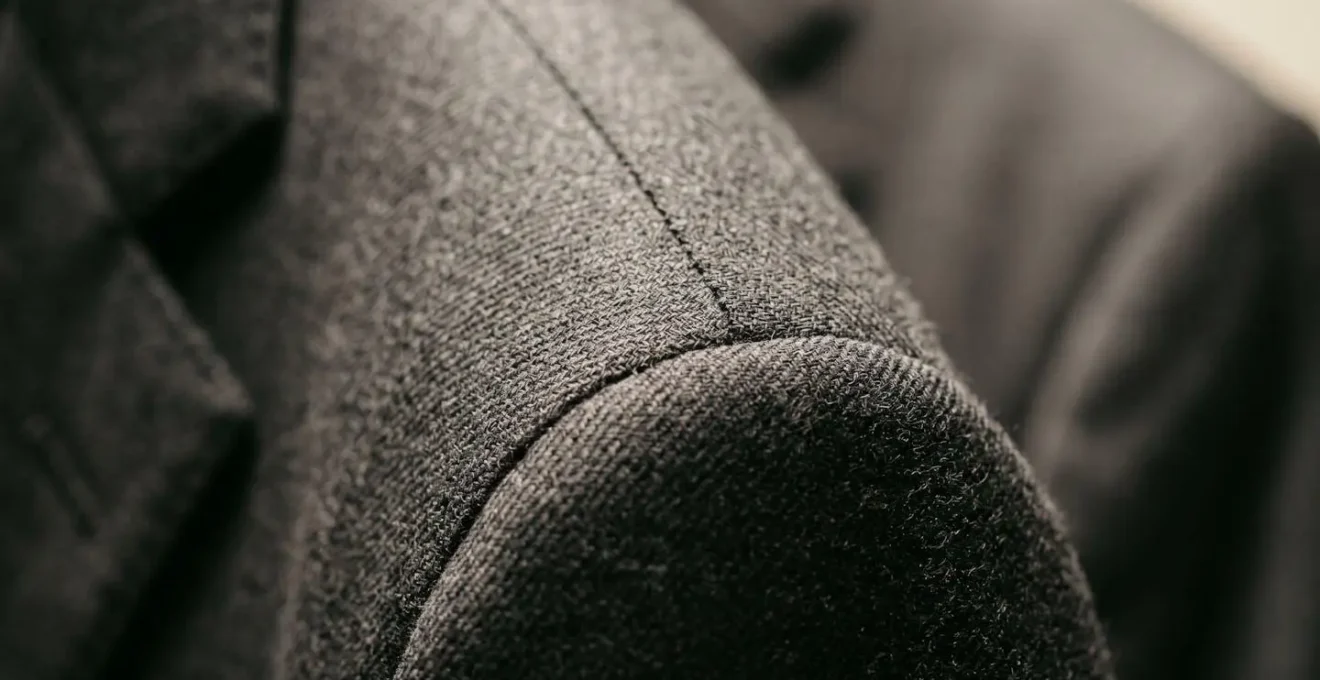
As you can see in this detailed view, the precision of the stitching and the way the fabric falls from this crucial point are paramount. This is where the structural integrity of the entire look begins, proving that true style is a matter of deliberate, well-executed details.
How to balance an oversized blazer with the right footwear?
Once you’ve secured the fit in the shoulders, the next step is to manage the overall proportion of your outfit, and your footwear is the ultimate anchor. The wrong shoe can make an oversized look feel bottom-heavy and frumpy, while the right shoe provides a crucial point of visual balance and sophistication. The goal is to create a counterpoint to the volume up top.
Think of your footwear as the « proportional anchor » of your look. With a voluminous blazer, you need a shoe that provides definition. Pointed-toe flats, slim loafers, or sleek, heeled boots are excellent choices. They create a sharper, more delineated endpoint for the leg line, which visually elongates your frame and prevents the silhouette from becoming a single, overwhelming block of fabric. A chunky, rounded shoe, by contrast, can add to the bulk and make the entire outfit feel clumsy.
The choice also depends on the rest of your outfit. If you pair your oversized blazer with wide-leg trousers, a slim, pointed shoe is almost mandatory to create a sliver of definition at the floor. If you opt for a pencil skirt or slim-fit trousers to balance the blazer’s volume, you have more flexibility. In this case, a classic loafer can maintain a smart, professional aesthetic. Ankle boots work particularly well with cropped trousers, creating a clean line and adding a touch of modern edge without sacrificing polish.
Ultimately, your footwear should not compete with the blazer for attention but rather support it. Opting for neutral colors like black, navy, or tan in your shoes keeps the focus on the blazer’s structure and the overall silhouette you’ve intentionally crafted. It’s a subtle but powerful way to communicate that every element of your outfit has been carefully considered.
Men’s Department vs. Women’s Oversized: Which offers better value?
The temptation to shop in the men’s department for an « authentic » oversized look is strong, but it’s a strategy that requires careful consideration. While you might find a bargain, a men’s blazer is not simply a larger version of a woman’s. It’s cut differently in ways that can undermine the very polish you’re trying to achieve. Men’s blazers are typically designed for a broader shoulder line and a straight torso, with minimal tapering at the waist. This can result in a boxy, unflattering fit on a female frame, even if the shoulder seam lands correctly.
In contrast, a blazer from a women’s line that is *intentionally* designed to be oversized has been drafted with a female body in mind. The designers have already accounted for the difference in shoulder width, bust, and hip proportions. The volume is added strategically—often through the body and length—while key areas like the armholes and shoulder-to-bust ratio are maintained for a more flattering drape. This purpose-built construction is what you are paying for: the difference between a garment that is simply large and one that is artfully voluminous.
The market for women’s blazers is substantial and growing, reflecting the demand for these nuanced fits. With the global women’s blazer market hitting $69.17 billion in 2024 and projected to expand further, designers are investing heavily in perfecting these oversized silhouettes. This means you have more choice and a higher likelihood of finding a piece that delivers the desired look without extensive (and expensive) tailoring.
So, which offers better value? While a thrifted men’s blazer might have a lower initial cost, the potential need for significant alterations can quickly erase those savings. A well-chosen, intentionally oversized blazer from the women’s department offers better long-term value because it is designed for your frame from the start. It provides the trend’s aesthetic without sacrificing the sophisticated fit that is crucial for a conservative office environment.
The sleeve length error that makes you look like a child in dad’s suit
After the shoulder seam, the second most critical fit point for avoiding the « sloppy » label is the sleeve length. Sleeves that are too long, bunching around your wrists or completely hiding your hands, are an immediate and undeniable signal of a poor fit. It is perhaps the single detail most associated with the cliché of a child wearing an adult’s clothing, and it can instantly sabotage an otherwise well-styled oversized look.
The professional standard, even for a relaxed or oversized fit, is to have the blazer sleeve end at or just above the wrist bone. This allows a small amount of the shirt cuff underneath to show. This isn’t just an aesthetic preference; it has practical origins. As noted by tailoring experts, showing a bit of cuff helps protect the more expensive jacket fabric from wear and tear. It also creates a clean, finished transition from the jacket to the hand, adding a touch of sharpness and intention to the look.
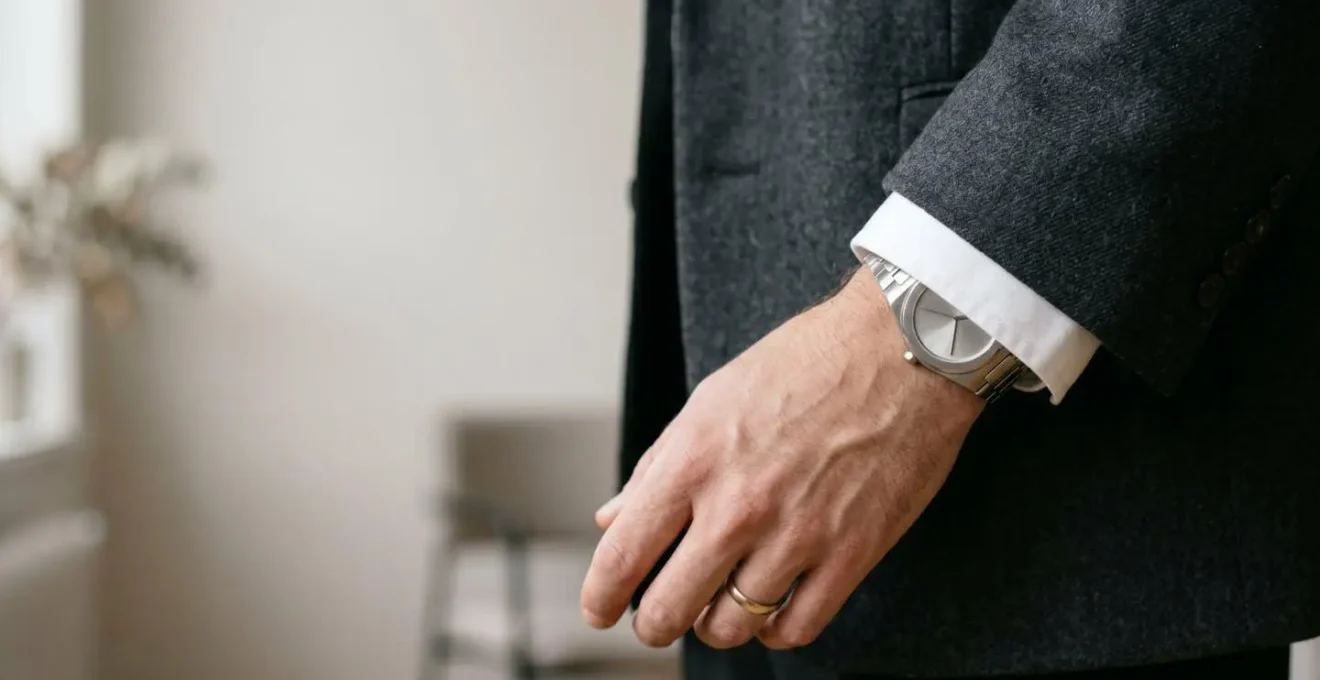
In the context of an oversized blazer, this detail becomes even more important. It serves as another « proportional anchor, » a small area of tailored precision that contrasts with the overall volume of the garment. Letting a crisp white or blue shirt cuff peek out—about a quarter to a half-inch is ideal—creates a visual break and reinforces that you are in control of the silhouette. It’s a subtle nod to classic tailoring that grounds the more modern, voluminous shape of the blazer.
If you find a blazer you love but the sleeves are too long, do not hesitate to invest in a simple tailoring fix. Having the sleeves shortened is a relatively inexpensive alteration that pays huge dividends in polish and professionalism. It is the final touch that ensures your oversized blazer reads as a confident style choice, not a fitting room mistake.
When is the oversized trend predicted to fade for corporate wear?
Investing in a trend always comes with a nagging question: how long will it last? When it comes to corporate wear, this concern is amplified. You want to look current, but you also need your wardrobe investments to have longevity. The good news is that the oversized silhouette is not a fleeting fad but rather a fundamental shift in our understanding of power dressing, and it shows signs of maturing rather than disappearing.
The most extreme, runway-inspired versions of the trend may soften, but the core idea of a more relaxed, comfortable, and yet powerful silhouette is here to stay. It’s an evolution away from the restrictive, body-hugging styles of the past and towards a more modern sense of ease and confidence. The trend is less about a specific size and more about a feeling of empowered comfort. Data supports this maturation; while the explosive growth may be leveling off, the silhouette is now a staple.
For instance, while the market was once flooded with new options, recent retail analytics indicate a 17% drop in new oversized blazer stock-keeping units (SKUs). This doesn’t signal the trend’s death, but rather its stabilization. Retailers are no longer just chasing the hype; they are curating more timeless, well-designed oversized pieces. The focus is shifting from « bigger is better » to « better-proportioned is better. »
Therefore, you can invest with confidence, provided you choose wisely. A classic, well-tailored oversized blazer in a neutral color like black, navy, charcoal, or camel will transcend seasonal trends. It becomes a versatile « third piece » that can be styled in countless ways for years to come. The trend is not fading; it is being refined. By focusing on quality, fit, and timelessness, your oversized blazer won’t be a trendy discard but a cornerstone of your modern professional wardrobe.
Why a structured bag corrects the « slouchy » look of oversized knitwear?
The principle of balancing volume isn’t limited to blazers. It’s just as crucial when styling oversized knitwear, which can easily look slouchy or unrefined in a professional context. The key to elevating a cozy, oversized sweater is to introduce a point of sharp, geometric contrast. This is where a structured handbag becomes your most powerful ally.
An oversized sweater or cardigan is defined by its soft lines, relaxed drape, and lack of internal structure. If you pair it with an equally soft, slouchy tote bag, the entire look can dissolve into an undefined mass. There are no clean lines or points of visual focus, which can read as disorganized or overly casual for an office environment. You need an accessory that can inject discipline into the silhouette.
A structured bag—think a classic top-handle satchel, a boxy crossbody, or a minimalist tote with rigid sides—does exactly that. Its clean lines, sharp corners, and firm shape create a direct and powerful contrast to the softness of the knitwear. This juxtaposition is visually interesting and creates a sense of intentionality. The bag acts as a « proportional anchor, » a solid, defined shape that gives the eye a place to rest and helps to define your overall silhouette.
This accessory choice communicates that you understand form and balance. It shows that while you are embracing the comfort of an oversized knit, you have not abandoned polish and structure. The bag’s sharp geometry effectively « corrects » the potential slouchiness of the sweater, pulling the entire look together and making it feel considered and professional. It’s a simple switch that can transform an outfit from weekend-casual to office-appropriate.
How to layer a turtleneck under a dress without bunching?
Layering a turtleneck under a dress or a blazer is a chic way to add warmth and dimension, but the execution can be tricky. The primary enemy is bunching—unsightly lumps and bumps of fabric that ruin the sleek silhouette you’re aiming for. The secret to flawless layering lies in a few key principles: fabric choice, fit, and creating a smooth base.
First, the turtleneck itself must be of the right material and fit. Opt for a thin, fine-gauge knit made from materials like merino wool, cashmere, or a high-quality modal blend. These fabrics provide warmth without adding bulk. Avoid chunky cable knits or thick cottons, which are guaranteed to create lumps. The fit should be close to the body but not uncomfortably tight. A slim-fit turtleneck acts like a second skin, creating a smooth canvas for the layers on top.
Second, ensure your base layers are working with you, not against you. A common mistake is to overlook the fit of the garments underneath. If your base layers don’t have a flattering cut or are made of fabric that clings or bunches, this will be magnified under the weight of an oversized blazer. The goal is a sleek foundation that allows the outer layers to drape correctly.
Finally, the way you wear the outer layer matters. For a modern, relaxed silhouette under an oversized blazer, it’s often best to keep the jacket unbuttoned. This allows for more movement and prevents the fabric from pulling or constricting the layers beneath. By focusing on these details, you ensure your layered look appears effortless and polished, not bulky and constricted.
Your Action Plan: Flawless Layering Under an Oversized Blazer
- Choose the Right Base: Start with a slim-fit turtleneck in a fine-gauge knit like merino wool to minimize bulk.
- Ensure a Flattering Cut: Make sure your base layers are cut well to prevent any initial bunching before you even add the blazer.
- Embrace a Modern Silhouette: Pair your suit with a high-quality cotton T-shirt or a merino wool polo instead of a traditional shirt for a relaxed yet professional look.
- Keep it Open: Wear your oversized blazer unbuttoned to allow the layers underneath to drape naturally and avoid pulling.
- Select Smart Footwear: Ground the look with sleek boots or smart sneakers to maintain polish while embracing comfort.
Key Takeaways
- The shoulder seam is non-negotiable: It must hit your natural shoulder point to signal intentional, expensive style.
- Balance volume with a « proportional anchor »: Use sleek footwear, a structured bag, or a visible sliver of cuff to ground the look.
- Cost-per-wear trumps initial price: A well-made, tailored blazer is a smarter long-term investment for a capsule wardrobe than multiple trendy, ill-fitting pieces.
Is a $300 Structured Blazer Worth the Investment for a Capsule Wardrobe?
In a world of fast fashion, a $300 price tag for a single blazer can seem daunting. However, when building a functional and professional capsule wardrobe, the most important metric isn’t the initial price—it’s the cost-per-wear. A high-quality, perfectly fitting blazer is one of the most versatile and hard-working items you can own, and its value extends far beyond its price tag.
Consider the logic: a cheap, trendy blazer might seem like a bargain at $60, but if the fabric pills or the seams pull after a handful of wears, its value plummets. A well-constructed blazer, on the other hand, is built for longevity. As Her Capsule Edit wisely puts it, « A tailored blazer and good shoes cost more at first, but they last and actually lower repeat spending. » It’s an investment in quality that pays dividends over time. A simple calculation confirms this: according to cost-per-wear analysis, a $260 item worn 130 times over three years costs just $2 per wear, making it more economical than a cheap piece that quickly fails.
The $300 figure is often a sweet spot where you can find excellent construction, quality fabric, and a great fit off the rack, or afford a mid-range piece plus the crucial cost of tailoring. The choice between these two paths is a strategic one, as the following comparison illustrates.
This table breaks down the true cost of acquiring a perfect-fit blazer, comparing the value of a piece that requires tailoring against one that fits perfectly from the start. As you can see, investing in tailoring a slightly cheaper but well-made piece can often represent the best long-term value.
| Factor | $220 Blazer + $80 Tailoring | $300 Perfect-Fit Off-Rack Blazer |
|---|---|---|
| Initial Investment | $300 total | $300 |
| Fit Quality | Custom-tailored to your body | Standardized fit |
| Longevity | 4-5 years with proper care | 3-4 years (if fit remains flattering) |
| Cost Per Wear (worn 2x/week) | ~$0.75 over 4 years | ~$1.00 over 3 years |
| Resale Value | Higher due to quality tailoring | Moderate |
| Hidden Costs | None (already tailored) | Potential future alterations ($50-100) |
| Verdict | Better long-term investment | Convenient but potentially costlier |
Ultimately, a $300 investment in a structured blazer isn’t an expense; it’s the foundation of a powerful professional image. It’s the piece that pulls everything else together, communicating confidence, competence, and a keen understanding of style. In a capsule wardrobe, where every item must earn its place, a high-quality blazer is not just worth it—it’s essential.
Now that you are armed with the principles of fit, proportion, and smart investment, you can approach the oversized trend not with hesitation, but with a clear strategy for making it work for you and your career.