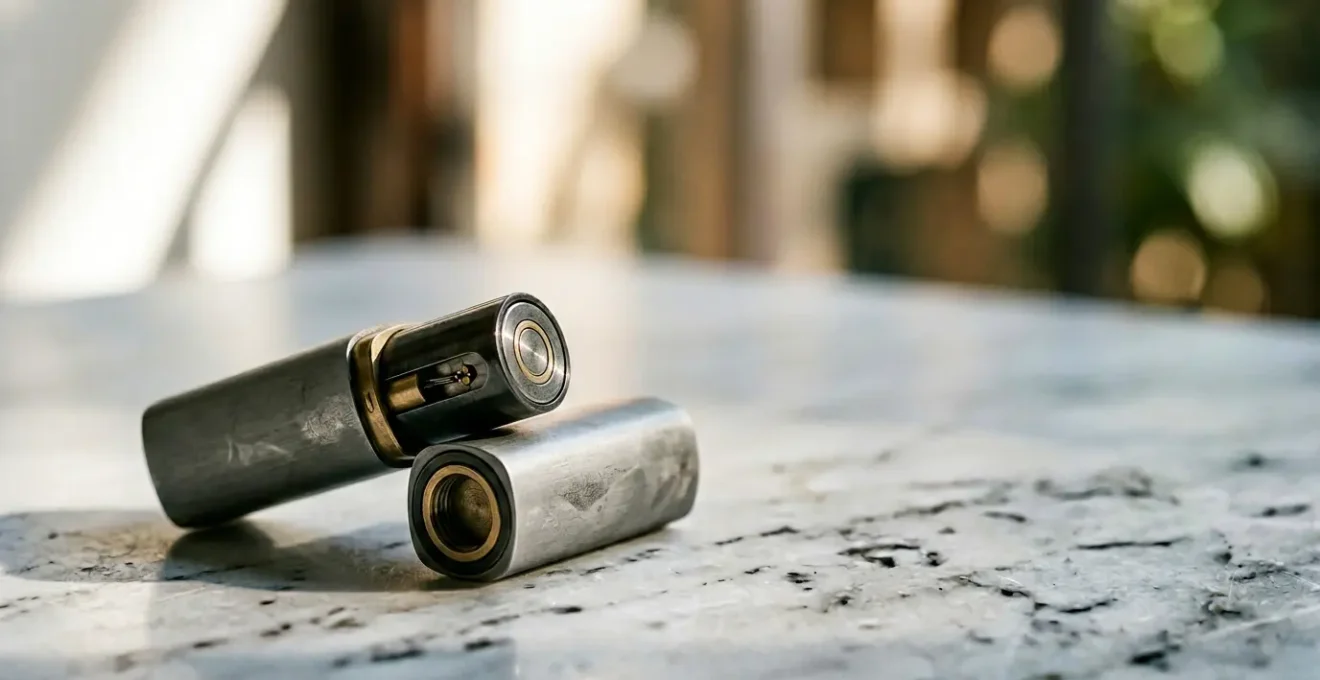
For the discerning luxury consumer, the true value of a refillable system lies not in simple eco-friendliness, but in its ability to transform a disposable product into a lasting personal artifact.
- The initial investment in a quality metal case pays dividends in durability and aesthetic, developing a unique patina over time that plastic cannot replicate.
- A proper cleaning protocol elevates maintenance from a chore to a professional ritual, ensuring hygiene without compromising the formula.
- The financial break-even point is reached after just 3-4 refills, with the case itself often retaining significant resale value on the secondary market.
Recommendation: Opt for refillable systems from brands that prioritize material quality and the sensory experience, viewing the case as a long-term investment in your personal collection, not just a container.
The conversation around sustainable beauty often orbits a simple, well-meaning premise: reduce, reuse, recycle. For the luxury consumer, however, this narrative can feel incomplete, even reductive. The allure of a high-end cosmetic is rarely just about the product inside; it is an ecosystem of experience. It’s the satisfying weight of the case, the precise click of the closure, the silent declaration of quality it makes when drawn from a handbag. The question then becomes, does the shift to refillable systems—laudable as it is for the planet—force a compromise on this carefully curated experience? Is the consumer being asked to trade a piece of everyday luxury for a clear conscience?
Many discussions stop at the surface level, championing the reduction of plastic waste as the sole victory. But this overlooks the core anxieties of the target audience: will it feel cheap? Will it be a hassle? Will it still feel *special*? The truth is, the most forward-thinking luxury houses understand this tension implicitly. They are not merely selling a refill; they are engineering a new kind of ownership. This article moves beyond the green-tinted platitudes to offer a critic’s analysis. We will deconstruct the material choices, dissect the long-term value proposition, and spotlight the brands that are successfully transforming the act of refilling from a mundane necessity into a sensory ritual that enhances, rather than diminishes, the feeling of true luxury.
This guide provides a comprehensive analysis for the luxury shopper, examining everything from material endurance and financial viability to the very definition of sustainability in beauty today. Explore the key considerations that determine whether a refillable system is a worthy investment or merely a well-intentioned gimmick.
Summary: A Critic’s Guide to Refillable Luxury Beauty
- Metal vs. Plastic: Which refill case survives 5 years in a handbag?
- How to clean your refillable jar before adding a new pod to avoid bacteria?
- Refill vs. New Unit: How many refills until you break even?
- The heavy glass mistake that makes luxury eco-packaging a travel nightmare
- 3 brands that make the refill experience feel as special as the first buy
- When will mushroom packaging replace styrofoam in luxury beauty?
- Why buying the biggest size isn’t eco-friendly if you don’t finish it?
- What Does « Sustainable Beauty » Actually Mean Beyond Green Packaging?
Metal vs. Plastic: Which refill case survives 5 years in a handbag?
The choice of material for a refillable case is the first and most critical indicator of a brand’s commitment to true luxury and longevity. While high-grade plastics like ABS are often touted for their durability, the reality of daily use tells a different story. As one research team notes, while a material like ABS is functional, its value is primarily in resilience during transport, not in its long-term aesthetic appeal. Over five years, a plastic case inevitably accumulates micro-scratches, scuffs, and a general dullness that speaks of wear, not character. It is a material designed for disposability, and its soul reflects that.
In contrast, a well-crafted metal case, often made from alloys like zamac, is conceived as a permanent object. It is an investment in a piece of personal hardware. This is where the concept of the personal artifact emerges. A metal case doesn’t just wear; it evolves. The minute scratches, the softening of sharp edges, and the subtle shifts in surface luster create a unique patina. It tells the story of its owner. This object is not destined for a landfill; it is designed to be a constant companion, its increasing character a mark of its value, much like a fine leather wallet or a mechanical watch.
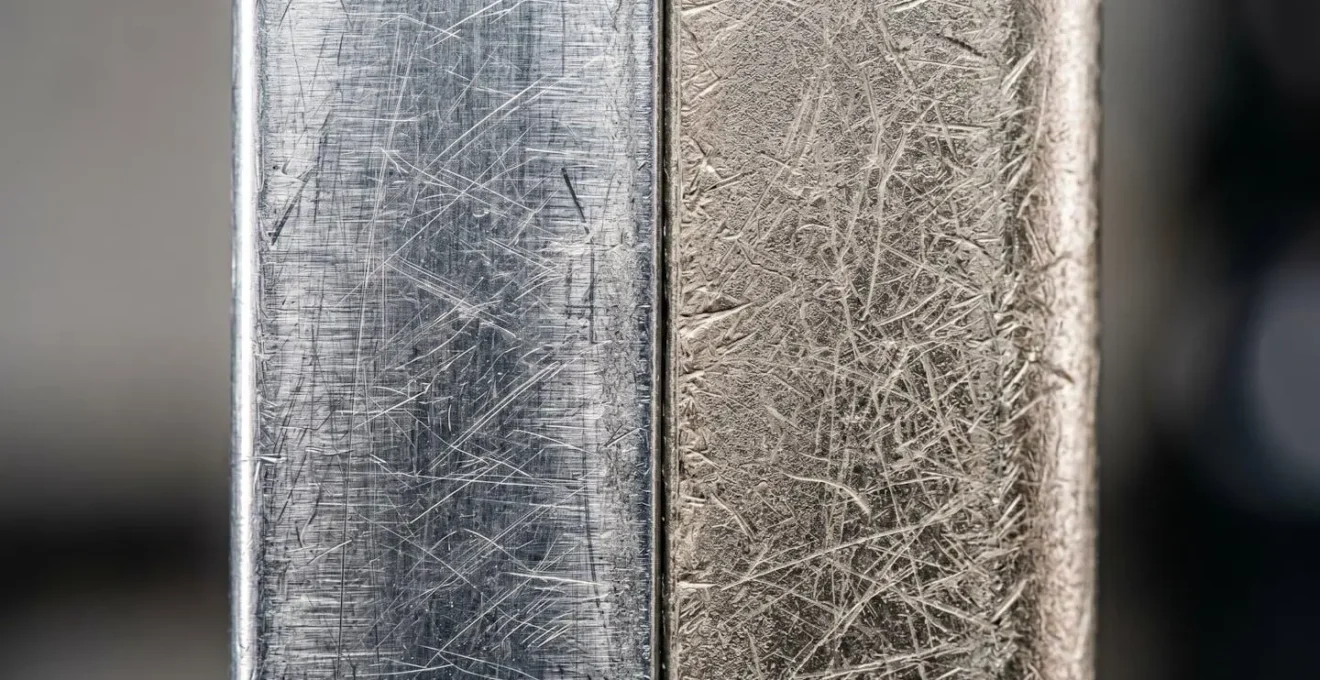
As the visual evidence suggests, the degradation of plastic is one of entropy, while the aging of metal is one of character development. For the luxury consumer, the choice is clear. The slight premium for a metal case is not a cost; it is the purchase price of permanence. It is the decision to own an object that grows with you, transforming a simple cosmetic into a piece of your personal history. The plastic alternative, no matter how durable, remains a temporary vessel waiting to be discarded.
How to clean your refillable jar before adding a new pod to avoid bacteria?
A primary concern for any discerning user of refillable cosmetics is hygiene. The prospect of residue from an old formula cross-contaminating a fresh pod is a legitimate worry, as it can alter the product’s performance and, more critically, introduce bacteria. The standard advice to « wipe it clean » is woefully inadequate for a luxury product. Maintaining the integrity of a high-performance formula requires a more precise, professional approach—a maintenance ritual that ensures pristine conditions for every refill.
For lipstick cases, jars, or compacts, water and soap are enemies. They can leave behind mineral residue and trapped moisture, creating a breeding ground for bacteria and potentially degrading the sensitive ingredients in the new refill. The professional standard is to use 70% isopropyl alcohol. Its high alcohol content effectively sanitizes surfaces by killing bacteria and viruses, while its rapid evaporation rate ensures no moisture is left behind. This is the same principle used in cosmetic labs and by makeup artists to maintain kit hygiene.
Executing this properly transforms a simple chore into a satisfying ritual that respects the product and the vessel. It reinforces the idea that you are not just using a product, but curating a collection. The following protocol, adapted from cosmetic chemist best practices, ensures a perfect, sanitary transfer every time.
Your Sanitization Protocol for Refillable Cases
- Disassemble and Inspect: Remove the empty refill pod from the case completely. Carefully inspect all interior crevices, magnetic attachment points, and hinge mechanisms for any visible residue or buildup.
- Sanitize with Alcohol: Dip a lint-free cosmetic swab or pad in 70% isopropyl alcohol. Methodically wipe down all interior surfaces of the case, ensuring you reach every corner.
- Detail the Nooks: Use a clean, alcohol-dipped cotton swab to meticulously clean hard-to-reach areas where old product and oils can accumulate, such as the small gaps around the refill housing.
- Air Dry Completely: Allow the case to air dry for at least 5-10 minutes. This is a crucial step. Inserting a new refill into a case that is still damp with alcohol can compromise the formula’s stability.
- Avoid Water and Soap: Never use soap and water for cleaning. This can leave behind a film and introduce moisture, which may lead to formula separation or bacterial growth in the new pod.
Refill vs. New Unit: How many refills until you break even?
The financial argument for refillable lipstick is often presented as a simple long-term saving, but for the luxury market, the calculation is more nuanced. It’s not just about cost per use; it’s about systemic value. The initial purchase of a refillable system involves a higher upfront cost for the case, which can be seen as an investment in a piece of permanent hardware. Research shows that a significant portion of consumers are prepared for this, with studies indicating a widespread willingness to pay a premium for sustainable and refillable options.
The true financial picture emerges when analyzing the total cost of ownership over time, factoring in not just the savings per refill but also the inherent value of the case itself. A high-quality metal case from a desirable brand isn’t a sunk cost; it often retains value and can even be sold on the secondary market, something unthinkable for a disposable plastic lipstick. The break-even point, therefore, is only part of the story.
The following analysis breaks down the typical costs associated with a luxury lipstick, demonstrating that the financial benefits are coupled with a significant reduction in environmental impact from the very first refill. This data comes from a detailed comparison of packaging systems.
| Factor | Traditional Single-Use | Refillable System | Break-Even Point |
|---|---|---|---|
| Initial Case Cost | $0 (included) | $25-$45 | N/A |
| Refill/Unit Cost | $28-$35 (full lipstick) | $18-$24 (refill pod) | After 3-4 refills |
| Environmental Savings | 0% | 60% less packaging CO₂ | Immediate |
| Resale Value (luxury) | $0 | $15-$80 (secondary market) | Adds investment value |
| 5-Year Total Cost (10 units) | $280-$350 | $205-$285 | Savings: $75-$65 |
As the table illustrates, the financial break-even point is typically reached after the third or fourth refill. However, the « value break-even » is immediate. The reduction in carbon footprint begins with the first refill, and the case itself becomes an asset rather than a liability. Over a five-year period, the savings are tangible, but the more profound benefit is the shift in consumption from a disposable model to one of curation and long-term ownership.
The heavy glass mistake that makes luxury eco-packaging a travel nightmare
In the pursuit of a premium, sustainable feel, many brands have turned to glass as an alternative to plastic. Heavy, thick-walled glass jars for creams and foundations certainly convey a sense of substance and luxury on a bathroom vanity. They feel substantial in the hand and are infinitely recyclable, ticking two major boxes. However, this design choice often overlooks a crucial aspect of the modern luxury lifestyle: travel. The very weight that signifies quality at home becomes a significant liability in a suitcase or a carry-on.
This « heavy glass mistake » is a classic case of solving one problem while creating another. While the intention is to reduce plastic, the environmental calculation is more complex. As a pivotal MDPI research study highlights, « The weight of the cosmetic packaging has a direct and linear effect on the environmental impact of said packaging. » Heavier items require more fuel to transport, from the factory to the warehouse to the retailer, and ultimately, in the consumer’s luggage. This additional weight contributes to a larger carbon footprint throughout the product’s lifecycle. Successful refill systems, by contrast, focus on reducing overall mass. Internal lifecycle assessments at major brands have shown that a 60% reduction in CO₂ emissions can be achieved by lightweight refill pods compared to new full-size products.
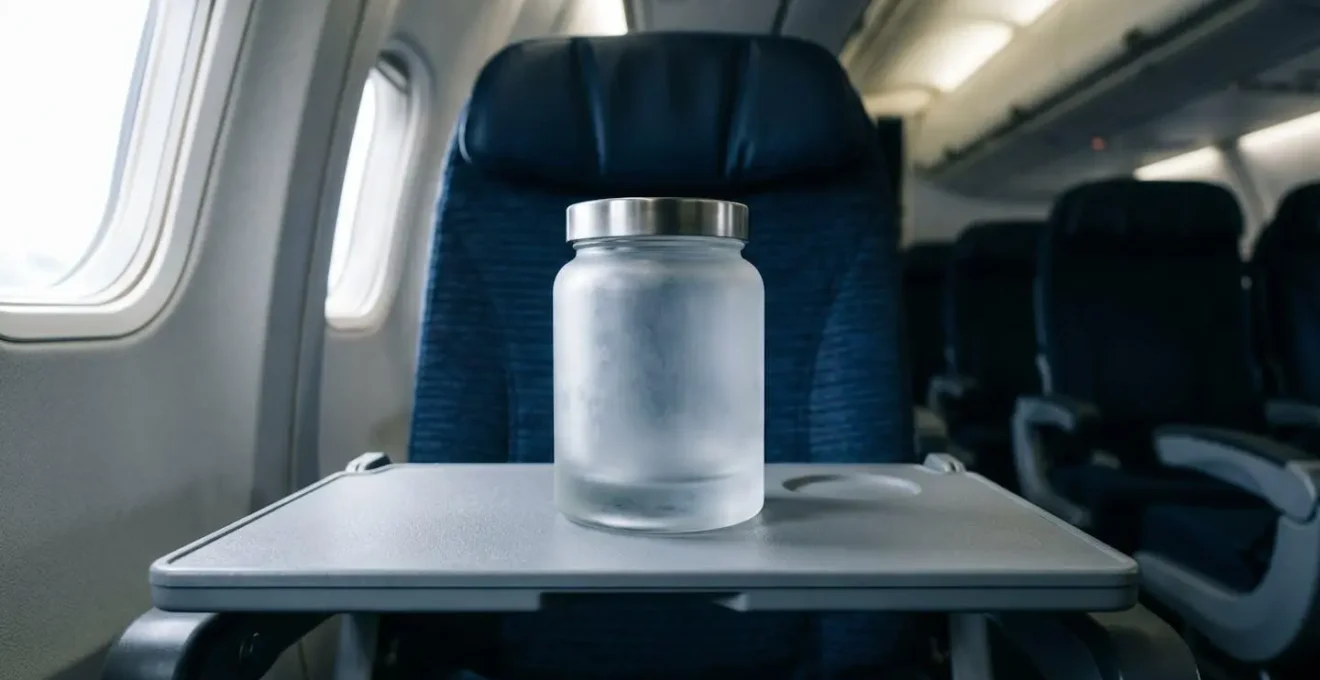
A beautifully crafted, weighty glass jar is a joy to use, but it is fundamentally an at-home object. It is impractical for the gym bag, the weekend getaway, or the international flight. A truly intelligent luxury packaging strategy must account for mobility. The ideal system offers a permanent, beautiful « home » vessel for the vanity and a lightweight, durable, and equally elegant travel-sized component or refill pod. This demonstrates a brand’s deep understanding of its customer’s real-world needs, moving beyond a simplistic « plastic bad, glass good » dichotomy to a more sophisticated, user-centric design philosophy.
3 brands that make the refill experience feel as special as the first buy
The success of a refillable system hinges on one crucial factor: its ability to make the act of replenishment feel like a ritual, not a chore. A handful of visionary brands have mastered this, transforming what could be a mundane task into a moment of renewed luxury. They prove that sustainability and a premium experience are not mutually exclusive. With a market surge where prestige refillables surged by 47% in some regions, the demand for this elevated experience is clear.
One such pioneer is Hermès Beauty. Their lipstick cases, designed by Pierre Hardy, are works of art crafted from lacquered, brushed, and polished metal. The magnetic closure produces a solid, satisfying ‘thunk’ that communicates precision engineering. The refill process is intuitive and tactile, reinforcing the object’s permanence and value. Similarly, Hourglass Cosmetics has championed refillable luxury with its Curator eyeshadow palettes and Confession Ultra Slim Lipsticks. The sleek, gold-tone applicator for the lipstick feels like a bespoke instrument, and swapping out the slender refill is an elegant, seamless action.
However, no brand has centered its identity on the refillable ritual quite like La Bouche Rouge. Their approach serves as a masterclass in sensory design, turning a simple product replacement into a signature brand moment.
Case Study: La Bouche Rouge’s Premium Refill Mechanism
French luxury brand La Bouche Rouge has engineered its refillable lipstick system around a signature metallic ‘click’ that delivers both auditory and tactile satisfaction. The brand’s philosophy is a direct response to the estimated one billion lipsticks discarded annually. Their design transforms a replacement into a ritual. The magnetic insertion system creates a deeply satisfying sound when the refill pod locks into the zamac alloy case. This case is not designed to be replaced; it is intended to last indefinitely, developing a unique patina over time and becoming a true personal artifact. The refills themselves arrive in minimal, yet elegant, paper packaging, ensuring the unboxing experience retains a premium feel without the waste.
These brands demonstrate that the key is focusing on the haptic and auditory feedback of the refill mechanism. The weight of the case, the sound of the click, and the smooth precision of the fit all contribute to a sense of enduring quality. They are not just selling makeup; they are selling a beautiful, permanent object that you happen to fill with makeup.
When will mushroom packaging replace styrofoam in luxury beauty?
While refillable cases address the primary packaging, the secondary packaging—the box, the insert, the protective foam—remains a significant source of waste. For decades, Styrofoam (expanded polystyrene) has been the default for protecting fragile, high-end goods, but its environmental toll is colossal. The search for a sustainable, yet equally protective, alternative is leading the industry to an unlikely hero: mycelium, the root structure of mushrooms.
Mycelium packaging is not a distant sci-fi concept; it is a commercially viable technology poised for explosive growth. Grown by combining agricultural waste (like hemp or wood chips) with mycelium spores, the material forms a dense, lightweight, and fully compostable structure. It can be molded into any shape, creating custom-fit inserts that offer the same protective qualities as Styrofoam without the centuries-long environmental hangover. As the technology scales, the global market is expected to reach over $208.8 million by 2034.
For luxury beauty, the appeal is twofold. First, it offers a genuinely circular solution to the problem of transit packaging. A mycelium insert can be broken up and tossed into a garden, where it will biodegrade in weeks, enriching the soil. Second, its organic, velvety texture and natural, off-white appearance offer a unique aesthetic that aligns perfectly with the ethos of sustainable luxury. As Shaun Seaman, a pioneer in the field, states, « We can create packaging that aesthetically looks good, and fits with the organic, sustainable and eco-friendly branding of most of these businesses. » Imagine unboxing a fine glass bottle of serum nestled not in synthetic foam, but in a soft, earth-born cradle. This is the future of luxury unboxing.
The transition is already beginning, with niche brands and even some larger players like L’Oréal exploring its use. The primary barrier is currently scale and cost, but as production ramps up and more brands commit, we can expect mycelium to move from a novel innovation to an industry standard within the next five to ten years. It represents the next frontier in lifecycle accountability, where a brand takes responsibility for every single component of its product’s journey, right down to the compostable box it arrives in.
Why buying the biggest size isn’t eco-friendly if you don’t finish it?
The « value size » proposition has long been a staple of consumer logic: buying in bulk saves money and, supposedly, packaging. In the context of sustainability, many consumers gravitate towards the largest available jar or bottle, assuming that one large container is better than several small ones. While this holds true for high-turnover household staples, it’s a flawed and often counterproductive strategy for luxury beauty products, where a little goes a long way and novelty is a key driver of new purchases.
The unseen waste in the beauty industry isn’t just the packaging; it’s the product itself. Industry data shows that on average, a small but significant percentage of beauty product stock is disposed of due to spoilage or expiration before it’s ever sold. This problem extends into the consumer’s home. A large, expensive jar of face cream or a foundation that isn’t a perfect color match can sit for months, even years, slowly expiring. The psychological barrier to discarding a pricey, half-used product is immense. As one participant in a study on cosmetic disposal habits noted, « Especially expensive cosmetics, I’m reluctant to throw away. » This leads to a bathroom cabinet filled with well-intentioned but ultimately wasted products.
A 100ml « jumbo » jar of cream that gets used halfway before expiring or being abandoned for a newer, more exciting launch is far more wasteful than two fully used 30ml jars. The resources that went into formulating, manufacturing, and transporting that unused 50ml of product—the water, the energy, the rare botanical extracts—are all for naught. The « eco-friendly » choice was, in fact, the more wasteful one.
This is where the intelligence of a refillable system shines once again. It encourages purchasing smaller, more manageable quantities. One buys a permanent, beautiful vessel and replenishes it with smaller, fresh pods as needed. This « right-sizing » approach minimizes the risk of product expiration and waste. It shifts the consumer mindset from « stocking up » to « topping up, » ensuring that the product is always fresh, effective, and, most importantly, fully used. True sustainability considers the entire lifecycle, and that includes ensuring the precious formula inside the package actually serves its purpose.
Key Takeaways
- True luxury in refillable systems comes from superior materials like metal that develop a patina, becoming a ‘personal artifact’.
- The financial break-even point is just one metric; the immediate environmental savings and long-term resale value of the case provide systemic value.
- Sustainability extends beyond packaging to the product itself; buying smaller, refillable quantities prevents waste from expired « value size » products.
What Does « Sustainable Beauty » Actually Mean Beyond Green Packaging?
In an industry that produces over 120 billion units of packaging annually, the term « sustainable beauty » has often been co-opted as a marketing buzzword, narrowly focused on recyclable materials or minimalist design. While these are positive steps, they represent only a fraction of a truly sustainable model. For the discerning consumer, it’s crucial to look beyond the « green » packaging and evaluate a brand’s commitment on a much deeper, more systemic level.
True sustainability is about lifecycle accountability. This means a brand takes responsibility for its product and packaging from creation to disposal and beyond. This is increasingly being codified into law. For instance, the EU Packaging and Packaging Waste Regulation mandates that all packaging must be reusable or recyclable by 2030, shifting the onus from the consumer to the producer. This leads to the concept of Extended Producer Responsibility (EPR), where companies are financially and logistically responsible for the end-of-life of their products.
A brand that merely sells a refillable product but provides no infrastructure or incentive to participate in a circular system is only doing half the job. A truly sustainable brand invests in the system itself. This can take many forms: in-store refill stations, mail-back programs for empty pods, or partnerships with specialized recycling companies like TerraCycle. It’s about closing the loop, not just creating a slightly better open one. The L’Occitane model provides a powerful example of what corporate-led systemic change looks like in practice.
Case Study: L’Occitane’s Extended Producer Responsibility in Action
French beauty brand L’Occitane exemplifies Extended Producer Responsibility (EPR) by not just offering refills, but by actively building the global infrastructure to support them. By establishing over 1,000 in-store refill stations by 2024, the company shifts the end-of-life responsibility from the consumer back to itself. This initiative makes refilling a convenient and integrated part of the shopping experience, rather than placing the burden of recycling solely on individual effort. L’Occitane’s approach demonstrates how corporate accountability can drive systemic change, moving beyond token gestures to create a genuine circular system where the brand is responsible for its packaging waste throughout the entire product lifecycle.
Therefore, choosing a refillable system is more than an eco-conscious act; it is an alignment with brands that demonstrate a deeper, more authentic commitment to a circular economy. It is an investment in a future where luxury and responsibility are one and the same.