Accessories & Details
The difference between a forgettable outfit and a memorable one rarely lies in the main garments. Instead, it lives in the accessories and details—the structured tote that anchors your silhouette, the silver ring stack that catches light during a presentation, or the cashmere scarf that adds dimension to a neutral palette. These elements work as visual punctuation marks, transforming basic pieces into intentional style statements.
Whether you’re navigating corporate dress codes, transitioning from office to evening events, or simply seeking to maximize your wardrobe’s versatility, understanding how accessories function together opens new possibilities. A single jewelry change can shift your look from professional to party-ready. The right bag preserves both your posture and your polish. Even the undertones of your metals affect how your complexion photographs on video calls.
This resource covers the essential categories of accessories and styling details—from professional bags and statement jewelry to luxury scarves and color coordination principles. Each section addresses practical questions about materials, care, and styling techniques that genuinely impact how you look and feel.
Professional Bags: Function Meets Presentation
Your bag choice communicates as much as your outfit, but it also affects your physical comfort throughout the day. The debate between totes and backpacks ultimately depends on your commute, wardrobe style, and any existing shoulder or back tension.
Tote Versus Backpack: Making the Right Choice
A structured tote offers polished aesthetics and easy access to contents, making it ideal for client meetings and office environments. However, carrying weight on one shoulder for extended periods can create tension headaches and postural imbalances. Backpacks distribute weight evenly across both shoulders, making them superior for longer commutes or heavier loads—though they pair less elegantly with tailored blazers or flowing dresses.
The compromise many professionals reach involves owning both styles and selecting based on the day’s demands. When your calendar includes external meetings, the tote signals intentionality. For internal work days with laptop transport, the backpack protects your spine.
Leather Quality and Longevity
Not all leather performs equally under daily stress. Full-grain leather develops character over time and withstands years of use, while bonded leather—made from leather scraps and synthetic materials—often shows wear within months, particularly at handle attachment points. When evaluating a bag’s value, examine the straps where they connect to the body: reinforced stitching and solid hardware indicate better construction.
Beyond black, three versatile colors work with most office wardrobes:
- Cognac brown—pairs with navy, gray, and black
- Burgundy—adds warmth without overwhelming neutral palettes
- Olive or forest green—offers unexpected sophistication with earth tones
Statement Jewelry Without Visual Noise
The power of statement jewelry lies in strategic restraint. Wearing bold earrings and a dramatic necklace simultaneously creates visual competition, making both pieces lose impact. Professional settings require even more careful calibration—your accessories should enhance your presence, not distract from your message.
The One-Statement Rule
Choose either earrings or a necklace as your focal point for each outfit. Statement earrings work particularly well for video calls and presentations where your face receives primary attention. Necklaces shine during in-person interactions where your full silhouette remains visible.
For Zoom meetings specifically, necklace length matters significantly:
- 16-18 inches (choker to princess length)—sits within most camera frames
- 20-24 inches (matinée length)—may appear cut off or create visual tension at frame edge
- Longer chains often disappear entirely below typical webcam angles
Mixing Metals Intentionally
The old rule prohibiting silver and gold combinations has evolved. Modern styling embraces mixed metals when executed with intention rather than accident. The key involves creating deliberate repetition—if you’re wearing a gold watch, add a gold element elsewhere (a ring, a bag clasp) so the silver pieces appear as a conscious contrast rather than an oversight.
Heavy earrings present a practical concern beyond aesthetics: consistently wearing substantial weight can permanently stretch earlobes over time. Reserve your heaviest statement pieces for occasional wear rather than daily rotation.
Cashmere and Luxury Scarves: Worth the Investment?
The price gap between a premium cashmere scarf and a wool blend alternative raises legitimate questions about value. Understanding fiber properties helps clarify whether the investment matches your actual needs.
Why Cashmere Outperforms on Warmth
Cashmere fibers trap air more efficiently than merino wool due to their finer diameter—typically 15-19 microns compared to merino’s 20-24 microns. This creates superior insulation relative to weight, meaning a lightweight cashmere scarf often provides warmth equivalent to a heavier wool alternative. For those who dislike bulky layers or find heavier fabrics uncomfortable, cashmere delivers functional advantages beyond prestige.
However, durability differs significantly. Wool blends often withstand rougher treatment, making them practical choices for outdoor activities or daily commutes where the scarf contacts coat zippers, bag straps, and other abrasive surfaces.
Scarf Care and Storage
The most common mistake damaging luxury scarves involves summer storage. Moths and carpet beetles target natural fibers, leaving holes that appear mysteriously when you retrieve pieces in autumn. Prevention requires:
- Cleaning before storage—insects target body oils and food residue
- Breathable storage containers—sealed plastic traps moisture and promotes mildew
- Cedar blocks or lavender sachets as natural deterrents
Pilling affects all natural fiber knits eventually. A fabric comb removes pills more safely than electric shavers, which can thin the fabric if used aggressively. Gentle, single-direction strokes preserve the scarf’s integrity while restoring its smooth appearance.
Silver Jewelry: Sterling Versus Plated
Daily wear demands different material considerations than occasional accessories. Silver jewelry illustrates this principle clearly, with sterling silver and silver-plated pieces serving distinct purposes.
Understanding the Difference
Sterling silver (marked 925) contains 92.5% pure silver alloyed with copper or other metals for durability. This composition tarnishes over time—especially in humid environments—but cleaning restores its original luster indefinitely. Silver-plated jewelry features a thin silver coating over base metal, typically brass or copper. While initially indistinguishable from sterling, the plating eventually wears through, revealing the underlying metal and sometimes causing skin discoloration.
For rings, bracelets, and other pieces experiencing constant friction, sterling silver represents the practical choice despite higher upfront cost. Earrings and necklaces receiving less abrasion may perform adequately in plated versions.
Protecting Your Silver
Chlorine damages silver finishes almost instantly—remove all silver jewelry before swimming in treated pools. Even brief exposure can create permanent surface damage requiring professional refinishing.
Home cleaning works effectively for regular tarnish. A paste of baking soda and water, applied gently with a soft cloth, removes oxidation without scratching. For intricate pieces with detailed textures, soaking in aluminum foil-lined water with baking soda creates a chemical reaction that lifts tarnish from crevices.
When purchasing silver, verify authenticity through hallmarks:
- 925—indicates sterling silver content
- SS or STER—common abbreviations for sterling
- Manufacturer marks—legitimate pieces typically include maker identification
Color Details That Elevate Everything
Beyond accessories themselves, understanding color relationships transforms how those accessories perform within your outfits. Tonal dressing, color blocking, and strategic use of neutrals each serve different purposes.
Tonal Dressing for Visual Cohesion
Wearing variations of a single hue creates elongating, sophisticated effects—but lighting significantly impacts success. Blacks from different fabric compositions often appear mismatched under fluorescent office lighting, reading as accidental rather than intentional. Testing pieces together under your actual environment lighting prevents this common frustration.
Gradient arrangements, moving from darker to lighter or saturated to muted, visually smooth transitions across the body. This technique also simplifies closet organization, making morning selections faster when pieces hang in tonal progressions.
Using Neutral Accessories as Anchors
Vibrant outfits sometimes overwhelm rather than energize. Three neutral accessories—typically in black, cream, or cognac—can ground bold color choices instantly. A structured bag, simple belt, and classic watch in coordinating neutrals provide visual rest points, allowing your colorful garments to shine without creating chaotic impressions.
Patterned scarves offer another solution for bridging pieces that don’t quite harmonize. When two garment colors clash slightly, a scarf incorporating both tones plus a neutral creates intentional connection, making the overall combination appear planned.
Accessories and details reward attention and care proportionally to the investment you make in understanding them. Each category—bags, jewelry, scarves, color principles—offers opportunities to refine your presentation and extend your wardrobe’s versatility without requiring entirely new garments. The specific articles within this section explore individual topics in greater depth, addressing particular challenges and techniques for maximizing the impact of what might seem like small choices.
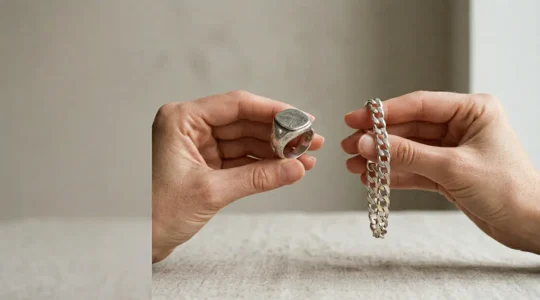
Sterling Silver vs. Silver Plated: Which is Better for Daily Wear?
The choice between sterling silver and silver-plated jewelry is not about the initial price; it’s a technical decision between investing in lasting structural integrity and purchasing a temporary aesthetic. Sterling silver is a durable, repairable precious metal alloy ideal for…
Lire la suite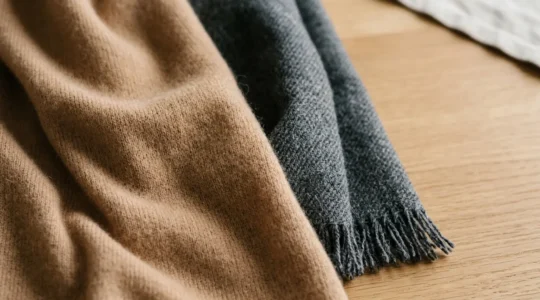
Is a $200 Cashmere Scarf Really Warmer Than a $50 Wool Blend?
Yes, a high-quality cashmere scarf offers significantly better thermal performance than a wool blend, but its value is only realized through proper selection and care. Cashmere’s superior warmth comes from its ultra-fine fibers (14-16 microns) which create more air pockets…
Lire la suite
How to Wear Statement Earrings at Work Without Distracting From Your Pitch?
Contrary to popular belief, statement jewelry in a corporate setting isn’t about fashion—it’s a strategic tool for commanding attention and building authority. Your accessories function as a non-verbal communication system, framing your face on video calls and reinforcing your professional…
Lire la suite
Tote or Backpack? How to Choose a Work Bag That Saves Your Posture and Elevates Your Style
The long-held belief that totes are for style and backpacks are for comfort is outdated; the real key to both is a bag’s underlying structure. A structured bag provides a « visual anchor » that elevates soft or casual outfits, preventing a…
Lire la suite
What Does « Smart Casual » Actually Mean for a Dinner Party in 2024?
The « smart casual » dress code isn’t a rulebook to memorize; it’s a formula for social grace: Polish + Personality – Formality. Your outfit is a non-verbal gesture of respect for the host’s effort, contributing to the event’s atmosphere. Strategic choices…
Lire la suite
How to Master Tonal Dressing for a Seamless Day-to-Night Look?
In summary: Build your outfit with « transitional potential » by focusing on light-responsive textures and tonal gradients, not just solid colors. Organize your closet by color gradient to create a grab-and-go system that simplifies morning choices and guarantees a cohesive look….
Lire la suite
How to Style Chunky Knits Without Looking Bulky in Winter?
The secret to a sleek silhouette in chunky knits isn’t about hiding volume, but mastering the physics of fabric and the art of structural contrast. Warmth is determined by a fiber’s ability to trap air (its thermal efficiency), not its…
Lire la suite
Is Wearing a Bright Single Hue Professional Enough for Corporate Settings?
Wearing a single bright hue isn’t a fashion risk; it’s a calculated power move to build your professional brand. The psychological impact of color is scientifically documented, allowing you to use hues like red to project dominance in high-stakes situations….
Lire la suite