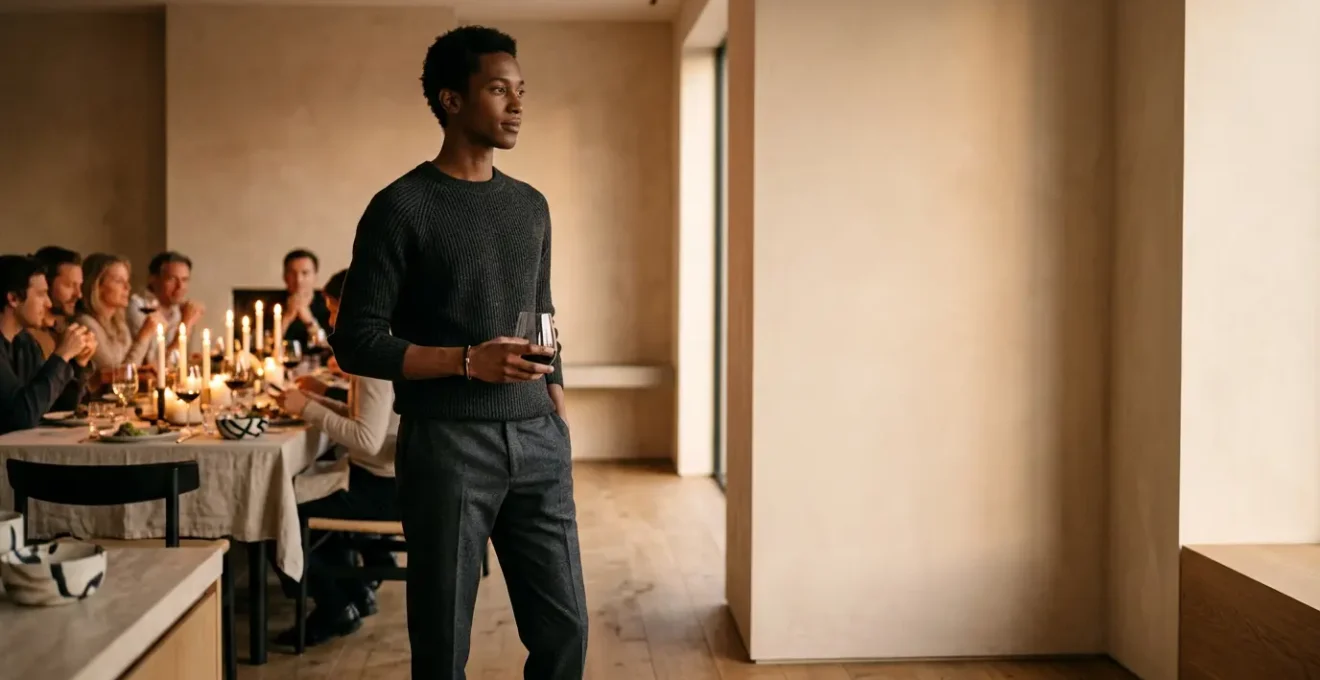
The « smart casual » dress code isn’t a rulebook to memorize; it’s a formula for social grace: Polish + Personality – Formality.
- Your outfit is a non-verbal gesture of respect for the host’s effort, contributing to the event’s atmosphere.
- Strategic choices in fabric, accessories, and even heel type ensure you remain comfortable, confident, and appropriate all evening.
Recommendation: Approach your next dinner party invitation not with anxiety, but with a clear strategy to assemble an outfit that is both perfectly appropriate and authentically you.
There are few phrases in the English language that incite a quiet, simmering panic quite like « the dress code is smart casual. » You see it on the invitation for an upcoming dinner party, and the questions immediately begin to cascade. Are jeans okay? If so, which ones? Is a dress too much? What about a blazer? This ambiguity can leave even the most socially adept guest feeling terrified of miscalculating, doomed to be the one person who is conspicuously overdressed or, far worse, painfully underdressed.
The common advice often circles around vague suggestions like « wear a nice top with jeans » or the unhelpful tautology, « it’s a step up from casual but not as formal as business wear. » While true, these platitudes offer no real strategy. They don’t equip you to navigate the nuances of a modern social gathering, from the host’s home style to the lighting in the dining room. The anxiety stems from a lack of a clear framework for making decisions.
But what if the key wasn’t a list of approved garments, but a simple, elegant formula? The secret to mastering smart casual lies in a strategic balance: Polish + Personality – Formality. It’s about presenting a thoughtful, put-together version of yourself (Polish), allowing a unique element to shine (Personality), while consciously subtracting the rigid elements of corporate or black-tie attire (Formality). This approach shifts your focus from a fear of breaking rules to a confident expression of social respect.
This guide will deconstruct that formula into definitive, practical actions. We will move beyond generic lists and delve into the core principles of guest etiquette, from the psychology of showing respect to the practical science of which fabrics look best in low light. You’ll learn how to transform a look with a simple jewelry change, avoid the common mistakes that can ruin an evening, and finally, walk into any dinner party with the effortless confidence that comes from knowing you got it just right.
To help you navigate these nuances with precision, this article breaks down the essential strategies for mastering the smart casual code. The following sections provide a clear roadmap to building the perfect dinner party ensemble, ensuring you feel comfortable and look impeccable from the moment you arrive.
Summary: Decoding Smart Casual for Modern Dinner Parties
- Why Dressing Up Shows Respect to Your Host’s Effort
- How to Create a « Day-to-Night » Outfit Using Just Jewelry Changes
- Velvet vs. Silk: Which Photographs Better in Low Light?
- The Heel Height Mistake That Forces You to Sit Down All Night
- When to Keep Your Coat On vs. Checking It Immediately
- The Heavy Earring Mistake That Stretches Earlobes Permanently
- High Contrast vs. Low Contrast: Which Suits Low-Key Social Events?
- The Final Polish: Ensuring Your Statement Pieces Enhance, Not Distract
Why Dressing Up Shows Respect to Your Host’s Effort
Before we discuss a single garment, we must address the « why. » Dressing for a dinner party is not an act of vanity; it is the first and most fundamental step in fulfilling the social contract between a guest and a host. Think of the effort your host has invested: planning a menu, shopping, cooking for hours, cleaning their home, and creating an atmosphere. Your attire is your silent, reciprocal gesture. It’s a non-verbal « thank you » that acknowledges their hard work and signals your enthusiasm for the occasion you are about to share.
This initial impression is formed almost instantly. In fact, research shows that it takes a mere seven seconds for someone to form a solid impression of you, and your clothing is a primary component of that judgment. Arriving in an outfit that shows thought and care immediately communicates respect and appreciation, setting a positive tone for the entire evening. It shows you believe the event is important.
Dressing for success isn’t just a matter of style – it’s a strategy. Clothing choices inform how people perceive you, and they influence how you behave, too.
– Fashion and professionalism experts, The Stats Behind Dressing for Success
Conversely, arriving in something that appears thoughtless—wrinkled, overly casual, or stained—can subtly communicate that the event was an afterthought for you. It unintentionally devalues the host’s significant effort. The goal of smart casual, therefore, is to find the sweet spot: an outfit that is comfortable and authentic to you, yet is visibly elevated to honor the occasion. It’s not about being the most dressed-up person in the room; it’s about contributing positively to the beautiful evening your host has so carefully orchestrated.
How to Create a « Day-to-Night » Outfit Using Just Jewelry Changes
For the modern guest, a dinner party often comes at the end of a long workday, leaving little time for a complete outfit change. This is where strategic accessorizing becomes your most powerful tool. A well-chosen base outfit can be completely transformed from professional daytime wear to elegant evening attire with a few key jewelry swaps. The secret lies in understanding the « Three Points of Light »: your ears, your neck, and your wrists.
For a daytime or office look, the rule is subtlety. Activate only one or two of the three points with minimal, understated pieces—think small stud earrings, a delicate chain necklace, or a simple watch. The transition to evening is about deliberately increasing the scale, shine, and movement. Your goal is to catch the soft, ambient light of a dinner party setting. Swap your matte or brushed-metal daytime pieces for high-polish, pavé, or gemstone jewelry that will shimmer in the candlelight.
A practical strategy is to move from quiet pieces to more expressive ones. Replace your simple studs with a pair of larger, more sculptural earrings. Add a complementary bracelet or a refined cocktail ring to your wrist. If your neckline is open, a statement necklace can become the focal point of your entire look. To prepare for spontaneous invitations, every savvy professional should maintain an « emergency jewelry roll » in their work bag. This small pouch, containing a bold necklace, a pair of statement earrings, and a cocktail ring, is your secret weapon for an instant, effortless transition from desk to dinner.
Velvet vs. Silk: Which Photographs Better in Low Light?
When curating a smart casual look for the evening, your choice of fabric is just as crucial as the silhouette. In the low, warm lighting of a dinner party, different materials interact with light in dramatically different ways, affecting both how you look in person and how you appear in photos. Two of the most effective evening fabrics, silk and velvet, offer distinct advantages. Your choice between them should be a deliberate one, based on the impression you wish to create. This central piece becomes your « outfit anchor. »
To understand the difference, it’s helpful to visualize how each material handles light. The image below contrasts the deep, light-absorbing texture of velvet with the luminous, reflective surface of silk.
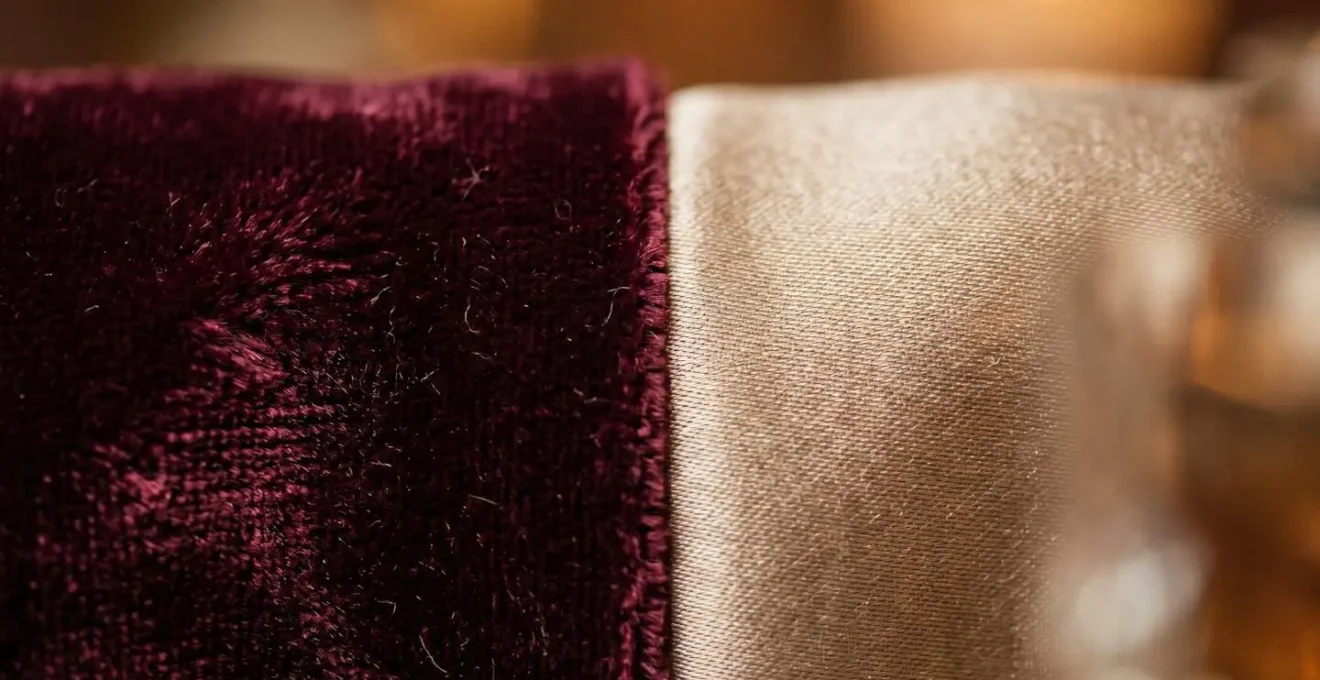
As you can see, velvet’s dense pile creates a rich interplay of light and shadow, giving it a moody, three-dimensional quality perfect for a sophisticated, cozy setting. Silk, on the other hand, possesses a natural luster that catches and reflects light, creating a radiant shimmer that helps you stand out. The following comparison breaks down these characteristics further.
This table, based on an analysis of fabric light interaction, details how each material performs under evening conditions, helping you decide which is best suited for your event.
| Characteristic | Velvet | Silk |
|---|---|---|
| Light Interaction | Absorbs and reflects light, creating interplay of light and shadow | Shimmers and catches light beautifully with natural sheen |
| Surface Appearance | Three-dimensional look from dense pile weave | Smooth and lustrous with radiant appearance |
| Photography Effect | Rich texture, deep shadows, moody depth in candlelight | Luminous sheen, stands out in dim settings, risk of flash ‘hot spots’ |
| Wrinkle Resistance | Can crush after prolonged sitting (especially velveteen) | Charmeuse and crepe de chine resist creasing better |
| Drape Quality | Heavier, structured drape with weight | Lightweight, flowing, natural fluidity |
Ultimately, the choice is strategic: choose velvet for touchable depth and richness, ideal for intimate, candlelit dinners. Opt for silk for luminosity and graceful movement, perfect for a slightly more festive or larger gathering where you want to have a subtle glow. Understanding this distinction elevates your choice from simply picking a color to architecting your presence in the room.
The Heel Height Mistake That Forces You to Sit Down All Night
There is a specific, sinking feeling that comes with realizing you’ve made a grave footwear error. It’s the moment you find yourself desperately scanning for an empty chair, unable to stand and mingle because your feet are in agony. This is the single most common mistake that can sabotage your dinner party experience, effectively tethering you to your seat. It’s a particularly common issue, as data from the American Podiatric Medical Association reveals that an astonishing 87% of women report foot discomfort from uncomfortable shoes.
The crucial mistake is not necessarily choosing a high heel, but choosing the wrong type of high heel for the event’s demands. A dinner party is not a « car-to-table » affair; it often involves standing for extended periods during an initial cocktail hour, mingling between courses, or gathering in the kitchen. A stiletto, which concentrates your entire body weight onto a single, tiny point, is simply not engineered for this kind of endurance.
The solution is to prioritize structure and weight distribution over raw height. A block heel, a stylish wedge, or even a platform heel provides a much larger surface area to support your weight. This simple shift in physics drastically reduces the pressure on the ball of your foot, allowing you to remain standing and mobile for hours, not minutes. As an etiquette coach, my advice is definitive: if you anticipate being on your feet for more than thirty minutes, a block heel is always the superior choice to a stiletto of the same height. Choosing elegant, comfortable footwear is not a compromise on style; it is a strategic decision that enables you to be a present, engaged, and mobile guest all evening long.
When to Keep Your Coat On vs. Checking It Immediately
The first thirty seconds inside your host’s home are a delicate dance of etiquette, and how you handle your outerwear is a key step. This moment requires « situational calibration » and can set the tone for your arrival. The golden rule is simple: if your host offers to take your coat, you must graciously accept. Politely declining can create an awkward moment, subtly implying that you don’t trust their closet or, worse, that their home is too cold for you to be comfortable without it.
However, there is one critical exception to this rule: the « Third Piece » principle. This applies when your « coat » is not merely functional outerwear but an integral part of your planned outfit—a stylish blazer, a chic trench, a kimono jacket, or a structured cardigan. In this scenario, it is perfectly acceptable to keep it on. The correct way to handle this is with a warm, appreciative refusal. Simply say, « Thank you so much for offering, but it’s actually part of my outfit! » This clarifies your intention and avoids any misunderstanding.
A smart guest also plans their layers and accessories. If you tend to run cold, don’t rely on your heavy outdoor coat for warmth. Instead, layer with elegant inner pieces like a fine-gauge merino wool sweater or a silk long-sleeved top, allowing you to comfortably remove your outer coat upon arrival. Finally, apply this logic to your handbag. A large tote or shoulder bag should be checked with your coat. A small clutch or crossbody, however, is considered part of your ensemble and should be kept with you for essentials like your phone and lipstick. These small details signal a high degree of social awareness.
The Heavy Earring Mistake That Stretches Earlobes Permanently
While a beautiful pair of statement earrings can be the perfect finishing touch to a smart casual look, a common mistake can lead to discomfort, distraction, and even long-term damage. The error is choosing earrings based on their visual impact alone, without considering their physical weight. Overly heavy earrings not only become painful after an hour or two but can also permanently stretch your earlobes over time—an entirely preventable issue.
A beautiful, lightweight earring frames the face without creating any visual or physical strain, as demonstrated by the elegant choice below. The key is to achieve a bold look without the associated burden.
As a general rule, most experts recommend that earrings for extended wear should be 7 grams or under per piece. Anything heavier should be reserved for very short-term events. The material of the earring is the single biggest factor in its final weight. While solid metal and large gemstones offer a premium look, they are also the densest and heaviest options. For a statement look that you can wear comfortably all evening, you should prioritize lighter materials.
This comparative table, derived from guidance by jewelry experts in a post on earring weight, illustrates the significant differences in material density. It’s an essential guide for building a collection of comfortable statement jewelry.
| Material Type | Relative Weight | Best Use Case |
|---|---|---|
| Resin/Acrylic | Lightest | Large statement earrings for all-day wear |
| Wood | Very Light | Natural, organic designs with minimal strain |
| Fabric Tassel/Seed Bead | Light | Bohemian styles, movement without weight |
| Hollow Metal | Light-Medium | Hoops and sculptural designs appearing substantial |
| Solid Metal (Silver/Gold) | Medium-Heavy | Quality pieces for limited-hour wear |
| Gemstones/Glass | Heaviest | Special occasion only, minimal wear time |
By consciously selecting earrings made from resin, acrylic, wood, or hollow metal, you can wear large, visually impactful designs without sacrificing comfort. This allows you to fully enjoy the social occasion without being distracted by aching earlobes—a small but crucial detail for a successful evening.
High Contrast vs. Low Contrast: Which Suits Low-Key Social Events?
Beyond individual pieces, the overall color story of your outfit plays a significant role in its perceived formality. A high-contrast outfit, such as a classic black-and-white combination, creates a sharp, graphic, and more formal look. A low-contrast or tonal outfit, built from varying shades of a single color family (like beige, grey, navy, or olive), communicates a softer, more understated sophistication. For a dinner party where the level of formality is ambiguous, low-contrast dressing is often the more modern and strategic choice.
This approach has become a hallmark of the « quiet luxury » aesthetic, which prioritizes quality, texture, and silhouette over loud branding or bold statements. It whispers confidence rather than shouting for attention, making it perfectly suited for an intimate social setting. By building a base outfit in a single color family, you create a cohesive and elongated silhouette that looks effortlessly chic.
Case Study: The Rise of Tonal Dressing for Sophisticated Social Settings
In the evolution of smart casual fashion, low-contrast, monochromatic outfits have emerged as the go-to strategy for demonstrating style mastery in ambiguous social situations. Fashion experts recommend this approach for dinner parties where the formality is uncertain. The technique involves building a sophisticated base in a single color family and then, if desired, adding one single, deliberate high-contrast accent—such as a vibrant red lip, a bright white clutch, or a shoe in a contrasting color. This creates a controlled focal point without overwhelming the look’s inherent sophistication and proves especially effective in contemporary, minimalist home environments.
Tonal dressing doesn’t mean boring. The interest comes from mixing textures within the same color family—for example, pairing a cashmere sweater with silk pants, or a ribbed knit top with leather trousers, all in shades of cream or charcoal. This creates visual depth and a sense of luxuriousness that is both subtle and impactful. For a smart casual dinner, it’s a can’t-miss formula for looking polished, modern, and perfectly in tune with your surroundings.
Your 5-Point Smart Casual Pre-Departure Checklist
- Points of Contact: List all visual elements of your chosen outfit—top, bottom, shoes, outerwear, and every accessory. Do they form a cohesive whole?
- Collection: Lay out the selected pieces. Scrutinize them. Are they all clean, perfectly pressed, and in excellent repair?
- Coherence: Does the complete look align with the « smart casual » balance—not too formal (no black-tie elements) and not too casual (no distressed denim or graphic tees)? Calibrate this against what you know of the host and venue.
- Memorability/Emotion: Does the outfit feel like « you »? Is there one element—a unique color, a signature piece of jewelry—that injects personality without overwhelming the look?
- Integration Plan: Do a final, full-length mirror check. Is anything missing or jarring? Does your outerwear complement the outfit beneath, or does it clash?
Key Takeaways
- Mastering smart casual is not about a checklist of clothes but a formula: Polish + Personality – Formality.
- Your outfit is a silent but powerful gesture of respect for your host’s effort and a contribution to the event’s atmosphere.
- Strategic choices in fabric (like velvet vs. silk for low light), accessory weight, and heel type are what separate a good outfit from a great one.
The Final Polish: Ensuring Your Statement Pieces Enhance, Not Distract
You’ve chosen the perfect outfit, considered your fabrics, and selected your shoes for endurance. The final step is a critical self-edit to ensure your chosen statement pieces—be it bold earrings, a striking necklace, or a vibrant scarf—are enhancing your overall presence, not distracting from it. The goal is for your accessories to frame your face and start conversations, not compete with you for attention.
The most important principle here is the Rule of One Focal Point. If you’re wearing large, sculptural earrings, keep your neckline simple and your top’s pattern muted. If a bold necklace is your chosen statement, opt for small, barely-there stud earrings. Giving your statement piece its own « space » to shine ensures it becomes a sophisticated highlight rather than part of a cluttered and confusing visual message. It should be the first thing people notice, which then draws their attention to you.
For a dinner party setting, also consider a quick sound and motion test. Before you leave the house, shake your head gently. Do your earrings or bracelets make a loud clanking noise? Excessive noise can be distracting at an intimate dinner table. Choose « static » statement pieces, like large studs or fixed sculptural designs, over those with too much movement or sound. Your accessories should add to the ambiance, not interrupt it. A well-chosen statement piece can be a fantastic icebreaker, but its role is to complement you, the guest, who is the real star of the show.
With this framework in mind, you can approach your next « smart casual » invitation not with a sense of dread, but with the confidence of an expert. You have the tools to assemble an outfit that is respectful, stylish, and, most importantly, allows you to relax and enjoy the wonderful evening your host has planned for you.