
Contrary to popular belief, statement jewelry in a corporate setting isn’t about fashion—it’s a strategic tool for commanding attention and building authority.
- Your accessories function as a non-verbal communication system, framing your face on video calls and reinforcing your professional narrative.
- Choosing materials and managing maintenance are not trivial details; they are crucial for projecting an image of reliability and attention to detail.
Recommendation: Stop decorating your outfits. Start building an intentional accessory system that communicates your professional value before you even speak.
In the world of corporate dress codes, expressing personality can feel like walking a tightrope. You want to be memorable, but not distracting. You want to show creativity, but not be perceived as unprofessional. Many professionals default to the safest option: minimal, barely-there accessories that blend into the background. The common advice is to keep it simple, avoid anything too bold, and focus solely on the suit. This approach, however, misses a significant opportunity.
The real challenge isn’t about choosing between « bold » and « safe. » It’s about understanding that your accessories are not a decorative afterthought; they are a powerful, strategic asset in your communication toolkit. But what if the true key to leveraging statement jewelry wasn’t about following fashion rules, but about mastering the principles of visual communication? What if your earrings could do more than just complete an outfit—what if they could actively help you control your professional narrative, frame your authority, and build a memorable personal brand?
This guide reframes the conversation. We will move beyond the superficial « do’s and don’ts » to provide a strategic framework for using bold accessories effectively. We will explore how to make deliberate choices—from selecting a single focal point and framing your face for presentations to building a signature accessory system. You’ll learn the practical tactics for maintaining your pieces and making smart investments, ensuring your image always communicates confidence and intention.
Here, we provide a complete roadmap for transforming your accessories from mere ornaments into strategic professional assets. The following sections break down exactly how to achieve this, from foundational choices to advanced techniques.
Summary: How to Wear Statement Earrings at Work Without Distracting From Your Pitch?
- Necklace or Earrings: Why choosing both makes you look cluttered?
- How to mix silver and gold without it looking accidental?
- The heavy earring mistake that stretches earlobes permanently
- How to prevent your $20 statement necklace from turning copper?
- 3 necklace lengths that sit perfectly within the Zoom camera frame
- How to choose one accessory that becomes your professional trademark?
- How to use necklaces to frame your face during presentations?
- Sterling Silver vs. Silver Plated: Which is Better for Daily Wear?
Necklace or Earrings: Why Choosing Both Makes You Look Cluttered?
The first strategic decision in professional accessorizing is choosing a single focal point. In an era dominated by video calls, the visual field is limited to your head and shoulders, making every choice within that frame critical. The increased emphasis on upper body style for virtual meetings means that what you wear near your face has more impact than ever. Wearing both a statement necklace and statement earrings creates competing focal points, resulting in visual clutter that can distract from your message.
The goal is to create a visual anchor, not visual noise. Statement earrings are uniquely effective at this because they frame your face, drawing the viewer’s eye upward towards your own. A necklace can sometimes drop out of the camera frame or compete with a neckline, but earrings are always in the most strategic position. This is about controlling the narrative; you want your audience to focus on you, not to be subconsciously distracted by competing elements.
A professional stylist quoted in the VSTYLE Blog offers a clear directive on this, highlighting the power of a single, decisive choice:
Statement earrings are my go-to accessory. There is no better spotlight for your face, and they don’t require other jewelry to complete your look.
– Professional stylist quoted in VSTYLE Blog, VSTYLE Blog – Statement Earrings You Can Wear To Work
Choosing one or the other isn’t a rule of fashion; it’s a rule of effective communication. By selecting a single, powerful piece, you project an image of intention and control. You are making a deliberate choice to guide the viewer’s attention, which is the cornerstone of professional presence.
How to Mix Silver and Gold Without it Looking Accidental?
Once you have mastered the single focal point, the next level of accessory strategy is to demonstrate mastery over conventional rules. For decades, the advice has been to never mix metals. However, in a modern professional context, intentionally mixing gold and silver signals a high level of confidence and an eye for detail. The key is to make it look deliberate, not like you got dressed in the dark. This is achieved through a principle of intentional dissonance.
The difference between an accidental mix and a strategic one lies in consistency and ratio. Instead of scattering metals randomly, you must group them to create purposeful zones. Furthermore, paying attention to the finish—pairing matte with matte or polished with polished—creates a cohesive look even with different colors. This level of detail communicates that you are thoughtful and in control of your personal brand.
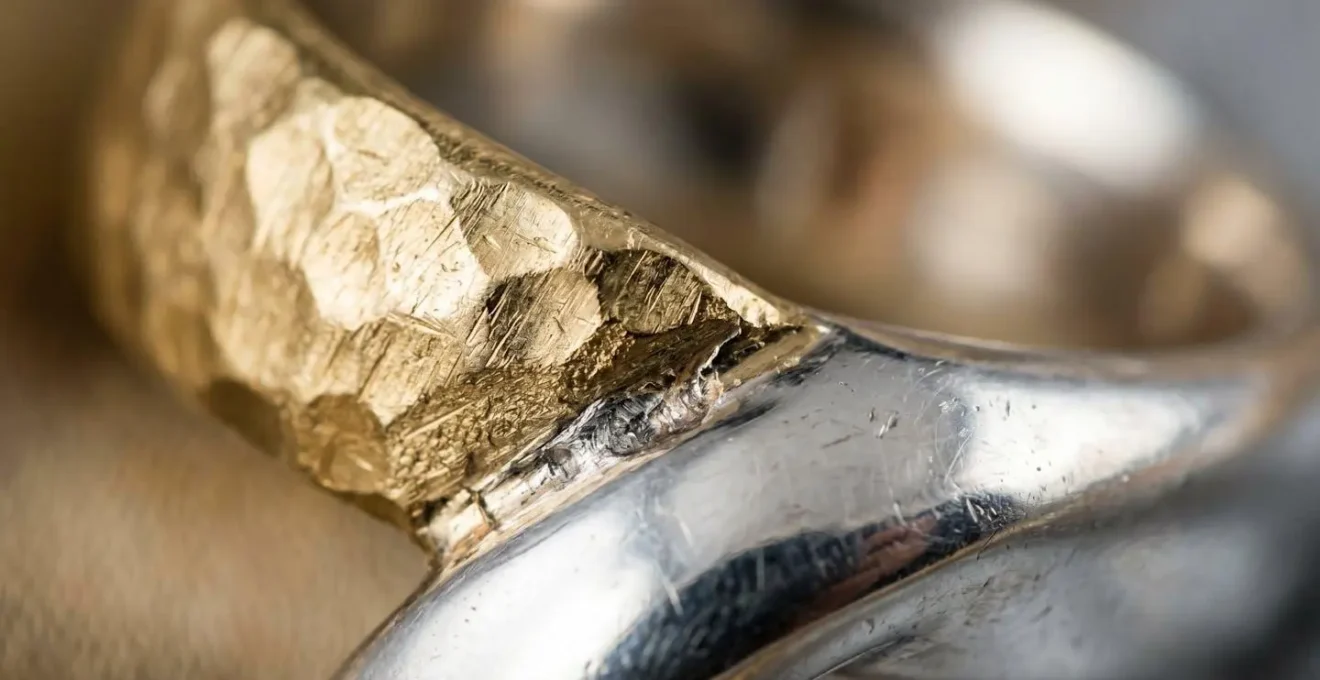
A proven framework for this is the 2:1 Ratio Method. This system provides a simple structure to ensure your mixed-metal look is always balanced and intentional. It involves choosing a dominant metal and adding a single, contrasting accent piece. A « bridge piece » containing both metals can be used to explicitly signal that the combination is a deliberate style choice. Adopting such a system shows a sophisticated understanding of style that goes beyond following basic rules.
The Heavy Earring Mistake That Stretches Earlobes Permanently
A powerful professional image is undermined if its components cause visible discomfort or long-term damage. While large statement earrings can be a formidable tool, ignoring their physical weight is a critical error. Heavy earrings not only cause discomfort during a long workday but can lead to the permanent stretching of earlobes—a detail that can subtly detract from a polished and composed appearance. This isn’t just about comfort; it’s about foresight and self-care, which are attributes of any successful professional.
The threshold for what is considered « heavy » is more defined than many realize. According to jewelry care guidelines, earrings weighing 8 grams and above are generally not suitable for prolonged daily wear. Wearing pieces above this weight, especially without support, places continuous strain on the delicate skin of the earlobe. The consequence is not just temporary redness but irreversible elongation that no amount of professional styling can hide.
Fortunately, there are strategic solutions to counteract this, allowing you to wear bolder pieces without compromise. These methods focus on distributing weight and providing support, turning a potential liability into a manageable part of your accessory system.
- Stabilizing Backs: Swap standard earring backs for larger, disc-style stabilizing backs. These distribute the earring’s weight across a wider area of the ear, preventing the pulling and drooping at the piercing hole.
- Support Patches: For particularly heavy pieces reserved for important events, use transparent, medical-grade lobe support patches. These adhesive patches are applied to the back of the earlobe to bear the majority of the weight.
- Material Choice: Opt for statement earrings made from lightweight materials. Acrylic, resin, wood, and fabric-based designs can provide significant visual impact with minimal weight, offering the best of both worlds.
- Limited Wear Time: Reserve your heaviest earrings for shorter durations, such as a key presentation or a client dinner. Alternate them with lighter styles to give your earlobes time to recover.
How to Prevent Your $20 Statement Necklace From Turning Copper?
Your professional image is a system where every detail matters. A striking statement necklace can elevate a simple blazer, but if it’s tarnished or, worse, leaving a green stain on your skin, it cheapens your entire presentation. Whether your accessory is a significant investment or an affordable trendy piece, its maintenance is non-negotiable. Preventing a $20 necklace from turning copper is a matter of strategic care, reflecting a broader professional principle: you value and maintain your assets, no matter their cost.
The primary enemy of fashion jewelry is exposure to moisture, chemicals, and air. This is why the most foundational rule of jewelry care, as noted by the Featherly Vibes Jewelry Care Guide, is so critical:
Jewelry should be the last thing you put on and the first thing you take off.
– Featherly Vibes Jewelry Care Guide, Featherly Vibes – Jewelry Tarnishing Prevention
This simple habit prevents contact with perfumes, lotions, and hairsprays that accelerate oxidation. However, for a truly professional-grade approach, your storage strategy must be equally deliberate. Simply tossing a necklace onto a dresser exposes it to humidity and dust. A more robust system is required to protect your pieces and, by extension, your image.
Implement a professional-grade anti-tarnish storage strategy:
- Isolate and Seal: Store each piece in its own small, airtight zip-top bag or an anti-tarnish jewelry box. This is the single most effective way to block humidity.
- Absorb Aggressors: Add anti-tarnish strips or silica gel packets to your jewelry container. These actively absorb the airborne sulfur and moisture that cause discoloration.
- Control the Environment: Keep your jewelry in a cool, dry place. A bedroom drawer is far better than a bathroom cabinet, where steam from showers creates a high-humidity environment.
- Apply a Sealant: For pieces you wear frequently, consider a professional jewelry sealant. These clear, protective sprays, used by costume designers, create a durable barrier between the metal and the elements, and are safer for skin than the common « clear nail polish » hack.
3 Necklace Lengths That Sit Perfectly Within the Zoom Camera Frame
In a virtual meeting, your screen is your stage, and the camera frame dictates the rules of engagement. A long, beautiful necklace may be stunning in person but becomes an awkward, distracting element if it’s constantly cut off by the bottom of the screen. Strategic accessorizing for the camera requires understanding which lengths work within this limited frame and what message each one sends. This is not about fashion; it’s about strategic framing to maintain a polished, intentional presence on video.
The key is to select lengths that reliably stay in view and complement your neckline without creating visual conflict. There are three specific necklace lengths that are optimized for video calls, each serving a distinct function. Choosing the right one depends on your outfit and the impression you want to create. The following breakdown serves as a strategic guide to mastering the « above-the-desk » presentation.
| Necklace Length | Measurement | Video Call Function | Best Neckline Pairing | Camera Visibility |
|---|---|---|---|---|
| Collar | 14-16 inches | The Anchor – sits just above collarbone, creates visual base for head and shoulders | Works with all necklines | Always visible, frames face without dropping out of sight |
| Princess | 17-19 inches | The Sweet Spot – perfectly complements open necklines | V-neck or unbuttoned shirt (WARNING: fights with crew necks on camera) | Fully visible, creates elegant frame |
| Pendant on Long Chain | 20-24 inches | The Strategic Accent – typically cut off but can peek into frame as subtle intrigue | Solid, high-contrast tops | Partially visible, works best with small meaningful pendants on fine chains |
As the table demonstrates, a 14-16 inch « Collar » necklace is the most reliable choice, acting as a visual anchor that is always visible. The 17-19 inch « Princess » length is ideal for open necklines, while longer pendants should be used with caution, reserved for creating subtle intrigue rather than serving as a primary focal point. Mastering these lengths is a tactical skill for any professional who wants to project authority and poise on camera.
How to Choose One Accessory That Becomes Your Professional Trademark?
The pinnacle of accessory strategy is not about having a large collection, but about cultivating a signature look. A professional trademark is an accessory—or a consistent combination of accessories—that becomes so associated with you that it forms a part of your personal brand. It’s the modern equivalent of a signature scent or a calling card. This isn’t just about being recognizable; it’s about projecting an unwavering image of consistency, confidence, and identity. It communicates who you are before you even begin to speak.
A trademark accessory should be distinctive but not overpowering, and it must be something you can wear consistently across different professional settings. It could be a pair of architecturally unique earrings, a specific style of brooch, or a well-chosen watch. The key is that it feels authentic to you and aligns with the industry you’re in. An artist’s trademark might be more sculptural, while a lawyer’s might be more classic and understated.
Case Study: The Platinum Wedding Band and Gold Crest Ring Strategy
A professional strategically built his workplace trademark around an « accessory system » rather than a single piece: a platinum wedding band consistently paired with a brushed gold family crest ring. This deliberate mixed-metal combination became his signature. The power of this system was validated at a corporate dinner where he received five compliments on the pairing before dessert. This demonstrates how a thoughtful, consistent system creates a memorable and sophisticated personal brand that signals intentionality in any professional setting.
Developing this signature element requires introspection and a clear process. It’s an audit of your personal style and your professional goals.
Action Plan: Forging Your Professional Accessory Trademark
- Identify Points of Contact: List all the professional scenarios where your accessory will be seen (e.g., video calls, in-person meetings, networking events). This defines the functional requirements.
- Collect and Inventory: Gather your most-worn accessories. Which pieces do you naturally gravitate towards? Identify common themes in material, shape, or style.
- Test for Coherence: Hold each potential trademark piece against your typical work attire. Does it complement or compete? It must be versatile enough to work with at least 80% of your professional wardrobe.
- Evaluate Mémorability: Does the accessory have a unique quality—an unusual shape, a meaningful story, a distinctive texture—that makes it more memorable than a generic alternative?
- Develop an Integration Plan: Commit to wearing the chosen accessory or accessory system for the next 21 workdays. The goal is to build consistency until it becomes an effortless, integrated part of your professional identity.
How to Use Necklaces to Frame Your Face During Presentations?
In a presentation, whether on stage or on screen, your primary goal is to hold your audience’s attention and direct it towards your face and your message. A necklace is not simply an adornment in this context; it is a powerful tool for visual framing. The right necklace creates a visual boundary at the base of the neck, acting as an arrow that points directly to the speaker. It helps to anchor the audience’s gaze and prevent it from wandering.
This goes beyond simple aesthetics and into the realm of non-verbal communication and psychology. The accessories we choose send subtle signals about our status, personality, and approach. As research into personal adornment highlights, these choices are a sophisticated form of communication that can be leveraged strategically.
Jewelry functions as a sophisticated form of non-verbal communication, conveying messages about status, beliefs, relationships, and cultural identity. In professional settings, the choice to wear understated pieces versus bold statement items sends different signals about personality and approach to work.
– Prins and Prins Diamonds Psychology Research, The Psychology of Personal Adornment: Why Jewellery Matters
To use a necklace as an effective framing device, consider these principles. First, contrast is key. A light-colored or metallic necklace against a dark, solid top creates a strong visual line. Conversely, a dark necklace on a light top achieves the same effect. Avoid busy patterns that will compete with the necklace. Second, the shape of the necklace should complement the neckline of your garment. A V-neck top is best framed by a pendant that follows the « V » shape, while a crew neck is best anchored by a shorter collar or choker-style necklace that sits cleanly above it. By making these intentional choices, you are not just accessorizing; you are actively directing your audience’s focus and reinforcing your authority as the speaker.
Key Takeaways
- Stop thinking of jewelry as decoration and start using it as a strategic communication tool to control your professional narrative.
- Master the « above-the-desk » visual frame by choosing one focal point (earrings or necklace) and selecting lengths that are always visible on camera.
- Signal confidence by intentionally mixing metals using a system like the 2:1 ratio, and protect your image by properly maintaining all accessories, regardless of price.
Sterling Silver vs. Silver Plated: Which is Better for Daily Wear?
The final layer of your accessory strategy is the material itself. The choice between sterling silver and silver-plated jewelry is not merely a question of budget; it is a strategic decision about investment, reliability, and long-term professional image. For pieces intended for daily wear, especially a signature trademark, the material’s durability and behavior over time are paramount. A professional’s image must be consistent, and a piece that degrades, tarnishes, or causes skin irritation can undermine that consistency.
Sterling silver is an alloy composed of 92.5% pure silver, making it a precious metal. It is considered an « investment-grade » material for daily wear. While it can tarnish over time, it develops a patina that can be polished away, restoring it to its original look. This graceful aging signifies longevity and quality. In contrast, silver-plated jewelry consists of a thin layer of silver over a base metal like brass or copper. It is an excellent, affordable option for « trend-testing »—experimenting with bold, temporary styles without a significant financial commitment.
However, for daily wear, the trade-off with plated pieces is significant. The thin plating inevitably wears away, exposing the base metal underneath. This degradation is irreversible and can project an image of carelessness. Furthermore, the exposed base metal, often containing nickel, poses a higher risk of causing skin sensitivity, a distraction no professional needs. The choice, therefore, aligns with two different strategies.
This comparative analysis clarifies the strategic role of each material in a professional wardrobe.
| Characteristic | Sterling Silver | Silver Plated |
|---|---|---|
| Composition | 92.5% pure silver, 7.5% other metals (usually copper) | Thin layer of silver over base metal (brass or copper) |
| Investment Category | Long-term investment for core, timeless daily-wear pieces | Affordable option for experimenting with trends without financial commitment |
| Tarnish Behavior | Develops patina with age that can be polished to look new – signifies longevity | Degrades over time – chips and tarnishes irreversibly as plating wears away |
| Skin Sensitivity Risk | Hypoallergenic – reliable choice for long-term wear without allergic reactions | Higher risk – may reveal nickel underneath causing redness and itching, creating workplace distraction |
| Lifecycle & Aging | Ages gracefully – can be restored through polishing | Base metal exposure inevitable – cannot be fully restored once plating degrades |
| Professional Impression | Consistent quality signals reliability and attention to detail | May show signs of wear during important meetings if worn daily |
By shifting your perspective from decoration to communication, your accessories become a powerful extension of your professional brand. Now is the time to audit your current collection and begin building a system that works as hard as you do.