
The secret to a sleek silhouette in chunky knits isn’t about hiding volume, but mastering the physics of fabric and the art of structural contrast.
- Warmth is determined by a fiber’s ability to trap air (its thermal efficiency), not its thickness. Finer, hollow fibers like cashmere can be warmer than bulky wool.
- Visual bulk is controlled by pairing soft, amorphous knits with sharp, defined elements like a structured bag or a dress with a clean line.
Recommendation: Invest in understanding the material properties of your knits (microns, fiber type) and use accessories to create intentional shape rather than trying to shrink the sweater’s volume.
The moment the first crisp autumn air arrives, the siren call of the chunky knit sweater is undeniable. It promises cozy warmth, comfort, and a sense of hygge that sees us through the darkest winter days. Yet, this promise comes with a familiar fear: the transformation into a shapeless, bulky figure, lost within a sea of yarn. For years, the advice has been the same—a quick front-tuck, a pair of skinny jeans, a belt cinched hopefully at the waist. These are temporary fixes, not true solutions.
As a fashion expert from a region where warmth is not a luxury but a necessity, I can tell you that the key to mastering the chunky knit is not found in these superficial styling tricks. It’s found in a deeper understanding, a shift in perspective from hiding bulk to celebrating texture. The secret lies in the fabric physics and the principle of structural contrast. It’s about knowing why a cable knit feels warmer, how a fine-gauge turtleneck can glide under a dress, and why a specific handbag can completely redefine your silhouette.
This guide moves beyond the platitudes. We will delve into the science of fibers to understand true warmth, explore techniques for layering without bunching, and learn how the right accessories provide the definition that chunky knits crave. Prepare to see your winter wardrobe not as a source of bulk, but as a system of textures and shapes waiting to be skillfully combined for ultimate warmth and style.
To navigate this journey from bulky to beautiful, this guide breaks down the essential science and styling strategies. Explore the sections below to build your expertise and reclaim your love for chunky knits without compromise.
Contents: A Deep Dive into Warmth and Style
- Why cable knits are warmer than rib knits for outdoor walks?
- How to layer a turtleneck under a dress without bunching?
- Cashmere vs. Mohair: Which texture irritates sensitive skin less?
- The hanging error that stretches your heavy knits out of shape
- When to switch from cotton knits to wool blends during the fall?
- Why cashmere fibers trap heat better than merino wool?
- Why a structured bag corrects the ‘slouchy’ look of oversized knitwear?
- Is a $200 Cashmere Scarf Really Warmer Than a $50 Wool Blend?
Why cable knits are warmer than rib knits for outdoor walks?
The answer lies not in the weight of the yarn, but in the physics of its structure. The primary function of winter clothing is insulation, which is the ability to trap a layer of air next to your body. This trapped air, heated by your own body, acts as a buffer against the cold outside. A cable knit’s intricate, three-dimensional pattern of twists and crossings is a master of this principle. It creates a multitude of tiny, deep pockets within the fabric’s structure.
Think of it as architectural insulation. Each crossover in a cable knit is a small valley or ridge, creating significantly more surface area and depth than a flat rib knit. These pockets are where the magic happens. They hold onto still air far more effectively. In contrast, a rib knit, while stretchy and comfortable, has a more two-dimensional structure. Its vertical channels are shallower and can sometimes stretch open, allowing this precious warm air to escape more easily, especially when you move.
This is why a cable knit sweater often feels substantially warmer during an active outdoor walk, even if it’s the same weight and material as a ribbed one. The thermal efficiency is simply higher due to its superior ability to trap air. Research into textile science confirms that trapped air provides thermal insulation by creating a barrier that slows down heat transfer. The complex geometry of a cable knit is a purpose-built system for maximizing this effect.
So, when you choose your sweater for a brisk walk, you’re not just picking a pattern; you’re selecting a technology designed for optimal heat retention.
How to layer a turtleneck under a dress without bunching?
Layering a turtleneck under a dress is a classic Nordic style move, extending the life of your favorite dresses into the colder months. However, the execution can be tricky, often resulting in frustrating bunching and twisting around the waist and arms. The solution is not to tug and pull, but to apply the principles of fabric physics, focusing on friction and structure.
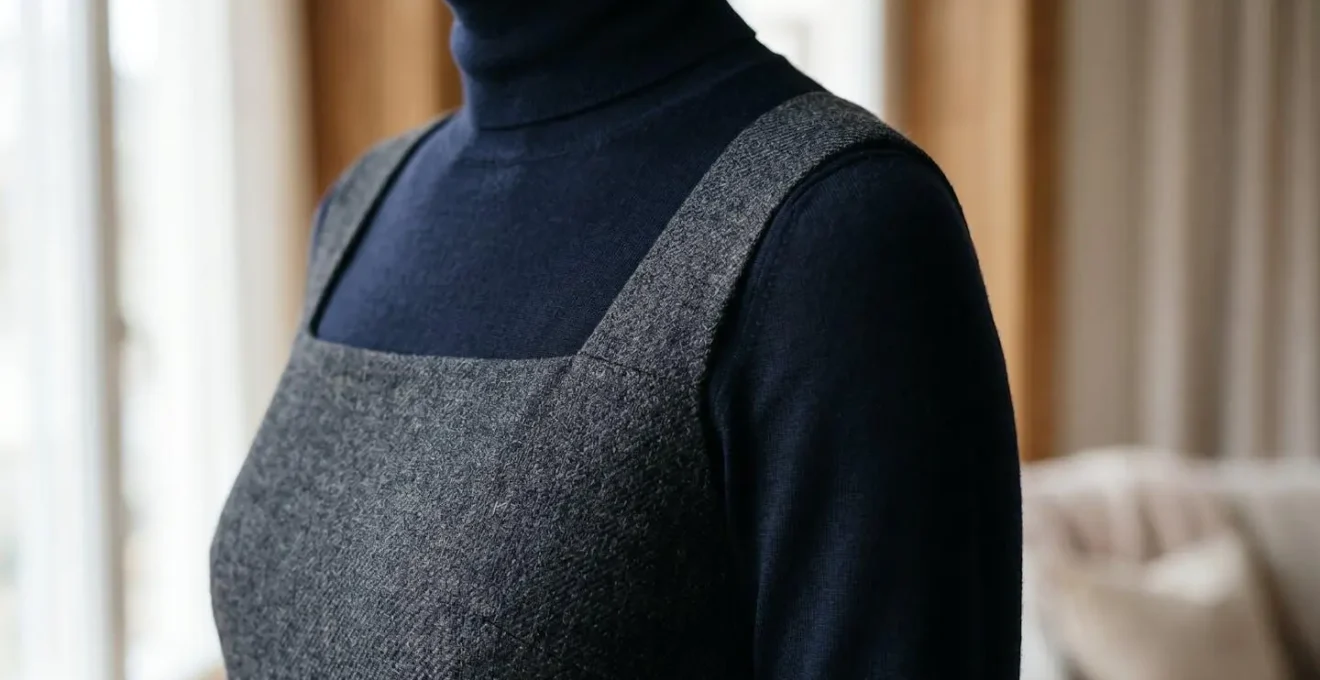
The primary culprit of bunching is friction between two similar fabrics, especially natural fibers like cotton. To achieve a smooth silhouette, you need to create a « low-friction » environment. This means choosing a base layer that glides, rather than grips. A tissue-weight turtleneck made of modal, silk, or a microfiber blend is your best ally. These materials have a sleek surface that allows the outer dress fabric to drape over it effortlessly. A turtleneck bodysuit is the ultimate weapon in this fight, as it creates a perfectly taut line from the shoulders down, eliminating any possibility of the fabric riding up or bunching at the hips.
The dress itself plays an equally important role. Lightweight, clingy fabrics like jersey will grab onto the turtleneck and highlight every tiny fold. Instead, opt for dresses with some inherent structure or weight. Think wool, corduroy, a lined slip dress, or heavy crepe. These materials skim over the body and the base layer, their own weight and drape helping to smooth everything underneath. Here is the professional technique broken down:
- Choose the Right Base: Opt for a tissue-weight or modal turtleneck. A bodysuit provides the most seamless, taut line.
- Select a Structured Dress: Fabrics like wool, corduroy, or a lined slip dress will skim over the body rather than clinging to the layer underneath.
- Avoid High-Friction Pairings: Never layer a standard cotton turtleneck under a thin jersey or silk dress. The cotton will grip the dress fabric, creating unwanted folds and bulk.
By thinking about how fabrics interact, you can transform a potentially bulky combination into a sophisticated, streamlined, and warm winter outfit.
Cashmere vs. Mohair: Which texture irritates sensitive skin less?
When it comes to luxury knits, both cashmere and mohair offer unique textures and warmth, but their effect on sensitive skin is dramatically different. For those prone to itchiness and irritation, the clear winner is cashmere. This decision is not based on opinion, but on the measurable science of fiber diameter, known as the micron count.
A fiber’s « prickle factor » is determined by its thickness. Thicker, less flexible fibers don’t bend easily when they touch your skin; instead, their ends press against it, stimulating nerve endings and causing the sensation of itchiness. Finer fibers, on the other hand, are so soft and flexible that they simply bend on contact. According to fiber science studies, cashmere fibers range between 14-19 microns, which is considered exceptionally fine. In contrast, even high-quality mohair fibers typically start in the low 20s and go up from there.
This small difference in microns translates to a huge difference in comfort. Mohair is famous for its fuzzy « halo » effect, which is created by the protruding ends of its thicker fibers. While visually appealing, this very halo is what can feel prickly to sensitive skin. Cashmere’s ultra-fine fibers create a smooth, soft surface that lies gently against the skin, minimizing irritation. This also affects the visual bulk. Mohair’s halo adds significant visual volume, creating an airy but bulkier look, while cashmere’s fluid drape falls closer to the body for a more streamlined silhouette.
For a clear comparison, consider the following breakdown:
| Characteristic | Cashmere | Mohair |
|---|---|---|
| Fiber Diameter (Microns) | 14-19 microns | Low 20s+ microns |
| Skin Irritation Level | Minimal – fibers bend softly against skin | Moderate – halo of protruding fibers can feel prickly |
| Visual Drape | Fluid drape, falls close to body, minimizes bulk | Fuzzy aura/halo adds significant visual volume |
| Silhouette Effect | Sleek, streamlined | Airy, textured, bulkier appearance |
While a mohair-silk blend can reduce the prickle factor, if your primary concern is avoiding irritation without compromising on luxury, pure, high-quality cashmere is the safest and softest investment for your skin and your style.
The hanging error that stretches your heavy knits out of shape
The most common and destructive mistake in knitwear care is also the most intuitive: hanging a heavy sweater on a standard hanger. This simple act is a battle against gravity that your sweater is destined to lose. The weight of the knit, especially chunky wool or cashmere, pulls downwards, putting immense stress on the shoulder seams and the fabric itself. This leads to permanent stretching, distortion, and those dreaded « hanger shoulders » that ruin the garment’s silhouette.
As the experts at Wood-Blocks Wardrobe Storage note, » Hanging sweaters on hangers can cause them to stretch, especially around the shoulders. The weight of the fabric pulls on the shoulder seams, leading to stretching and unsightly hanger marks. » The best method for storing sweaters is to fold them neatly in a drawer or on a shelf. However, if closet space is at a premium and hanging is a must, there is a specific technique that saves your sweaters from this fate by neutralizing the force of gravity.
This method involves folding the sweater over the hanger bar, distributing the weight evenly across a large surface area instead of concentrating it on the delicate shoulder seams. It’s a simple change in habit that will dramatically extend the life and preserve the shape of your beloved knits. Follow these steps precisely:
- Fold: Fold the sweater in half vertically, laying the sleeves neatly on top of each other.
- Position: Place the hanger’s hook in the armpit area of the folded sweater.
- Drape Body: Fold the body of the sweater over one shoulder of the hanger.
- Drape Sleeves: Fold the sleeves over the other shoulder of the hanger. The sweater’s weight is now balanced across the hanger’s bar, not pulling from the shoulders.
If you’ve already made the hanging error, a rescue is possible. Soaking a stretched knit in lukewarm water with a small amount of hair conditioner can help relax the protein fibers, allowing you to gently re-shape it while it dries flat on a towel.
By adopting this simple fold-over hanging method, you’re not just storing your sweater; you’re actively preserving its intended shape and ensuring it remains a stylish, well-fitting piece for years to come.
When to switch from cotton knits to wool blends during the fall?
Navigating the transitional weather of fall requires a strategic approach to your knitwear. It’s not just about feeling cold; it’s about managing temperature fluctuations and humidity. The switch from breathable cotton to insulating wool isn’t a single date on the calendar but a response to specific environmental cues. Understanding the different properties of these fibers is key to staying comfortable and stylish without overheating or feeling a chill.
Cotton is a fantastic fiber for mild weather. It’s breathable and soft, making it perfect for those early fall days when the air is crisp but the sun still holds warmth. However, cotton’s greatest weakness is its reaction to moisture. It’s highly absorbent and slow to dry. If you get caught in a damp mist or start to perspire during a brisk walk, a cotton knit will hold that moisture, making you feel cold and clammy.
Wool, on the other hand, is a master of thermoregulation. Its fibers have a natural crimp that creates insulating air pockets (similar to cable knits), and it can absorb a significant amount of moisture vapor without feeling wet to the touch. Crucially, it wicks moisture away from the skin and retains its insulating properties even when damp. This is why a finer merino wool blend provides superior warmth with a much thinner profile than a bulky cotton knit. The following guide provides a clear roadmap for your seasonal knitwear transition:
| Temperature Range | Recommended Knit Type | Reason |
|---|---|---|
| Above 15°C (60°F) | Cotton knits | Breathable and comfortable in mild temperatures |
| 10-15°C (50-60°F) | Cotton-wool or cotton-cashmere blend | Lightweight warmth for transitional weather with temperature fluctuations |
| Below 10°C (50°F) | Pure wool, merino, or cashmere blends | Superior insulation and moisture-wicking properties for serious cold |
| High humidity or dampness | Wool blends (any temperature) | Wool is thermoregulating and wicks moisture away; cotton holds moisture |
The key takeaway is this: the moment the daily temperature consistently drops below 10°C (50°F), or when the weather turns damp, it’s time to retire your cotton knits and embrace the superior thermal efficiency and moisture-managing power of wool and its luxurious cousins.
Why cashmere fibers trap heat better than merino wool?
While both cashmere and fine merino wool are lauded for their warmth, cashmere possesses a subtle but significant structural advantage that gives it the edge in the warmth-to-weight contest. The secret lies in the microscopic structure of the fibers themselves. It’s a perfect example of how fabric physics, not just thickness, dictates thermal performance.
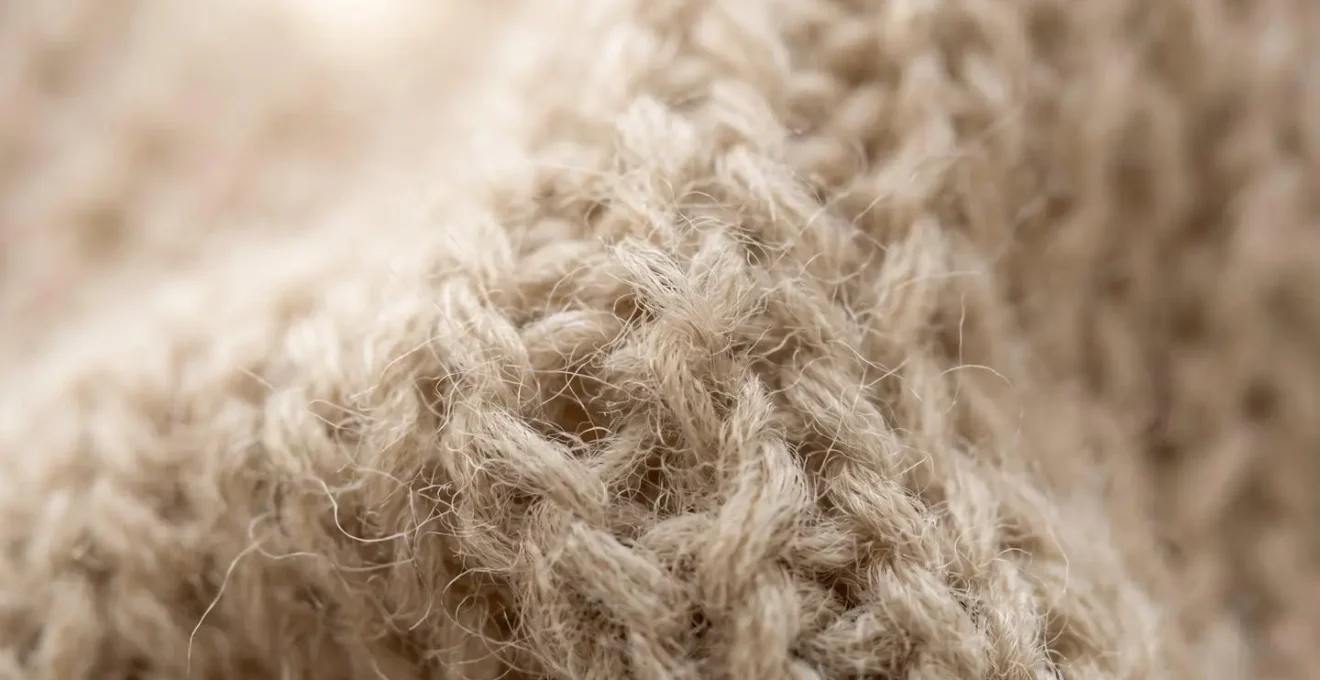
Merino wool fibers are solid and have a natural crimp, which creates tiny air pockets to trap heat effectively. This makes them an excellent insulator. However, high-quality cashmere fibers take this a step further. They are often described as being hollow or semi-hollow. This hollow core, combined with an even finer, more pronounced natural crimp, creates a far more complex, three-dimensional structure. As SELVANE Textile Science explains, « Cashmere fibers are hollow or semi-hollow and have a natural crimp, which creates millions of tiny air pockets. These pockets trap air, which is a fantastic insulator. »
Think of it like the difference between a standard insulated wall and one with a superior, aerated insulation material. The hollow nature of cashmere fibers creates an extra layer of insulation within the fiber itself, on top of the air trapped between the fibers. This phenomenon is known as « loft. » A fabric with high loft traps more air for its weight. This is why premium cashmere under 16 microns provides exceptional warmth while feeling almost weightless. It directly solves the fundamental winter fashion dilemma: how to stay truly warm without being buried in bulky layers.
So, while a thick merino sweater is a fantastic and practical choice for warmth, a high-quality cashmere sweater achieves a similar or even superior level of thermal efficiency with significantly less weight and bulk, making it the ultimate choice for a sleek, unencumbered silhouette in the cold.
Why a structured bag corrects the ‘slouchy’ look of oversized knitwear?
Styling an oversized, chunky knit is a delicate balancing act. The goal is « cozy-chic, » but the risk is « shapeless-frumpy. » The single most effective tool to tip the scales in your favor is not a belt or a tuck, but the introduction of structural contrast through a well-chosen handbag. A structured bag acts as a visual anchor, providing the clean lines and sharp angles that the soft, amorphous knit lacks.
The principle is one of visual juxtaposition. Your chunky sweater is all soft curves, plush texture, and a relaxed silhouette. A structured bag—think a firm top-handle tote, a crisp boxy crossbody, or a polished satchel—is the complete opposite. It has defined edges, flat planes, and a rigid form. When you place these two opposing elements together, they create a dynamic tension that elevates the entire look. The bag’s structure signals that the sweater’s slouchiness is an intentional, fashionable choice, not an accident of poor fit.
Volume needs contrast. Texture needs sleekness. And definition (even subtle) makes all the difference between cozy-chic and shapeless-frumpy.
– Style at a Certain Age Editorial, How to Style a Chunky Knit Sweater Without Looking Bulky
Beyond simply providing contrast, a structured bag can physically reshape your silhouette. A crossbody bag with its strap worn diagonally across the torso instantly breaks up the wide expanse of the sweater, creating the illusion of a waistline. Carrying a top-handle bag in the crook of your arm encourages better posture, counteracting the natural tendency to slouch when enveloped in a cozy knit. It’s a subtle but powerful piece of sartorial engineering.
Action plan: Balancing knits with bags
- Embrace Juxtaposition: Pair the soft shape of your knit with the sharp lines of a structured bag to create visual balance.
- Create a Waistline: Use a crossbody bag with a diagonal strap to visually divide the sweater’s mass and imply a waist.
- Improve Your Posture: Carry a top-handle bag to encourage an elegant posture that counteracts the slouch of oversized knitwear.
- Establish a Focal Point: Choose a bag with distinctive color or hardware to draw the eye and signal that your look is deliberate and high-fashion.
Ultimately, the structured bag doesn’t fight the chunky knit; it complements it. It tells the world that you understand the rules of volume and texture, and you know exactly how to break them with style.
Key takeaways
- True warmth comes from a fabric’s ability to trap air (thermal efficiency), not its physical thickness.
- Control bulk by creating structural contrast—pairing soft knits with sharp, defined accessories and clothing items.
- Fiber quality, measured in microns, determines both skin comfort and warmth-to-weight ratio, making it a better guide than price alone.
Is a $200 Cashmere Scarf Really Warmer Than a $50 Wool Blend?
In the world of winter accessories, the price gap between a high-grade cashmere scarf and a mass-market wool blend can be vast. This often leads to a fair question: are you paying for real performance or just a luxury label? The answer, grounded in fabric physics, is that a well-made $200 cashmere scarf is very likely to be significantly warmer, softer, and less bulky than its $50 counterpart.
The primary difference lies in fiber quality, specifically fineness (microns) and length. The $50 scarf is likely a « wool blend, » which can mean many things. Often, it’s a mix of standard wool (which can be over 24 microns and feel scratchy) with a small percentage of lower-grade cashmere or synthetic fibers. The cashmere is there for « label appeal » more than performance. The $200 scarf, if from a reputable source, should be 100% cashmere made from long, fine fibers. As cashmere quality research shows, premium cashmere measures below 16 microns, and even a one-micron difference dramatically impacts softness.
This superior fiber quality has three direct impacts on warmth and wearability. First, as we’ve learned, the finer, hollower cashmere fibers are simply more efficient at trapping heat, providing more warmth for less weight. You can loop a fine cashmere scarf multiple times without creating the massive bulk of a thick wool-blend scarf. Second, the use of longer fibers in premium cashmere means the scarf is less likely to pill and will be far more durable over time, lowering its « cost per wear. » Third, the dense but soft weave of high-quality cashmere is more effective at blocking wind than a looser, cheaper knit.
Ultimately, the $200 isn’t just for a name. It’s an investment in superior raw materials that deliver better thermal efficiency, a sleeker silhouette, enhanced comfort, and greater longevity. It’s the embodiment of the Nordic principle of buying fewer, better things that perform their function beautifully.