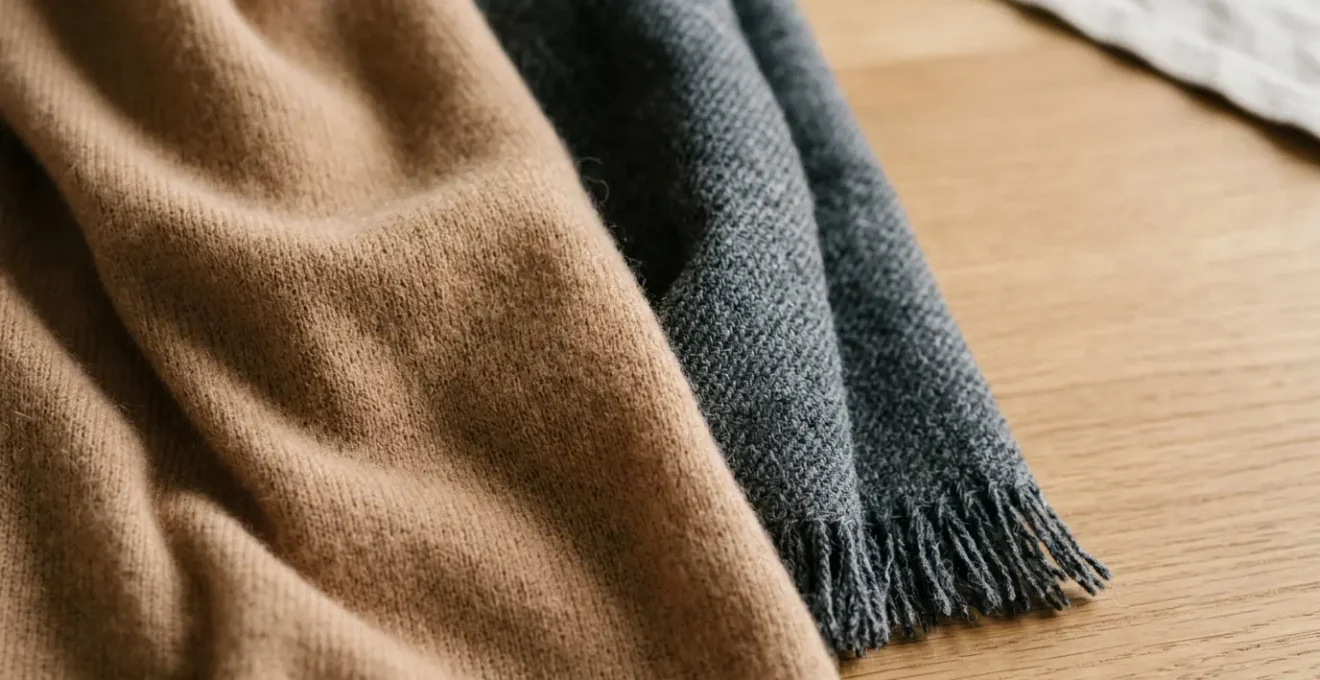
Yes, a high-quality cashmere scarf offers significantly better thermal performance than a wool blend, but its value is only realized through proper selection and care.
- Cashmere’s superior warmth comes from its ultra-fine fibers (14-16 microns) which create more air pockets for insulation than coarser wool.
- The higher price is an investment in material science, but this investment can be destroyed by improper care, like using a fabric shaver or storing it unclean.
Recommendation: Treat your cashmere as a piece of technical equipment. Learn to identify high-grade fiber, master its maintenance, and you will unlock performance that far exceeds its cost.
In the biting cold of winter, the debate between luxury and utility becomes a practical reality. You stand before two scarves: one, a plush $200 pure cashmere, the other a perfectly respectable $50 wool blend. The price difference is stark, and the immediate question is simple: are you paying for real performance, or just a brand name and a soft feel? Common wisdom is divided; some swear by the unmatched warmth of cashmere, while others dismiss it as an overpriced indulgence, arguing that a thick wool scarf does the job just fine.
This debate often misses the point. The value of a high-end textile isn’t just in its raw material, but in its specific physical properties and how they are leveraged. Thinking of a cashmere scarf not as a fashion accessory but as a piece of high-performance thermal gear changes the entire equation. It’s not about spending more; it’s about investing in a superior technology for retaining heat. The real key to determining its worth lies in understanding the science behind the fiber, the techniques to maximize its effectiveness, and the maintenance protocols required to protect its long-term performance.
This analysis will move beyond subjective feelings of softness and delve into the measurable data. We will deconstruct the thermal properties of these fibers, provide actionable techniques for real-world use, and establish the non-negotiable care procedures that define the difference between a sound investment and a costly mistake.
Contents: The True Value of Cashmere vs. Wool
- Why cashmere fibers trap heat better than merino wool?
- How to tie a scarf to maximize neck coverage in windy conditions?
- Comb vs. Shaver: Which tool removes pills without thinning the fabric?
- The storage mistake that leaves holes in your scarf over summer
- When to buy cashmere to get the best price (End of Season vs. Christmas)?
- How to identify fake cashmere quality in under 30 seconds in-store?
- Cashmere vs. Mohair: Which texture irritates sensitive skin less?
- Can You Machine Wash Silk or Must You Pay for Dry Cleaning Forever?
Why cashmere fibers trap heat better than merino wool?
The superior warmth of cashmere is not a marketing claim; it’s a matter of physics and microscopic structure. The primary function of any insulating fabric is to trap a layer of air close to the body, which your body then warms. The more small, stable air pockets a fabric can create, the better its insulation. This is where cashmere fundamentally outperforms wool. According to textile analysis, cashmere provides two to three times more insulation than traditional sheep’s wool for the same weight.
This remarkable thermal efficiency stems from the diameter of the fibers themselves. High-quality (Grade-A) cashmere fibers have an incredibly fine diameter, typically between 14-15.5 microns. For comparison, even fine merino wool fibers are significantly thicker, at around 22 microns. This fineness allows millions more fibers to be packed into the same yarn, creating an incredibly dense web that traps significantly more air. It’s the difference between building a wall with large bricks versus one with fine sand; the sand-filled wall has far less empty space for heat to escape.
However, the performance is not just about fiber diameter. Three key factors determine the final warmth of the scarf:
- Ply count: This refers to the number of cashmere strands twisted together to create the yarn. A 2-ply or 4-ply yarn is stronger and creates a denser fabric with more insulating air pockets than a single-ply yarn.
- Gauge (knitting density): This is arguably more important than ply. A tightly knit scarf (high gauge, e.g., 12G) will trap more air and block wind more effectively than a loosely knit one, even if the latter has a higher ply count. High-density knitting is a hallmark of a quality, performance-oriented scarf.
- Thermal regulation: Unlike synthetic blends, cashmere is highly breathable. It wicks moisture away from your skin, preventing the clammy, cold feeling that can occur when you move from a cold outdoor environment to a warm indoor one. This active regulation maintains a comfortable microclimate around your neck.
How to tie a scarf to maximize neck coverage in windy conditions?
Owning a high-performance scarf is only half the battle; deploying it correctly is essential for unlocking its full thermal potential, especially in windy conditions where convective heat loss (wind chill) is the primary enemy. The goal is not fashion, but to create a comprehensive, gap-free seal around the neck. A loose, decorative knot is functionally useless against a frigid gust.
For maximum coverage and wind-blocking, the « Full Wrap and Tuck » method is superior. It prioritizes creating multiple layers and eliminating entry points for cold air. Here’s the technique:
- Drape: Start by draping the scarf around the back of your neck, with one end significantly longer than the other (e.g., one end at your chest, the other near your waist).
- Wrap: Take the long end and wrap it fully around your neck one or two times, depending on the scarf’s length. The goal is to cover the back and sides of your neck completely. The wraps should be snug but not constricting.
- Secure: You will now have two ends hanging down in the front. Tie these ends in a simple, secure knot (a basic over-under knot is sufficient).
- Tuck and Seal: This is the most crucial step. Take the entire looped and knotted portion of the scarf and tuck it securely into the collar of your jacket or coat. Zip up your coat over the ends of the scarf. This action creates a « gasket effect, » using the collar of your outerwear to lock the scarf in place and form an impenetrable barrier against the wind.
This method ensures that the multiple layers of insulating cashmere are held tightly against the major blood vessels in your neck, while the outerwear collar prevents wind from getting underneath the fabric and stealing your body heat. It transforms the scarf from an accessory into an integrated part of your cold-weather-system.
Comb vs. Shaver: Which tool removes pills without thinning the fabric?
Pilling—the formation of small, fuzzy balls on the surface of a knit—is an unavoidable reality for even the highest-quality cashmere. It’s caused by the friction of wear, which causes the shorter fibers in the yarn to tangle. However, how you remove these pills is a critical maintenance step that determines the long-term health and lifespan of your scarf. The choice between a cashmere comb and a fabric shaver is a choice between preservation and potential destruction.
A cashmere comb is the professionally recommended tool for delicate fabrics. It is designed to gently hook and lift the pills from the surface without disturbing the underlying yarn structure. It works with the grain of the fabric, separating the tangled loose fibers from the stable, intact ones. A fabric shaver, on the other hand, is a far more aggressive tool. Its rotating blades cut or shear off anything raised from the fabric’s surface. While fast and effective on sturdy fabrics like cotton or heavy wool, it poses a significant risk to delicate knits. The blades cannot distinguish between a pill and a loop of the actual yarn, and they can easily snip the fabric, creating weak spots that will eventually become holes.
The following table from textile care experts makes the distinction clear:
| Tool Type | Best For | Fabric Damage Risk | Technique | Speed |
|---|---|---|---|---|
| Cashmere Comb | Delicate fabrics: cashmere, merino wool, fine knits | Low risk – gently lifts pills without cutting yarn loops | Manual control, gentle strokes in one direction | Slower, requires patience |
| Fabric Shaver | Heavier knitwear, cotton blends, synthetic fabrics, sturdy wool | High risk on delicates – rotating blades can cut yarn, creating weak spots or holes | Electric, requires cautious handling | Fast, efficient for large areas |
The correct technique involves laying the scarf flat and, holding the fabric taut with one hand, using the comb to make short, gentle strokes in one direction. The visual difference is clear: the comb preserves the integrity of the knit, while the shaver risks compromising it for the sake of speed.
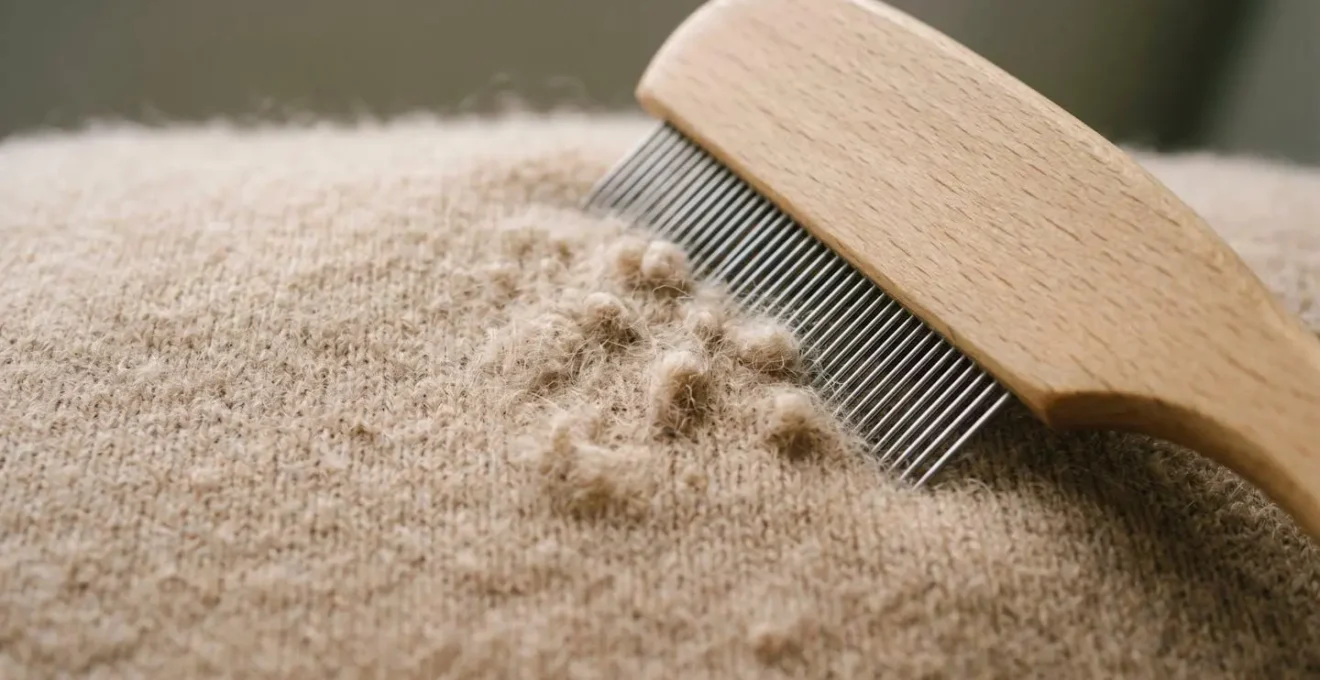
As the macro photograph shows, the goal is a delicate removal process that respects the fine structure of the fibers. A shaver is simply too blunt and indiscriminate an instrument for such a high-performance textile. Using one on a premium cashmere scarf is the equivalent of using a power sander on a piece of fine furniture.
The storage mistake that leaves holes in your scarf over summer
One of the most frustrating experiences for a cashmere owner is pulling their favorite scarf out of storage in the fall, only to find it riddled with tiny, inexplicable holes. The culprit is almost always the clothes moth (Tineola bisselliella). However, a common misconception is that moths are attracted to the luxurious cashmere fiber itself. This is incorrect, and understanding the truth is the key to effective prevention.
The single biggest storage mistake is putting away a scarf that is not perfectly clean. According to textile preservation research, moths are not drawn to the clean keratin of the cashmere fiber. Instead, they are attracted to the invisible traces of human life left on it: microscopic food stains, perspiration, body oils, and skin cells. To a moth larva, a dirty scarf is a pre-seasoned, five-star meal. Storing a scarf « as is » after a season of wear is an open invitation for an infestation.
Preventing this damage requires a strict, professional-grade storage protocol. It’s not about mothballs and luck; it’s about systematically removing the attractant and creating an inhospitable environment. Following these steps will ensure your scarf emerges from storage in the same condition it went in.
Your 4-Step Protocol for Moth-Proofing Cashmere
- Pre-storage cleaning (mandatory): Always clean your cashmere before storing it for the season. Follow the garment’s label for washing or dry-cleaning. This removes the food source that moths are attracted to, which is the single most important preventative step.
- Breathable vs. airtight storage: Use breathable cotton storage bags. Never use plastic bags or containers for long-term storage. Plastic traps residual moisture, which can lead to mildew and yellowing of the fibers over time.
- Proper folding technique: Never hang a cashmere scarf, as its weight will cause it to stretch and deform over months. Fold it gently along its natural lines or roll it loosely to avoid creating hard creases that can weaken the fibers.
- Deterrents and Environment: Add natural deterrents like cedar blocks or lavender sachets to the storage bag. Store the bag in a cool, dry, dark place. Moths and mildew thrive in warmth and humidity.
By following this protocol, you address the root cause of the problem—the food source—rather than just treating the symptoms. It’s a simple but non-negotiable process for protecting your high-value textile investment.
When to buy cashmere to get the best price (End of Season vs. Christmas)?
Timing the purchase of a high-quality cashmere scarf can have a significant impact on its price. Like any retail item, cashmere is subject to the laws of supply and demand, and understanding its seasonal cycle allows for a much more strategic investment. The two peak pricing periods are driven by weather and holidays, and the savvy buyer positions themselves outside of these.
The absolute worst time to buy cashmere from a price perspective is the period from November through late December. This is the confluence of two demand drivers: the onset of the coldest weather in the Northern Hemisphere and the peak Christmas gift-giving season. Retailers know that demand is at its highest, and prices are set accordingly. You are paying a premium for immediacy and seasonal relevance.
The most strategic time to purchase is during the end-of-season sales, typically from late January through March. By this point, retailers are looking to clear out their winter inventory to make space for incoming spring and summer collections. The immediate, weather-driven demand has subsided, and the focus shifts to liquidating stock. This is when you can find discounts of 30-50% or more on the exact same high-quality scarves that were selling for full price just two months earlier. You are essentially buying next winter’s high-performance gear at a significant discount by being counter-cyclical.

While it requires patience and foresight, purchasing during this transitional period is the single most effective way to lower the cost of entry for a premium cashmere piece without compromising on quality. You are buying the same material, the same craftsmanship, but simply at a more opportune moment in the retail calendar. It’s the ultimate move for a value-conscious investor in quality.
How to identify fake cashmere quality in under 30 seconds in-store?
The market is flooded with garments labeled « cashmere » that are either heavily blended with cheaper fibers or are low-grade (Grade C) cashmere with short, coarse fibers that will pill instantly and offer poor insulation. Being able to perform a quick, tactile quality assessment in the store is a critical skill to ensure you’re not overpaying for an inferior product. You don’t need a lab; you just need your hands and eyes. Here are three tests you can perform in under 30 seconds.
- The Two-Finger Rub Test: This tests for fiber length. Vigorously rub a small, inconspicuous section of the scarf between your thumb and forefinger for about 5-10 seconds. If small balls (pills) form almost immediately, it’s a major red flag. This indicates the use of short, cheap fibers that are prone to breaking and tangling. High-quality, long-fiber (Grade A) cashmere will resist this initial pilling and feel smooth.
- The Stretch & Rebound Test: This tests for resilience and fiber integrity. Gently stretch a small part of the fabric and observe how it behaves upon release. True, high-quality cashmere should spring back to its original shape instantly. If the fabric sags, looks distorted, or slowly returns to its shape, it suggests it’s either a low-grade fiber or blended with synthetics like acrylic or viscose that lack natural elasticity.
- The Light & Sheen Test: This tests for authenticity and fiber quality. Hold the scarf up to a store light. Authentic, high-grade cashmere has a very subtle, soft, matte-like luster, not a shiny, artificial sheen. A strong shine is a tell-tale sign of a blend with synthetic fibers like polyester or viscose. The surface should also show a very fine, almost invisible « bloom » or halo of tiny fibers (about 1-2mm long), which indicates the presence of the desirable long guard hairs of good cashmere.
These simple, physical tests cut through marketing language. They directly assess the properties that define genuine, high-performance cashmere. The standards are clear: according to international cashmere standards, premium fibers (Grade A) must be 14-16 microns, and anything above 19 microns is considered lower quality. These tests are a practical way to feel for that premium quality.
Cashmere vs. Mohair: Which texture irritates sensitive skin less?
For individuals with sensitive skin, the texture of a scarf is as important as its warmth. A material that causes itching or irritation around the neck is fundamentally unusable, regardless of its insulating properties. When comparing natural luxury fibers, cashmere and mohair are often considered, but their effect on skin is vastly different, a difference that can be explained by material science.
The sensation of « prickle » or irritation from a textile is directly related to the diameter of its individual fibers. Specifically, dermatological textile research indicates that skin irritation generally begins when more than 5% of fibers in a fabric exceed a diameter of 25-30 microns. These coarser fibers are too stiff to bend when they touch the skin, and instead poke it, triggering nerve receptors and causing the sensation of an itch.
This is where cashmere has a decisive advantage. As established, Grade-A cashmere has a fiber diameter of 14-15.5 microns, far below the irritation threshold. The fibers are so fine and flexible that they simply bend against the skin, creating a sensation of softness. This makes cashmere naturally hypoallergenic and an ideal choice for direct contact with sensitive areas like the face and neck.
Mohair, which comes from the Angora goat, has a more complex profile. While it’s known for its luster and « halo » effect, its fiber diameter varies significantly with the age of the goat. This table illustrates the critical difference:
| Factor | Cashmere | Mohair (Kid) | Mohair (Adult) |
|---|---|---|---|
| Fiber Diameter | 14-15.5 microns (Grade A) | ~20 microns | 30+ microns |
| Cuticle Scale Structure | Very smooth and flat against fiber shaft, minimizes friction | More pronounced scales, can create tickle sensation | Pronounced scales, prickle sensation |
| Halo Effect | Smooth bloom finish, fewer loose protruding fibers | Moderate fuzzy halo | Strong fuzzy halo of protruding fibers |
| Skin Sensitivity | Hypoallergenic, safe for sensitive skin | Generally comfortable, slight tickle possible | Can irritate sensitive faces/neck |
The conclusion is clear: while soft « kid mohair » is generally comfortable, it can still cause a « tickle » for some due to its more pronounced scales. Adult mohair, with fibers well over the 30-micron threshold, is highly likely to cause irritation on sensitive skin. For guaranteed comfort without compromising on luxury, cashmere is the superior technical choice.
Key takeaways
- Cashmere’s superior warmth is a scientific fact based on its ultra-fine fibers (14-16 microns) trapping more air than coarser wool.
- The true value of a $200 scarf is unlocked through meticulous care: de-pilling with a comb (not a shaver) and cleaning before storage to prevent moth damage are non-negotiable.
- Authentic, high-grade cashmere can be identified in-store via simple physical tests (rub, stretch, sheen) that assess fiber length and resilience.
Can You Machine Wash Silk or Must You Pay for Dry Cleaning Forever?
Expanding your wardrobe of high-quality accessories often leads to another expensive dilemma: the tyranny of the « Dry Clean Only » tag. Silk, much like cashmere, is a luxury fiber that seems to demand costly professional care. However, just as with cashmere, modern textile technology and knowledge can empower you to handle care at home, saving significant money and hassle. The key is distinguishing between silk types and using the correct protocol.
Not all silk is created equal. Traditional, high-sheen silks like Charmeuse or delicate Chiffon are indeed best left to professionals. Their weave is fragile and susceptible to water spotting and damage. However, many modern silk garments, particularly those with a matte finish like sand-washed silk or silk jersey, are specifically designed to be washable. If you can handle your cashmere at home, you can almost certainly handle these silks, often using the exact same tools and settings.
This creates an « Economical High-End Accessory Wardrobe » strategy. By investing in one set of gentle care supplies, you can service multiple luxury items. The zero-risk protocol is straightforward:
- Use a Mesh Bag: This is the single most important piece of equipment. It protects the silk from snagging on the washing machine drum.
- Select the Right Cycle: Use the ‘Delicates’ or ‘Hand Wash’ cycle on your machine. This uses cold water and minimal agitation to mimic gentle hand washing.
- Use the Right Detergent: This is the economic crossover point. The same pH-neutral, enzyme-free liquid detergent formulated for wool and cashmere is perfect for washable silk. Enzymes in standard detergents can degrade protein fibers like silk and cashmere.
- No Spin, No Heat: Set the machine to its lowest or « no-spin » setting. To dry, never use a machine dryer. Roll the garment in a clean towel to gently press out excess water, then lay it flat on another towel to air dry away from direct heat or sunlight.
By adopting this unified care system, you dramatically lower the total cost of ownership for your entire collection of fine accessories. You are no longer beholden to the recurring expense of dry cleaning, making the initial investment in quality pieces even more logical and sustainable.
Equipped with a textile tester’s mindset, the final step is to re-evaluate your cold-weather accessories not by their price tag, but by their performance metrics. By investing in superior materials and mastering their care, you transform a simple purchase into a long-term asset for comfort and warmth.