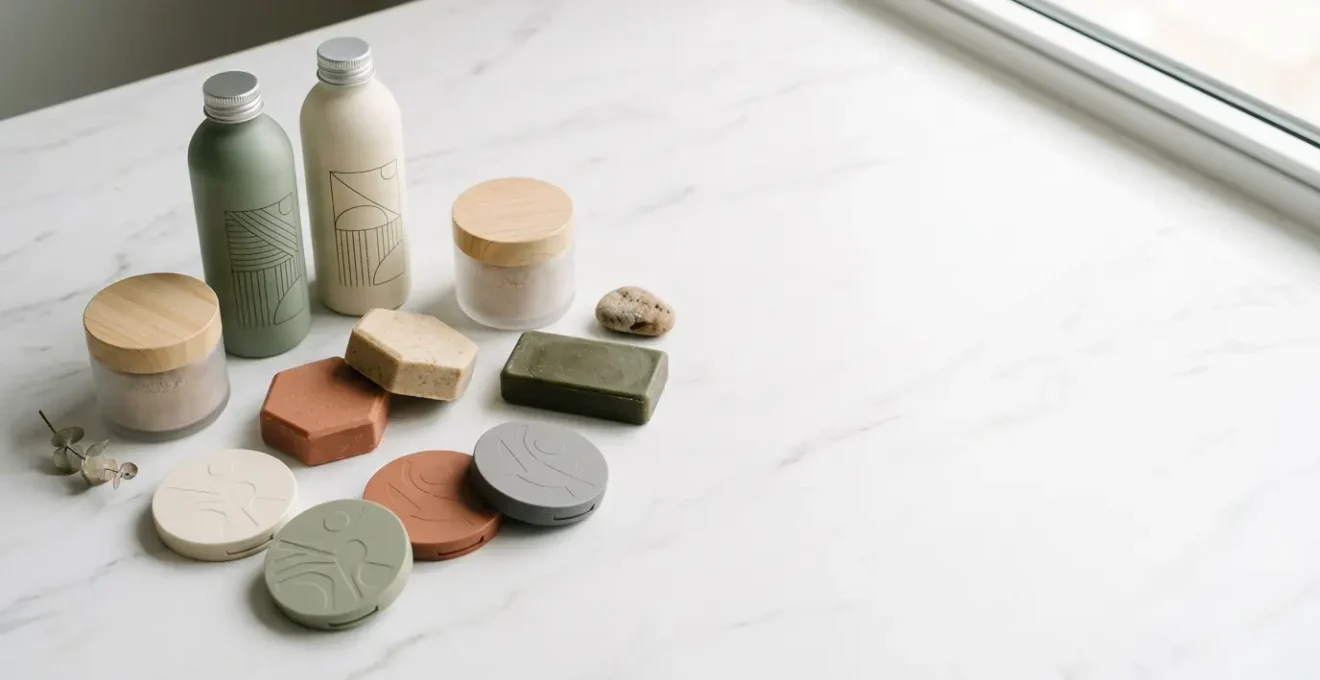
The single greatest advantage of waterless cosmetics isn’t just bypassing TSA rules; it’s the superior ingredient integrity and systemic efficiency from production to application.
- Powder formats are « preservative-free by design » because their waterless state naturally inhibits microbial growth.
- Manufacturing waterless products consumes significantly less energy and water, drastically reducing their environmental footprint.
Recommendation: Start by replacing one liquid product in your travel kit with a powder alternative to experience the benefits in stability and convenience firsthand.
The scene is painfully familiar: you’re frantically decanting your favorite face wash into a tiny, leaky bottle, hoping it’s under the limit for your carry-on. For years, the travel-savvy and minimalists have battled with the constraints of liquid toiletries, resorting to solid shampoo bars or simply buying subpar products at their destination. This cycle of waste, stress, and compromised routines has been accepted as a necessary evil of modern travel.
We’ve been told the solution is simply to find « solid alternatives. » But this view is shortsighted. It frames the problem as one of form factor alone, missing the bigger picture. The constant worry about spills, the diminishing potency of expensive serums exposed to air, and the sheer volume of preservatives needed to keep those water-based formulas stable are all symptoms of a larger, systemic issue with liquid-based personal care.
But what if the true travel hack wasn’t just avoiding liquids, but embracing a format that is inherently more stable, potent, and sustainable? This is the promise of waterless beauty. This isn’t about a simple swap; it’s about a fundamental upgrade. It’s about leveraging a system where ingredient integrity is paramount, the energy footprint is radically smaller, and you, the user, have final control over the product’s activation.
This article will deconstruct the systemic efficiency of powder cosmetics. We’ll explore the science behind their superior stability, provide actionable hacks for their use, and demonstrate how this shift not only solves your airport security woes but also aligns with a smarter, more sustainable future for beauty.
To navigate this comprehensive analysis, we will explore the key advantages and practical applications of embracing a waterless routine. The following summary outlines the journey from understanding ingredient science to mastering the art of the carry-on-only lifestyle.
Summary: Why Switching to Powder Shampoo Saves You Money and Airport Stress
- Why Vitamin C powder stays fresh for years compared to liquid serums?
- How to mix enzyme powders without creating a clumpy mess in your hand?
- Liquids vs. Solids: How to fly carry-on only with a full skincare routine?
- The grit mistake of not dissolving exfoliating powders fully before scrubbing
- 3 hacks to measure the perfect amount of powder cleanser every time
- The manufacturing energy mistake of heating creams unnecessarily
- Micellar Water or Wipes: Which actually cleans pores?
- Is Biotech the Future of Sustainable Beauty Ingredients?
Why Vitamin C powder stays fresh for years compared to liquid serums?
The primary weakness of liquid skincare, especially with notoriously volatile ingredients like L-Ascorbic Acid (Vitamin C), is water itself. Once dissolved, Vitamin C begins to oxidize when exposed to air, light, and heat, rapidly losing its potency. That expensive serum starts degrading the moment you open the bottle. This is why many liquid serums turn yellow or brown, a clear sign of oxidation and reduced effectiveness. It’s a battle against time that begins on the production line.
Powder formats completely sidestep this issue through ingredient integrity. By keeping the Vitamin C in its crystalline, anhydrous (water-free) state, it remains perfectly stable. As Dr. Luigi L. Polla, a renowned dermatologist, explains, the core challenge is instability when Vitamin C is dissolved in water. Bustle’s reporting on the topic highlights this expert consensus, noting that a powder format essentially pauses the degradation clock. A study cited by skin experts confirms that Vitamin C powders remain stable until mixed with a liquid, ensuring that every application delivers the ingredient at its peak potency.
The key challenge with vitamin C dissolved in water — as it is for use in typical skin care formulations — is its instability. It reacts with air and light.
– Dr. Luigi L. Polla, MD, Bustle
This isn’t just a minor benefit; it’s a fundamental shift in product efficacy. Instead of paying for a rapidly degrading asset, you’re investing in a stable ingredient that you activate on demand. This principle of activation control means you get a fresh, full-strength dose every single time, whether you’re at home or on the other side of the world. It’s the smarter, more efficient way to ensure your skincare is actually working for you.
How to mix enzyme powders without creating a clumpy mess in your hand?
The transition to powder cleansers can be thwarted by a simple, frustrating experience: creating a clumpy, gritty paste instead of a smooth, luxurious lather. This happens due to surface tension and improper hydration. Rushing the process by dumping water onto a pile of powder creates a waterproof barrier on the outside, leaving the inside dry and clumpy. Mastering activation control is key to unlocking the format’s potential.
Instead of frantic rubbing, an efficient « hacker » approach involves methodical hydration. The goal is to introduce water gradually, allowing each particle to be fully saturated before adding more liquid. This ensures a consistent, smooth texture every time.
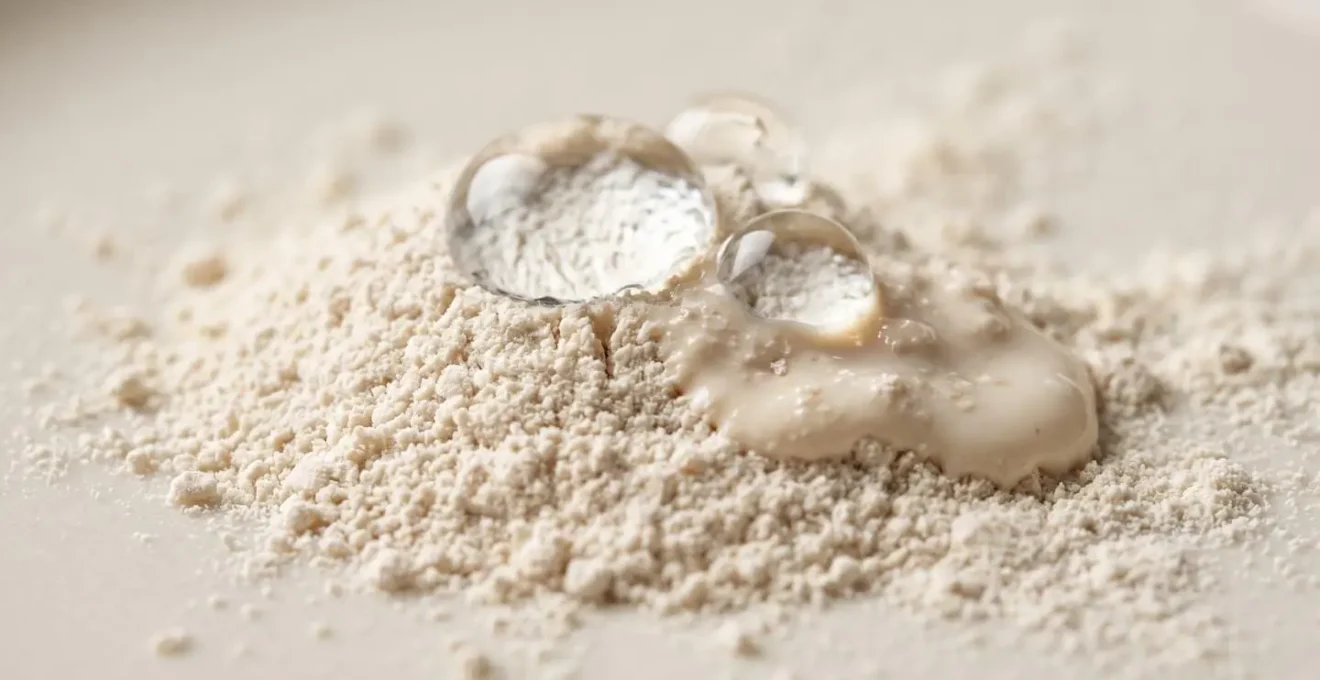
Forget guesswork. Three proven techniques guarantee a perfect, lump-free mix right in the palm of your hand:
- The Volcano Method: Create a small well in the powder pile. Add water drop by drop into the center, allowing the powder to absorb the liquid from the inside out.
- The Paste First Method: Add just one or two drops of water to the powder and mix thoroughly to create a thick, concentrated paste first. Once all lumps are gone, gradually add more water to thin it to your desired consistency.
- The Shaker Method: For ultimate perfection, use a tiny lidded container (like a repurposed sample jar). Add powder and water, close the lid, and shake vigorously for a flawlessly dispersed lather before applying.
Liquids vs. Solids: How to fly carry-on only with a full skincare routine?
For the minimalist traveler, the « 3-1-1 rule » for liquids is the ultimate constraint. The regulation is clear: travelers are limited to containers of no more than 3.4 ounces (100 milliliters) per item, all of which must fit into a single quart-sized bag. This forces a compromise: either leave essential products behind, decant into unreliable containers, or pay for expensive travel-sized versions that create more plastic waste. This is where the systemic efficiency of a waterless routine becomes a game-changer.
Powder and solid formats are largely exempt from these restrictions. A solid moisturizer balm or shampoo bar doesn’t count as a liquid, regardless of its size. Crucially, TSA regulations permit up to 12 ounces (around 350ml) of powdered substances in carry-on luggage, a volume that is more than ten times the allowance for a single liquid. This simple rule change unlocks the ability to travel with a complete, high-performance skincare and haircare routine without checking a bag.
Your 5-Step Waterless-Ready Audit
- Points of Contact: List every liquid product in your current travel toiletry bag (e.g., face wash, serum, shampoo, conditioner, toothpaste).
- Collect Alternatives: For each liquid, perform a quick search to identify a viable powder, tablet, or solid bar alternative.
- Coherence Check: Compare the key active ingredients. Does the powder alternative maintain the core function of your routine, or is it a compromise?
- Activation Test: Before you travel, buy and test one powder product at home. Assess if the mixing process (‘activation control’) fits your lifestyle.
- Integration Plan: Start small. Replace just one liquid product (like your cleanser) with its powder counterpart on your next trip to ease the transition.
Imagine a travel kit with a powder-to-foam cleanser, a potent Vitamin C powder, a solid moisturizer stick, a mineral powder SPF, solid shampoo and conditioner bars, and toothpaste tablets. This entire arsenal is TSA-compliant, spill-proof, and significantly lighter and more compact than its liquid-based equivalent. It’s not just about following the rules; it’s about building a more resilient, efficient, and stress-free travel system.
The grit mistake of not dissolving exfoliating powders fully before scrubbing
One of the most common user errors with powder-based exfoliants is impatience. In a rush, it’s tempting to quickly mix the powder with water and immediately start scrubbing. This is a critical mistake. Undissolved particles, whether they are enzymes, clays, or physical exfoliants like rice bran, remain sharp and abrasive. Applying this gritty mixture directly to the skin doesn’t result in a gentle exfoliation; it creates micro-tears and causes irritation, redness, and a compromised skin barrier.
The power of a powder exfoliant lies in its controlled activation. The goal is to create a smooth, creamy slurry where the exfoliating agents are evenly suspended, not a sandpaper-like paste. This requires giving the powder a few extra seconds to fully dissolve and bloom in the liquid. You should feel no discernible grit between your fingertips before the product touches your face. This step is non-negotiable for skin health.
As beauty editor Charlene Valledor emphasizes in Bustle, this principle applies to any powder-based treatment. Her advice is simple and direct: « You should also make sure your powder is thoroughly mixed into your cream or serum before applying it to your skin. » This simple check ensures the product performs as designed—as a sophisticated treatment, not a harsh scrub. Taking that extra 10 seconds to ensure a smooth consistency is the difference between a radiant complexion and an irritated one. It transforms the product from a potential hazard into a highly effective tool.
This small habit of ensuring full dissolution is a cornerstone of using these products effectively. It protects your skin barrier and allows the active ingredients to do their work without causing collateral damage. The efficiency of the product is only realized when paired with correct user application.
3 hacks to measure the perfect amount of powder cleanser every time
Unlike a liquid cleanser with a convenient pump, measuring the right amount of powder can feel like guesswork, leading to waste or an ineffective cleanse. A travel hacker, however, values precision and efficiency. Over-dispensing a concentrated powder is like pouring money down the drain. The key is to develop a consistent measuring technique that requires no special tools.
The goal is to find a repeatable physical action that dispenses approximately the same amount of product each time—typically a dime-sized amount for the face. Forget eyeballing it. Here are three practical, no-fuss hacks to achieve measurement consistency and maximize the life of your product, making your routine both economical and effective.
- The Quarter-Turn Shake: This works best with containers that have a sifter top with multiple holes. Instead of shaking wildly, hold the container upside down over your palm and give your wrist a quick, sharp quarter-turn. This controlled motion dispenses a consistent, predictable amount of powder every time.
- The Palm-Well Guide: Create a small well in the cup of your palm. Pour the powder directly from the bottle into this well, using the natural lines on your palm as a visual guide. Aim to fill a space roughly the size of a nickel or dime. This turns your hand into a reliable measuring cup.
- The Dry Brush Dip: For powders that come in a wide-mouthed jar, use a small, dry, dedicated brush (an old makeup or foundation brush works perfectly). Dip the very tip of the brush into the powder once. The amount that naturally clings to the bristles is often the perfect single-use dose. Tap the brush into your palm to release the powder, then activate with water.
By adopting one of these simple methods, you eliminate the variability of « just pouring » and transform the process into a precise, repeatable step. This ensures you’re using the product with maximum systemic efficiency, extending its life and guaranteeing a perfect cleanse each time.
The manufacturing energy mistake of heating creams unnecessarily
The advantages of waterless beauty extend far beyond the user’s bathroom cabinet; they begin at the source. The production of traditional liquid or cream-based cosmetics is a surprisingly energy-intensive process. Creating stable emulsions—the mixture of oil and water that forms the base of most lotions and creams—often requires heating large vats of ingredients to high temperatures and then cooling them down. This entire heating and cooling cycle consumes a significant amount of energy.
Powder formulations completely eliminate this step. They are created through a simple process of mixing and blending dry ingredients at room temperature. This represents a massive reduction in the product’s overall energy footprint. By designing a product that doesn’t require an emulsion, manufacturers can bypass the most energy-hungry part of the production line. This is a clear example of smart, sustainable design that tackles environmental impact at its root.
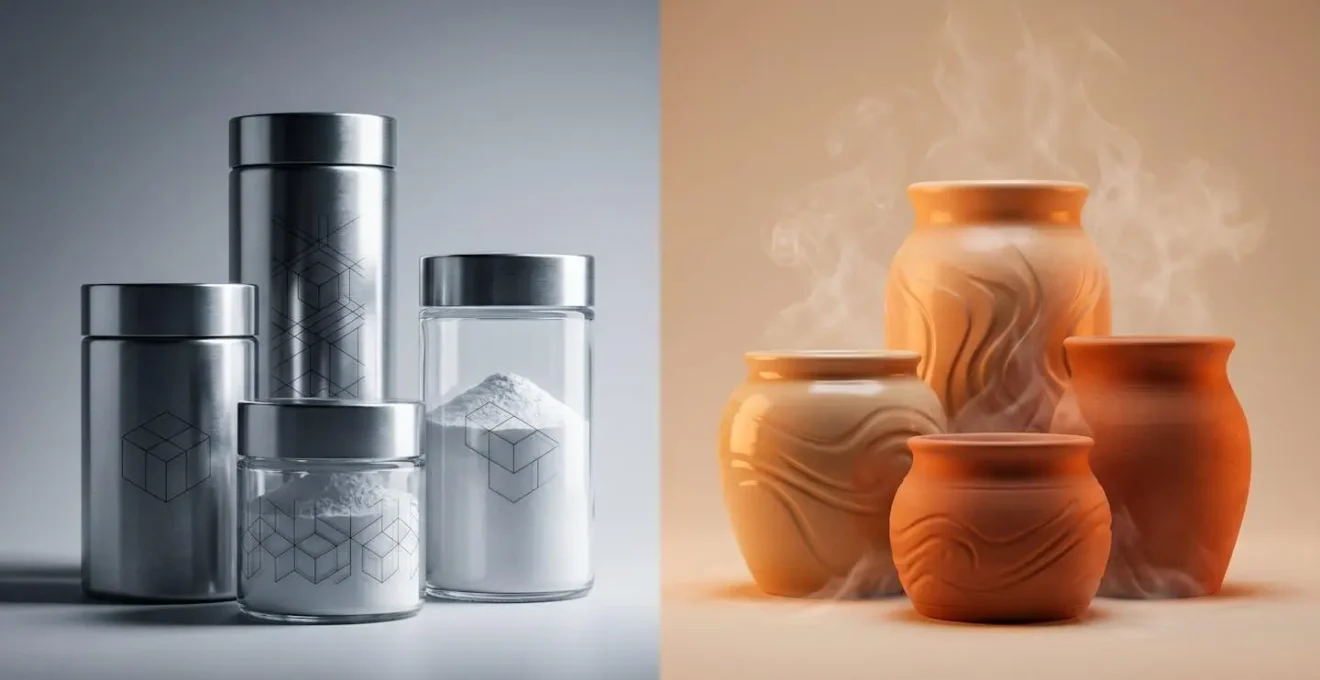
Furthermore, the water savings are staggering. Since the product is sold without water, there is no need to transport heavy, water-filled bottles from the factory to the warehouse to the consumer. This reduces shipping weight and, consequently, carbon emissions from transport. Specific manufacturing data shows that up to 5 liters of water can be saved in the production and lifecycle of a single bottle of powder shampoo compared to its liquid equivalent. It’s a clear win for systemic efficiency and a powerful argument for the format’s inherent sustainability.
Micellar Water or Wipes: Which actually cleans pores?
In the quest for convenient cleansing, micellar water and facial wipes have become go-to solutions, especially for travelers. However, their effectiveness in truly cleaning pores is highly debatable. Cleansing wipes primarily work by physically smearing makeup, oil, and debris across the skin’s surface, often pushing impurities deeper into pores rather than lifting them out. They also tend to leave behind a residue of preservatives and surfactants, which can lead to irritation and breakouts.
Micellar water is a step up, using tiny micelle molecules to trap dirt and oil. While effective for removing surface-level grime, it often fails to provide a deep cleanse. Without a rinsing action, a film of the product and the impurities it has trapped can remain on the skin. Both formats are also heavily dependent on preservatives due to their high water content, and they generate significant waste, either from single-use wipes or the cotton pads required for micellar water.
Powder cleansers offer a fundamentally different and more effective cleansing mechanism. When activated with water, they create a fresh lather of surfactants that emulsify and lift oil and dirt. More importantly, many formulations include ingredients like kaolin or bentonite clay, which have absorbent properties that actively pull impurities from within the pores. Because they are anhydrous, they are preservative-free by design and rinse away completely, leaving no residue behind. This table breaks down the core differences in performance and impact.
| Criterion | Micellar Water | Cleansing Wipes | Powder Cleanser |
|---|---|---|---|
| Primary cleansing mechanism | Micelles trap dirt and oil | Physical smearing/wiping | Surfactants + absorbent clays lift impurities |
| Water content | 80-90% water | 60-70% water | 0% water (anhydrous) |
| Preservatives required | Yes, high levels needed | Yes, high levels needed | No, self-preserving |
| Pore-cleansing depth | Surface-level, traps but doesn’t lift | Surface-level, can push debris | Deep clean, clays absorb from pores |
| Residue after use | Leaves micellar residue | Often leaves film/residue | Rinses completely clean |
| Environmental impact | Single-use cotton pads required | Non-biodegradable waste | Minimal packaging, no disposables |
| Typical shelf life | 6-12 months after opening | 3-6 months after opening | 24+ months, stable until activation |
Key Takeaways
- Powder cosmetics offer superior ingredient integrity, as water-free formulas prevent the oxidation and degradation of sensitive actives like Vitamin C.
- The energy footprint of powder products is drastically lower, as their production avoids the energy-intensive heating and cooling cycles required for liquid emulsions.
- Waterless formats are « preservative-free by design, » eliminating the need for many synthetic chemicals and offering a cleaner, more stable product.
Is Biotech the Future of Sustainable Beauty Ingredients?
The push for sustainability in beauty is accelerating, and the waterless trend is a significant part of that momentum. The financial markets reflect this shift; the global waterless cosmetics market, valued at USD 9.78 billion in 2023, is projected to soar to USD 23.60 billion by 2031. This growth isn’t just about consumer convenience; it’s about a deeper alignment with eco-conscious values. Now, this movement is converging with another powerful force: biotechnology.
Biotech in beauty refers to using lab-grown ingredients, fermentation-derived actives, and other bio-engineered materials. This approach offers incredible sustainability benefits, such as cultivating rare plant actives without over-harvesting, creating purer ingredients with less waste, and ensuring a consistent, ethical supply chain. The synergy between biotech and waterless formats is where the future of sustainable beauty truly lies.
Biotech-derived ingredients, which are often highly concentrated and pure, achieve their maximum potential when delivered in a stable, preservative-free base. A powder format is the perfect vehicle for these advanced actives. It protects their integrity until the moment of use, ensuring that the cutting-edge science translates into real results on the skin. This combination represents the pinnacle of systemic efficiency—marrying the most advanced, sustainable ingredients with the most stable and resource-efficient delivery system.
Case Study: Cryosmetics’ Biotech-Powered Waterless Launch
In September 2024, the brand Cryosmetics launched a groundbreaking line of 100% natural, waterless skincare products that perfectly illustrate this synergy. Their formulation focuses on self-preserving ingredients and microbiota health, completely eliminating synthetic preservatives. The launch demonstrates how biotech-derived ingredients like fermentation-based actives and lab-grown peptides achieve their highest stability and purity when delivered in powder-based formats. This model, highlighted in market analyses of industry innovators, proves that sustainability and high-efficacy are no longer trade-offs but are complementary design principles for the future of skincare.
The evidence is clear: shifting to powder-based cosmetics is more than a clever travel hack. It is a conscious decision to adopt a system that is more efficient, more sustainable, and ultimately, more effective from the moment of manufacture to the final application. It is the logical next step for the informed consumer. To put these insights into practice, the first step is to audit your own routine and identify the easiest liquid to replace.