Smart shopping
Have you ever calculated how much money sits unworn in your closet? For most people, the answer is staggering—often hundreds or even thousands in clothing, shoes, and accessories that seemed like a good idea at the time. The problem isn’t shopping itself; it’s how we approach it.
Smart shopping isn’t about deprivation or wearing the same outfit every day. It’s a fundamental shift in mindset: prioritizing quality over quantity, understanding what you’re actually buying, and building a wardrobe (and skincare routine) that works harder for you. Think of it as the difference between filling a bucket with holes versus one that holds water—both require effort, but only one delivers lasting results.
This resource covers the core principles that transform impulsive buyers into strategic investors. From decoding fabric quality and construction techniques to building a capsule wardrobe that survives every trend cycle, you’ll learn the practical skills that separate the truly stylish from those trapped on the consumption treadmill.
Why Quality Materials Are Your Best Financial Decision
When comparing a $200 wool sweater to a $50 synthetic alternative, the initial price difference seems obvious. But smart shopping requires looking beyond the price tag to the cost-per-wear equation. Premium natural fibers like 100% wool or silk can save you $500 or more annually simply by lasting longer and performing better.
The Hidden Costs of Cheap Fabrics
Synthetic blends often cause issues that cheaper prices can’t compensate for. During an eight-hour workday, polyester-heavy fabrics trap heat and bacteria, leading to body odor problems that require more frequent washing—which accelerates wear and fading. Meanwhile, quality wool naturally regulates temperature and resists odor.
The math becomes clear when you factor in replacement frequency. Four $50 shirts worn to destruction cost more than one $200 shirt that maintains its structure and appearance for years.
Identifying Quality in Store
Learning to spot genuine quality takes seconds once you know what to look for:
- The rub test: Vigorously rub fabric between your fingers for 10 seconds. If fibers ball up immediately, expect significant pilling within weeks.
- Cashmere verification: Check for 2-ply minimum construction and hold the garment to light—genuine cashmere feels substantial, not see-through.
- Seam inspection: Quality garments feature tight, even stitching with generous seam allowances for alterations.
Natural Fiber Face-Off: Cotton vs. Linen
Both cotton and linen excel as summer fabrics, but their aging trajectories differ significantly. Linen softens beautifully over five years while maintaining its structure, developing the coveted lived-in character that adds sophistication. Cotton, while initially softer, tends to thin and lose shape faster with repeated washing. For longevity-focused purchases, linen represents the smarter investment.
Construction Quality: The Invisible Value You’re Paying For
A well-constructed garment is like a well-built house: the foundation determines everything. Two blazers at the same price point can offer wildly different value based on their internal construction—knowledge that separates smart shoppers from frustrated buyers.
Canvas vs. Fused Lining: Why It Matters
The difference between canvas and fused lining becomes painfully obvious after dry cleaning. Fused linings use glue to attach interfacing to the outer fabric; heat and cleaning solvents break down this adhesive, causing visible bubbling that ruins the garment’s appearance.
Canvas construction uses stitching instead, allowing the blazer to age gracefully and conform to your body over time. This explains why a $300 structured blazer often proves cheaper long-term than multiple inferior replacements.
Fit Indicators You Can’t Ignore
Before purchasing any tailored piece, check for these warning signs:
- The X-crease—diagonal lines radiating from the button when fastened—signals a blazer that’s too tight. No tailoring fixes this.
- Lapels should lay flat against your chest without gapping.
- Shoulder seams must align with your actual shoulder bone.
Fabric Selection for Year-Round Versatility
Wool hopsack and tropical wool both offer year-round wearability, but serve different purposes. Hopsack’s textured weave adds visual interest for casual settings, while tropical wool’s smoother finish transitions seamlessly between professional and social contexts. A single navy blazer in either fabric serves client meetings and weekend brunches equally well.
Building a Capsule Wardrobe That Actually Saves Money
The capsule wardrobe concept promises freedom from decision fatigue and overstuffed closets. But does it actually deliver financial savings in the first year? The answer depends entirely on execution and avoiding common pitfalls.
The Five Pillars of a Trend-Proof Wardrobe
Every lasting wardrobe rests on investment pieces that transcend seasonal trends:
- Quality everyday boots—spending $300 outlasts buying $50 pairs twice yearly
- Properly fitted trousers—off-the-rack tailored to look bespoke costs less than designer
- A substantial coat—the piece that determines whether you freeze in October
- A versatile blazer—canvas construction in a neutral color
- Foundational basics—white shirts and similar staples worth buying in multiples
The Budget Split That Works
Allocating 70% of your clothing budget to timeless basics and 30% to trend-responsive pieces creates stability without boredom. This ratio acknowledges that trends offer novelty while preventing the discount mistake—those almost right purchases that accumulate into closet clutter because they never quite work with anything else.
The Resale Value Reality Check
Designer trenches retain approximately 60% of their value on the secondary market; high street equivalents typically hold zero. For major investment pieces, brand recognition and construction quality translate directly to exit value. Smart shoppers factor resale potential into initial purchase decisions, effectively reducing the true cost of ownership.
Strategic Planning: The Architecture of a Working Wardrobe
Approaching your wardrobe like an architect plans a house transforms random purchases into a coherent system. This structural thinking eliminates the frustration of owning nothing to wear despite a full closet.
The Color Coordination System
Selecting three neutral base colors and two accent colors creates a wardrobe where virtually everything combines. Navy, gray, and cream as neutrals, paired with burgundy and forest green as accents, for example. This constraint isn’t limiting—it’s liberating. Getting dressed becomes faster because decision fatigue disappears.
The Life Pie Chart Method
Draw a pie chart representing your actual life: what percentage involves work, casual weekends, formal events, athletic activities? Your wardrobe allocation should mirror these proportions. This exercise often reveals why closets overflow with party clothes worn twice yearly while everyday essentials are worn to exhaustion.
Timing Your Purchases Strategically
Winter coats offer the best selection in early autumn but the deepest discounts in late winter. Smart shopping means deciding which matters more for each specific purchase. For capsule staples where fit is crucial, prioritize selection. For trend pieces or replacements, timing for discounts makes sense.
Care and Maintenance: Extending the Life of Quality Pieces
Purchasing quality means nothing without proper maintenance. A single care mistake can shrink premium wool by two sizes or fade silk colors in an hour. Smart shopping extends beyond the purchase to include the knowledge that protects your investment.
Fabric-Specific Care Essentials
Silk’s remarkable temperature-regulating properties—cooling in summer, warming in winter—only persist with proper care. Yes, you can machine wash silk on delicate cycle with pH-neutral detergent, avoiding the forever dry cleaning trap. The critical mistake to avoid: never dry silk in direct sunlight, which fades colors rapidly.
For wool, the shrinking catastrophe usually involves hot water or tumble drying. Cold water, gentle cycle, and flat drying preserve fit and texture indefinitely.
Storage and Usage Wisdom
Packing away sweaters too early in April invites temperature fluctuations that damage fibers. Similarly, keeping your best coat in back-of-closet exile for special occasions deprives you of daily value. Quality pieces are meant to be used, not preserved. The investment pays off through regular wear, not careful hoarding.
Beyond Fashion: Smart Shopping Principles for Skincare
Smart shopping principles extend naturally to skincare, where technique often matters more than product price. Applying an expensive vitamin C serum incorrectly wastes both product and potential results.
Application Timing and Layering
The 15-minute wait after applying acids before adding the next serum isn’t arbitrary—it allows pH levels to normalize, ensuring each product penetrates effectively. Layer water-based serums before oil-based ones to prevent evaporation of active ingredients. This sequencing maximizes the value of every product in your routine.
Concentration and Value
With niacinamide, 10% concentration often delivers identical results to 20% with less irritation risk. Higher percentage doesn’t automatically mean better value—it means higher concentration, which isn’t always what skin needs or can effectively absorb. The smart shopper evaluates formulation quality, not just active ingredient percentages.
Recognizing Product Degradation
The color change that turns vitamin C serum orange or brown indicates oxidation—the product has become ineffective and potentially irritating. Proper storage in dark, cool environments extends potency. Recognizing when to replace products prevents wasting applications of degraded formulas on areas that age fastest: neck, hands, and chest.
Smart shopping ultimately represents a relationship change with consumption itself. Instead of the temporary satisfaction of quantity, it delivers the lasting satisfaction of quality, versatility, and strategic thinking. Whether evaluating fabric quality, planning wardrobe architecture, or applying skincare correctly, the underlying principle remains constant: invest thought before money, and the money works harder.
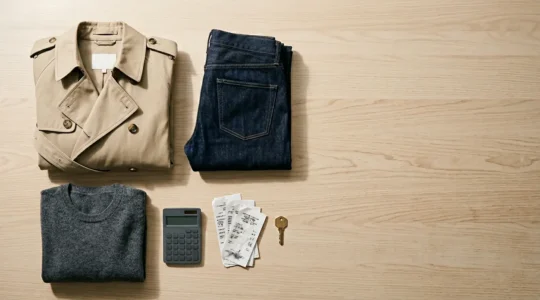
A Financial Audit: Is a Capsule Wardrobe Truly Cheaper in Year One?
Contrary to popular belief, a high-quality capsule wardrobe can be financially superior to fast fashion within the first 12 months. High upfront costs are offset by liquidating your old wardrobe and eliminating avoided impulse purchases. Quality items act as appreciating…
Lire la suite
How to Plan Your Wardrobe Like an Architect Plans a House?
The key to a functional wardrobe is to stop thinking like a collector and start planning like an architect: by designing a cohesive system, not just buying individual items. Your wardrobe’s composition should mathematically reflect your life’s activities, not your…
Lire la suite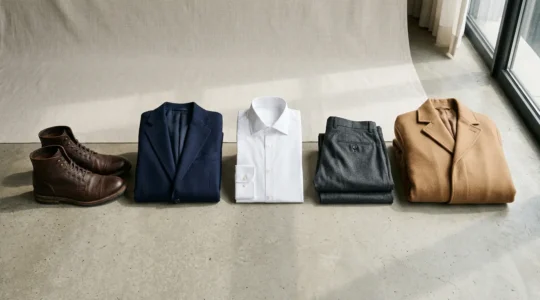
What Are the 5 Pillars of a Wardrobe That Survives Every Trend Cycle?
Building a timeless wardrobe isn’t about a magic list of items, but about applying five core architectural principles to create a functional system. True value is measured in « cost-per-wear, » not the initial price tag. A bespoke fit, achieved through tailoring,…
Lire la suite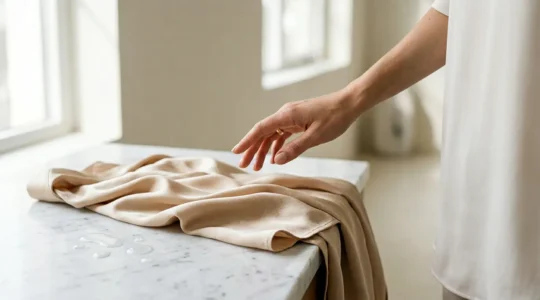
Can You Machine Wash Silk or Must You Pay for Dry Cleaning Forever?
The belief that all silk requires expensive, chemical-laden dry cleaning is a myth that costs you a fortune. Understanding silk as a high-performance protein fiber—not a fragile flower—is the key to unlocking its true value and longevity. Strategic machine washing…
Lire la suite
How to Dress for 10°C Mornings and 20°C Afternoons Without Carrying a Bag of Clothes?
The daily struggle of dressing for fluctuating temperatures isn’t solved by carrying more clothes, but by building a smarter, more systematic wardrobe. The key is to stop thinking in terms of individual garments and start acting like a « layering architect. »…
Lire la suite
Are You Wasting Money by Applying Your Vitamin C Serum Wrong?
Your high-end serum is likely delivering less than 30% of its potential efficacy due to common, unaddressed application errors, directly impacting your return on investment. The pH of your skin post-cleansing can neutralize your serum’s active ingredients on contact, wasting…
Lire la suite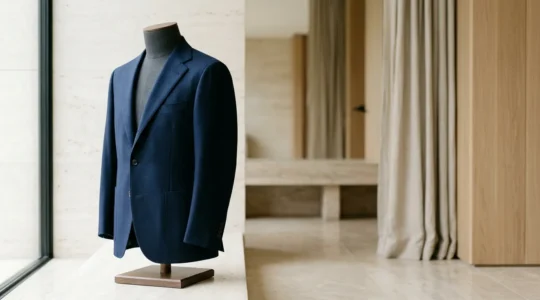
Is a $300 Structured Blazer Worth the Investment for a Capsule Wardrobe?
A $300 blazer’s value is proven not by its price tag, but by a measurable Cost-Per-Wear formula that positions it as a high-performing financial asset in your wardrobe. Superior construction (canvassed) provides structural integrity that outlasts cheaper, fused alternatives, drastically…
Lire la suite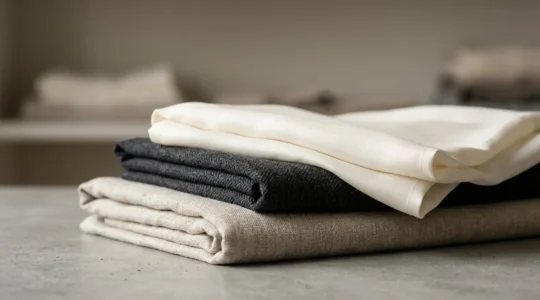
Why Buying 100% Wool or Silk Saves You $500 a Year on Replacements?
The true cost of fast fashion isn’t the price tag; it’s the predictable structural failure of poorly engineered materials. Synthetic fabrics like polyester are non-absorbent, creating a breeding ground for odor-causing bacteria that cheap laundry cycles can’t eliminate. High-quality garments…
Lire la suite