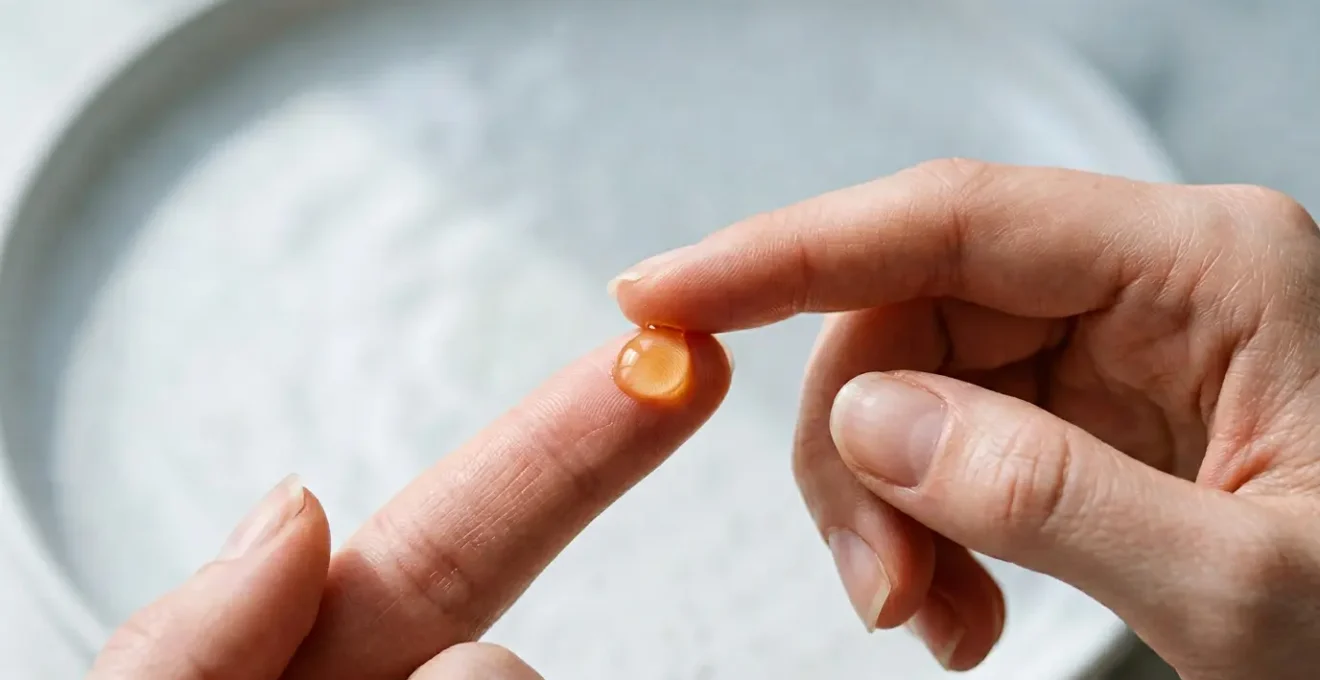
Your high-end serum is likely delivering less than 30% of its potential efficacy due to common, unaddressed application errors, directly impacting your return on investment.
- The pH of your skin post-cleansing can neutralize your serum’s active ingredients on contact, wasting the product.
- Incorrect layering of water-based and oil-based products leads to evaporation, preventing deep absorption.
Recommendation: Adopt a value-driven application protocol—treating each step as a strategic chemical transaction—to ensure every drop of your investment works for your skin, not against it.
You’ve made the investment. That small, often amber-tinted bottle of Vitamin C serum sits on your shelf, a promise of brighter, firmer skin. For skincare investors who meticulously select products for performance, the question isn’t just « is this a good serum? » but « am I getting the maximum return on this investment? » You follow the general advice—apply in the morning, follow with SPF—yet the results can feel underwhelming, leaving you to wonder if you’re pouring money down the drain.
The common discourse around Vitamin C focuses on its benefits, but rarely dissects the critical application failures that silently sabotage its efficacy. The problem isn’t the product; it’s the process. We often overlook the subtle chemistry at play on our own skin, turning a potent active into an expensive, ineffective lotion. This isn’t just about a beauty routine; it’s about asset management. When you pay a premium for high-performance actives, every drop counts.
But what if the key to unlocking your serum’s full potential wasn’t in buying a more expensive bottle, but in fundamentally re-engineering your application method? This guide departs from generic advice. We will audit your routine through the lens of an efficiency expert, identifying the precise points of value-loss—from pH conflicts and oxidative decay to suboptimal layering. We will treat your skincare shelf like a high-performance portfolio, ensuring your most valuable assets deliver the returns you expect.
This article provides a strategic framework to stop wasting product and start maximizing results. By understanding the science behind application, you can transform your routine from a hopeful ritual into a predictable, high-ROI system. The following sections break down the critical control points for achieving peak serum performance.
Table of Contents: How to Maximize the Value of Your Actives
- Why waiting 15 minutes after acids makes your next serum work better?
- How to layer water-based and oil-based serums to prevent evaporation?
- 10% vs 20% Niacinamide: Is stronger actually better value?
- The color change that warns you your Vitamin C is now useless trash
- 3 areas (Neck, Hands, Chest) you forget to treat that age faster
- L-Ascorbic Acid vs. Kakadu Plum: Which stays potent longer in the bottle?
- In what order should you layer scents to promote deep sleep?
- Can You Really Fade Sun Spots After 40 Without Lasers?
Why waiting 15 minutes after acids makes your next serum work better?
Waiting after applying an acid (like an AHA or BHA) is crucial because it gives the acid time to lower your skin’s pH, creating the optimal low-pH environment that a subsequent L-Ascorbic Acid (Vitamin C) serum needs for maximum absorption. Applying Vitamin C to skin that is at its normal, higher pH (around 5.5) dramatically reduces its bioavailability, effectively neutralizing your investment on contact. This waiting period is a non-negotiable step for maximizing your serum’s ROI.
Think of it as creating the perfect market conditions. L-Ascorbic Acid is most stable and permeable at a pH below 3.5. When you apply a glycolic or salicylic acid toner, you temporarily drop your skin’s surface pH into this ideal range. Rushing the next step and applying your Vitamin C serum before this pH adjustment has settled is like trying to sell ice in the winter—the conditions are wrong, and the transaction will fail. The wait time isn’t arbitrary; it’s a strategic pause to ensure the chemical environment is primed for peak performance. In fact, research demonstrates that the absorption of glycolic acid is nearly eight times higher at a pH of 3 than at a neutral pH of 7.
The exact timing can be optimized. While « 15 minutes » is a common recommendation, the key indicator is less about the clock and more about the skin’s state. You need to allow the acidic product to fully absorb and do its pH-adjusting work. For maximum efficiency, follow a simple touch-dry protocol: apply your acid, wait until the skin feels completely dry to the touch (typically 60-90 seconds), and only then apply your Vitamin C. This ensures you’re not diluting the acid or prematurely raising the pH, thereby securing the bioavailability of your expensive serum.
How to layer water-based and oil-based serums to prevent evaporation?
To prevent the evaporation of your serums, especially the expensive water-based ones, you must layer them strategically, following the « thin-to-thick » rule and finishing with an occlusive layer. The most significant loss of product value occurs through Transepidermal Water Loss (TEWL), where hydration and water-soluble actives escape from the skin. Layering an oil-based product or moisturizer on top of a water-based serum creates a seal, trapping the actives and moisture and forcing them to absorb into the skin rather than evaporate into the air.
The correct sequence is an exercise in applied chemistry. Begin with your most lightweight, water-based serums (like those containing hyaluronic acid or Vitamin C) on cleansed, toned skin. These have the smallest molecules and need direct access to penetrate effectively. After allowing a moment for absorption, you can « sandwich » the hydration. This technique involves applying your water-based serum, misting the face lightly with a hydrating toner, and then immediately applying a slightly thicker serum or a facial oil. This locks in a dual layer of hydration.
This « emulsion sandwich » technique is the key to preventing your investment from vanishing. The final, and most critical, step is the occlusive layer. This can be a dedicated facial oil or your daily moisturizer. This thicker layer acts as a physical barrier, significantly reducing TEWL and maximizing the contact time your water-based serums have with your skin. Without this seal, a significant percentage of your serum’s volume and potency is lost to the environment within the first hour of application.
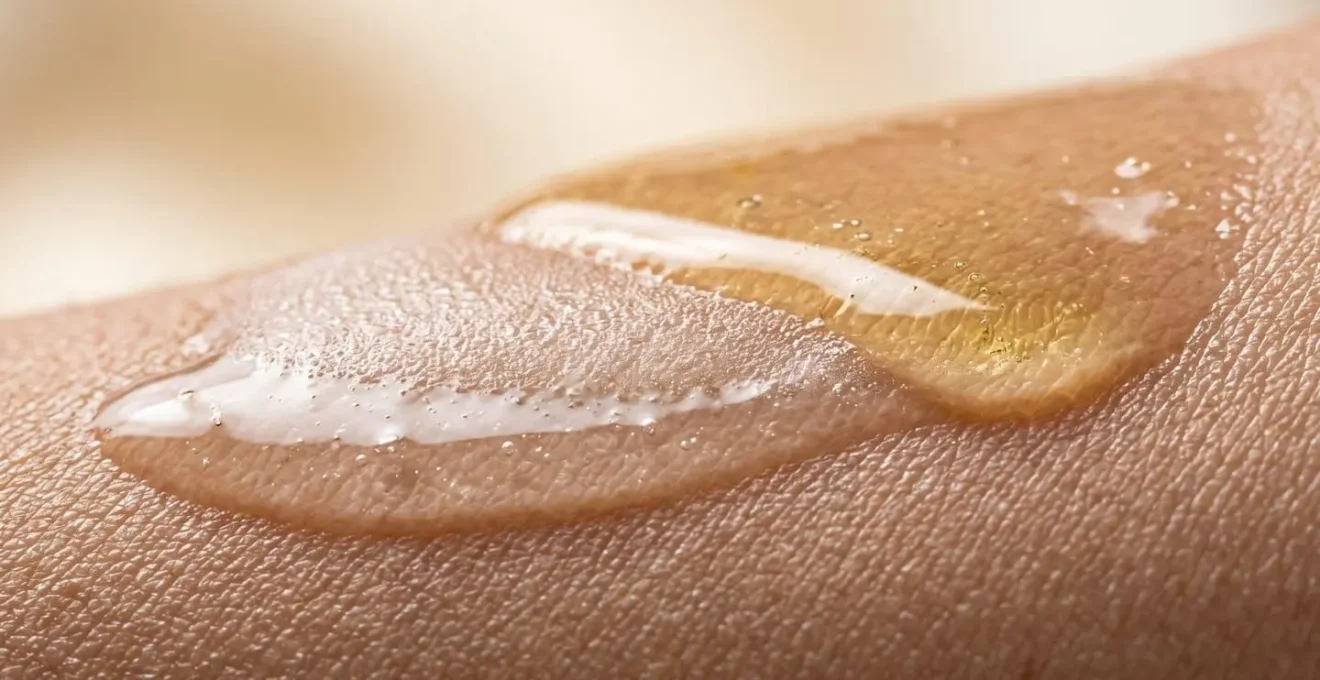
As this visualization shows, the goal is to create distinct, purposeful layers that work in synergy. An oil-based serum applied before a water-based one is a wasted effort, as the oil will block the water-based product from ever reaching the skin. Correctly ordered, these layers ensure that every dollar spent on your serum portfolio is given the maximum opportunity to deliver results.
10% vs 20% Niacinamide: Is stronger actually better value?
No, stronger is not actually better value when it comes to Niacinamide. For the savvy skincare investor, the 10% concentration represents the « efficiency frontier, » delivering the vast majority of the scientifically-proven benefits—such as sebum regulation, barrier support, and improved texture—with a minimal risk of irritation. Doubling the concentration to 20% offers only marginal additional benefits for most users but comes with a significantly higher price tag and an increased risk of redness and sensitivity, representing a case of diminishing returns on your investment.
The science supports a « less is more » approach. The primary benefits of Niacinamide for barrier function are well-established at concentrations between 4-5%. In fact, clinical studies confirm that even at a 5% concentration, the product showed no signs of irritation over a 21-day period, indicating it’s both effective and well-tolerated at these lower levels. While 10% offers a potent boost for tackling issues like enlarged pores, pushing to 20% often crosses the line from therapeutic to problematic, potentially disrupting the very skin barrier you’re trying to support. The extra cost is not just in the bottle price but in the potential need for « repair » products to calm the irritation caused by over-treatment.
The following analysis breaks down the value proposition, treating the choice between concentrations like an investment decision.
| Factor | 10% Niacinamide | 20% Niacinamide |
|---|---|---|
| Efficacy for sebum regulation | Optimal (sweet spot) | Marginal additional benefit |
| Barrier support benefits | Achieved at 4-5% | Diminishing returns above 10% |
| Irritation risk | Low for most skin types | Higher risk; potential barrier disruption |
| Cost-effectiveness | Better ROI with consistent use | Higher upfront cost + repair costs |
| Formulation quality impact | Critical (penetration enhancers matter) | Quality > concentration |
Ultimately, a high-quality 10% Niacinamide formulation used consistently will deliver a far greater return on investment than a 20% serum used sporadically due to irritation. Smart money focuses on the optimal effective dose, not the highest possible number on the label.
The color change that warns you your Vitamin C is now useless trash
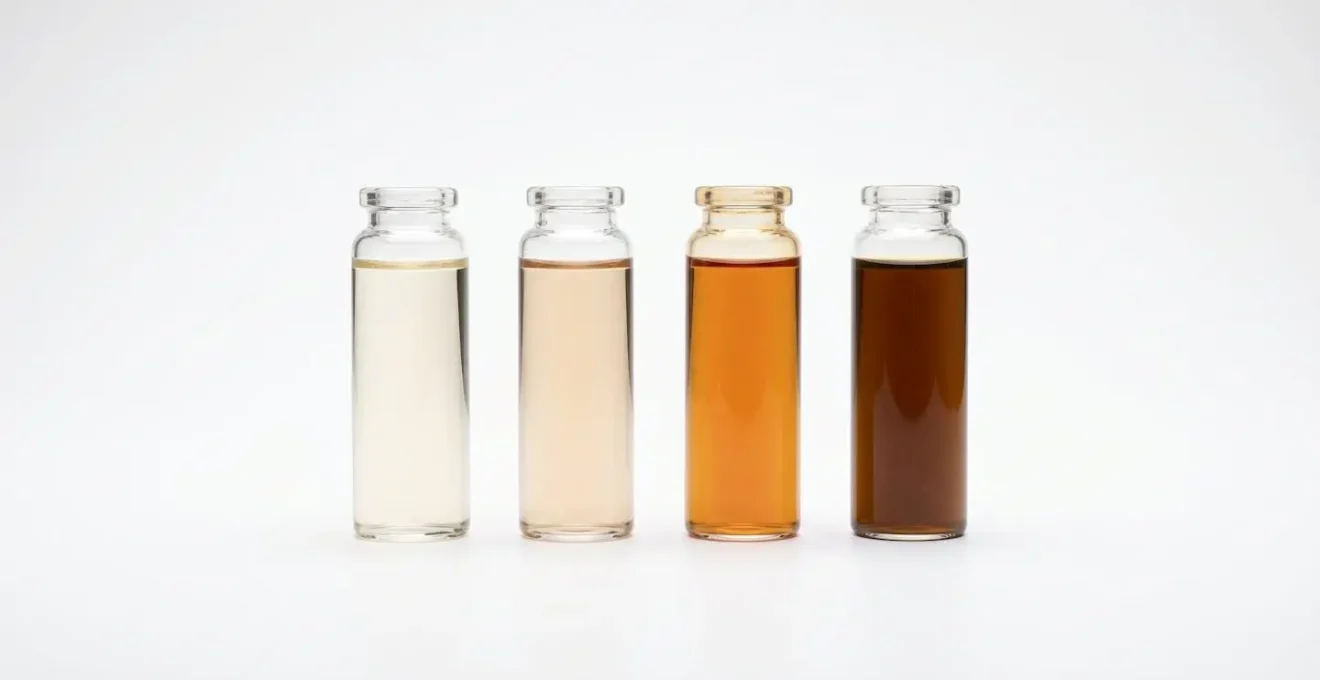
The most reliable visual cue that your Vitamin C serum is losing its potency—and your money is evaporating—is a change in color. A fresh, potent L-Ascorbic Acid serum should be clear or a very pale straw color. As it oxidizes through exposure to air, light, and heat, it begins to darken. A light champagne or pale yellow hue is a warning sign to use the product quickly. Once it turns amber, orange, or dark brown, the serum is largely oxidized, has lost its antioxidant benefits, and may even become pro-oxidant, creating free radicals instead of fighting them. At this point, it is effectively useless trash.
Oxidation is the enemy of your skincare investment. L-Ascorbic Acid is a notoriously unstable molecule, and this « potency decay » is an inevitable process. The color change is a direct visual indicator of the active ingredient degrading into dehydroascorbic acid and other compounds that offer no benefit to your skin. Using an oxidized serum is not just ineffective; it’s a financial waste and potentially harmful. Paying attention to this color spectrum is a crucial part of managing your skincare assets.
The image below provides a clear visual guide to assess the state of your serum’s potency.
To be a truly efficient investor, you must go beyond visual cues and proactively manage the factors that lead to oxidation. This includes assessing packaging economics and implementing a strict storage protocol. An airless pump will preserve potency far longer than a dropper bottle, offering a better long-term ROI despite a potentially higher upfront cost. Your goal is to maximize the number of *effective* doses you get from each bottle.
Action Plan: Vitamin C Oxidation Detection
- Smell Test First: Check for a metallic or ‘hot dog water’ scent before visual inspection. Your olfactory senses can detect the early stages of oxidation even before a significant color change.
- Color Spectrum Assessment: Use the established scale: Clear/pale straw is optimal potency. Champagne/light yellow means use within 2 weeks. Amber/orange should be demoted to use on the body (hands, chest). Dark brown requires immediate disposal.
- Packaging Economics Evaluation: Calculate your ‘cost-per-effective-dose.’ Divide the product price by the realistic number of usage days based on packaging (e.g., an opaque airless pump might offer 90 effective days, while a clear dropper bottle might only offer 30). This reveals the true value.
- Storage Protocol Implementation: Always store your serum in a cool, dark place like a cabinet—never on a sunlit counter. Tighten the cap immediately after every use to minimize air exposure. For maximum stability, consider refrigeration.
3 areas (Neck, Hands, Chest) you forget to treat that age faster
The three areas that reveal age most dramatically—and are most often neglected—are the neck, the chest (décolletage), and the back of the hands. From an asset management perspective, applying expensive serums only to the face is a flawed strategy. These three high-risk areas have a different biological makeup that makes them more susceptible to premature aging, and failing to « allocate » your potent actives to them undermines your overall anti-aging investment.
Applying leftover product to these zones is insufficient. They require deliberate, dedicated application because their skin is structurally different and under more environmental stress. Treating these areas is not a luxury; it is a core component of a comprehensive and efficient anti-aging strategy. Ignoring them means you are only solving for 25% of the visible aging equation, representing a poor return on your overall effort and expenditure.
Anatomical Vulnerability: Why These Areas Age Differently
The skin on the neck and chest is inherently thinner and contains fewer sebaceous glands (oil glands) compared to facial skin. This structural difference leads to a weaker moisture barrier, accelerated dryness, and quicker collagen and elastin breakdown from UV exposure. The back of the hands endures the most environmental abuse of any skin on the body, with constant sun exposure and frequent washing that strips its protective barrier. These anatomical and environmental factors explain why these areas often show signs of aging like crepey texture, sun spots, and loss of firmness even before the face does.
The logical conclusion is to treat these areas as primary targets, not afterthoughts. A truly effective strategy involves extending your entire facial routine—cleanser, active serums, moisturizer, and especially sunscreen—down to your chest and onto the back of your hands every single day. The cost of a few extra drops of serum applied to these areas is a marginal expense compared to the future cost of corrective procedures. It is a classic case of preventative maintenance yielding a higher long-term ROI.
L-Ascorbic Acid vs. Kakadu Plum: Which stays potent longer in the bottle?
Between pure L-Ascorbic Acid (L-AA) and a natural source like Kakadu Plum, the Kakadu Plum formulation will unequivocally stay potent longer in the bottle. This is the core of an essential investment decision for any serum user: are you a « sprinter » who can use a product quickly and consistently, or a « marathon runner » who needs stability and longevity above all else? Choosing the right active for your usage habits is key to maximizing value.
L-Ascorbic Acid is the pure, most biologically active form of Vitamin C. It’s a high-performance sprinter: incredibly fast and effective when fresh, but it burns out quickly, oxidizing rapidly upon exposure to air and light. As comparative research confirms that pure L-Ascorbic Acid has notoriously poor molecular stability, its value depreciates the moment you open the bottle. In contrast, Vitamin C from a whole-plant source like Kakadu Plum, or stabilized derivatives like Sodium Ascorbyl Phosphate, are the marathon runners. Their potency is often encased within a complex of natural co-factors or molecularly altered for stability, allowing them to remain effective for a much longer shelf-life.
The choice between them is a classic risk vs. reward, or rather, speed vs. stability scenario. Your personal ROI depends entirely on your behavior as a consumer.
| Characteristic | L-Ascorbic Acid (The Sprinter) | Kakadu Plum (The Marathon Runner) |
|---|---|---|
| Potency | Highest (pure active form) | Moderate (whole plant synergy) |
| Stability | Low (oxidizes rapidly) | High (natural co-factors stabilize) |
| Shelf Life | 2-4 months after opening | 6+ months with proper storage |
| Speed of Results | Fast (immediately bioavailable) | Gradual (steady delivery) |
| Best For | Diligent daily users seeking maximum efficacy | Infrequent users prioritizing longevity |
| ROI Factor | High if used quickly and consistently | Better value for slow/occasional users |
For a diligent user who will finish a 30ml bottle in two months, the high potency of L-Ascorbic Acid offers the best ROI. However, for an occasional user, or someone building a broader skincare portfolio, a stabilized derivative or a natural complex like Kakadu Plum is the smarter financial choice, as its value won’t have evaporated by the time you get to the end of the bottle.
In what order should you layer scents to promote deep sleep?
While not a topical active, optimizing your sleep is the final frontier for maximizing the returns on your skincare investments, as the body’s repair cycles are most active during deep sleep. Layering scents for sleep follows an « olfactory pyramid » protocol, moving from volatile top notes to heavy base notes to create a sustained aromatic environment that guides you into and through the stages of sleep. This isn’t just about pleasant smells; it’s about using fragrance as a biological tool to enhance the recovery phase where your skincare actually does its most important work.
The strategy involves timing the application of different scent profiles to match their evaporation rates with the phases of your sleep cycle. Just as you layer skincare from thin to thick, you layer scents from fleeting to tenacious. Confusing the olfactory system with multiple, conflicting nighttime product fragrances can create « scent noise. » For maximum effect, commit to a single scent profile for your evening routine or ensure your other products are fragrance-free.
Follow this timed layering protocol to create a cohesive, sleep-promoting scent-scape:
- Top Note Layer (The Wind-Down Phase): Approximately 30-45 minutes before bed, introduce a volatile, light scent like Bergamot or Lavender via a room mist or diffuser. These top notes initiate the relaxation response and are designed to fade within the first 1-2 hours as you drift off.
- Heart Note Layer (The Deep Sleep Phase): About 15 minutes before getting into bed, apply a medium-volatility oil such as Clary Sage or Chamomile to pulse points. These heart notes form the core of the fragrance and are engineered to last through the crucial hours of deep, non-REM sleep.
- Base Note Layer (The All-Night Anchor): At the moment of bedtime, apply a heavy, low-volatility scent like Sandalwood or Vetiver as a balm or oil to the chest or wrists. These base notes are the anchor, evaporating slowly to provide a subtle, grounding aroma that lasts 6-8 hours, right through until morning.
By treating scent as a functional tool rather than an afterthought, you are ensuring your body has the optimal recovery environment. This enhances the cellular repair processes that your expensive serums are designed to support, thereby protecting and maximizing your initial investment.
Key Takeaways
- Mind the pH Gap: Waiting 60-90 seconds after applying acids before your Vitamin C serum can increase absorption by up to 800%, maximizing potency and value.
- Concentration is Not Value: Higher percentages (e.g., 20% Niacinamide) often yield diminishing returns and higher irritation risk. Optimal efficacy is usually found at mid-range concentrations (4-10%).
- Oxidation is Financial Loss: A Vitamin C serum that has turned amber or brown is oxidized and useless. Monitor color and scent, and choose airless packaging to protect your investment from « potency decay. »
Can You Really Fade Sun Spots After 40 Without Lasers?
Yes, you can absolutely and significantly fade sun spots (hyperpigmentation) after 40 without resorting to expensive laser treatments. However, it requires a strategic, disciplined, and multi-pronged approach that treats your skincare routine as a serious protocol, not a casual ritual. For the skincare investor, this topical « Power Trio » strategy offers an exceptional ROI, delivering results comparable to in-office procedures over time, but at a fraction of the cost and with zero downtime.
The key is to move beyond a single-ingredient approach and instead deploy a synergistic portfolio of actives that target the pigmentation pathway from multiple angles. This involves:
- Preventing new pigment formation with a potent antioxidant.
- Accelerating the removal of existing pigmented cells with a cell turnover agent.
- Blocking the very enzyme responsible for melanin production.
This combined assault is what makes the strategy effective. Consistency over a period of 3-6 months is the « price » you pay, but the financial and skin-health benefits are substantial.
The Anti-Pigment Power Trio protocol is as follows:
- AM Application: A high-potency Vitamin C serum (10-20% L-Ascorbic Acid) is non-negotiable. Its primary role here is antioxidant protection to prevent UV exposure from triggering the creation of new pigment.
- PM Application #1: A retinoid product (such as prescription 0.025-0.1% tretinoin or over-the-counter adapalene/retinaldehyde) is the engine of the operation. It dramatically increases cell turnover, pushing existing, deeply lodged pigment up and out of the skin.
- PM Application #2: A tyrosinase inhibitor is the crucial blocking agent. This can be layered with the retinoid. Ingredients like Azelaic Acid (10-20%) or Alpha Arbutin (2%) work by directly inhibiting tyrosinase, the enzyme that synthesizes melanin. You are shutting down the melanin factory at the source.
The cost-benefit analysis when comparing this topical strategy to laser treatments is stark and compelling for any value-conscious individual.
| Treatment Approach | 12-Month Cost | Downtime | Timeline to Results | ROI Assessment |
|---|---|---|---|---|
| Topical Power Trio (Vitamin C + Retinoid + Tyrosinase Inhibitor) | $300-500 | None (possible mild peeling) | 3-6 months | High ROI for patient consumers |
| Single BBL/IPL Laser Session | $750-1,200 | 3-7 days redness/flaking | 2-4 weeks (may need multiple sessions) | Faster but higher cost per session |
| Fraxel Laser Session | $1,000-1,500 | 5-10 days significant peeling | 4-8 weeks (multiple sessions often needed) | Most invasive; cumulative cost high |
By adopting this strategic, value-driven mindset, you can transform your skincare shelf from a collection of products into a high-performance portfolio that delivers visible, consistent, and cost-effective results.