
The key to a functional wardrobe is to stop thinking like a collector and start planning like an architect: by designing a cohesive system, not just buying individual items.
- Your wardrobe’s composition should mathematically reflect your life’s activities, not your fantasy self.
- A strict budget allocation (like the 70/30 rule for basics vs. trends) prevents costly structural ‘defects’.
- True value is measured in ‘cost-per-wear’, making a high-quality initial investment cheaper in the long run.
Recommendation: Before buying your next item, draw a simple pie chart of your weekly activities. If the item doesn’t fit into the biggest slices of your life, it’s a design flaw, not a good purchase.
You have a closet full of clothes, yet you have nothing to wear. This paradox is the daily frustration of the impulse shopper, a sign of a collection rather than a system. The typical advice—to « find your personal style » or simply « declutter »—scratches the surface but fails to address the root cause. It’s like trying to fix a building’s structural problems by repainting a single room. These approaches often lead back to the same cycle of random acquisitions and growing dissatisfaction.
But what if the problem isn’t the clothes themselves, but the absence of a blueprint? An architect doesn’t start a project by collecting beautiful bricks; they begin with a master plan that defines the structure’s purpose, environment, and the lifestyle of its inhabitants. Treating your wardrobe with this same systemic, architectural logic is the key to transforming it from a chaotic pile of ‘almost-right’ items into a high-performance machine for living.
This guide will not ask you to create a mood board. Instead, it will provide you with a logical framework to engineer your wardrobe. We will deconstruct the process into core architectural principles: establishing a foundational color scheme, creating a lifestyle blueprint, allocating resources effectively, and calculating the long-term return on your investment. It’s time to move beyond impulse and build a wardrobe with intention, durability, and a clear purpose.
This article provides a systematic framework for building a wardrobe that truly serves you. The table of contents below outlines the key structural pillars we will construct, from foundational principles to advanced strategic planning.
Summary: A Blueprint for Your Wardrobe Architecture
- Why choosing 3 neutrals and 2 accents makes getting dressed faster?
- How to draw a pie chart of your life to stop buying party clothes you never wear?
- Basics vs. Trends: How to split your monthly clothing budget (70/30)?
- The discount mistake that fills your closet with « almost right » items
- When to buy winter coats to get the best selection vs best price?
- Coat vs. Blazer: Which core piece is missing if you freeze in October?
- Minimalism vs. Maximalism: Which aligns with your daily routine?
- Is a Capsule Wardrobe Actually Cheaper in the First Year?
Why choosing 3 neutrals and 2 accents makes getting dressed faster?
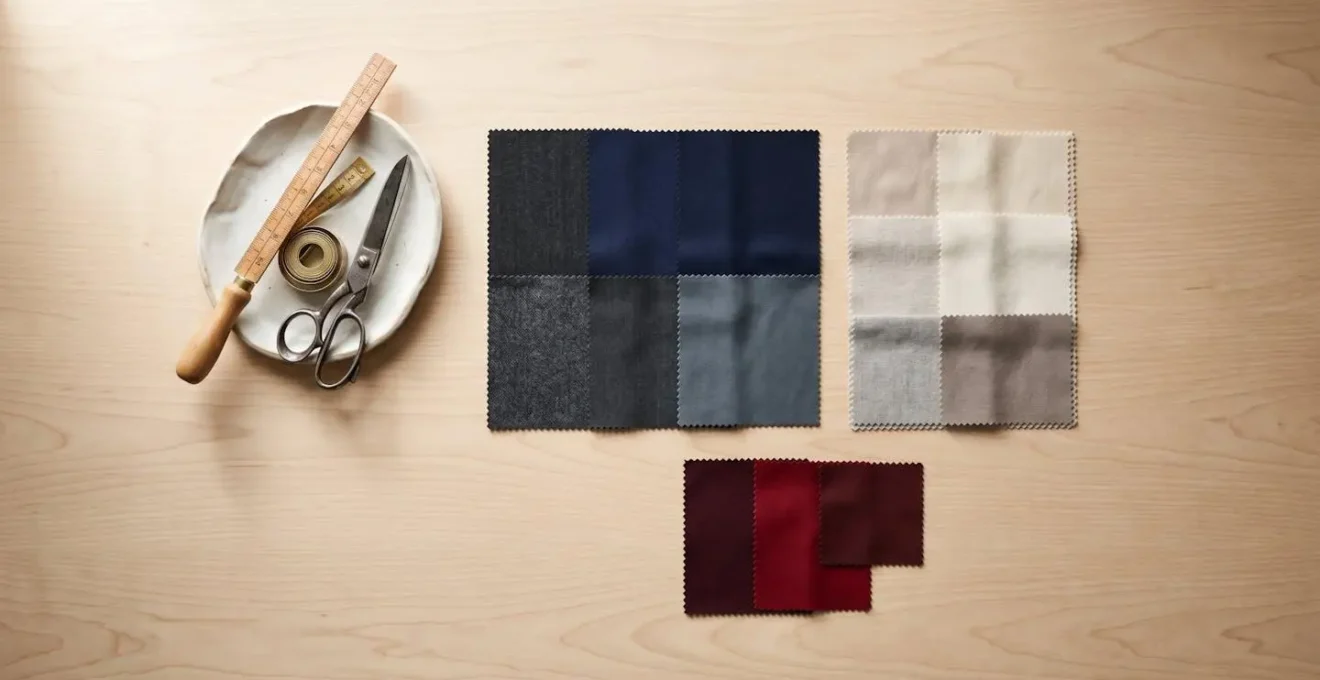
The first step in architectural design is establishing the foundational materials. In wardrobe architecture, this is your color palette. Adopting a strict 3-neutral, 2-accent color rule is not about limiting creativity; it’s about engineering efficiency by drastically reducing cognitive load. The average adult makes approximately 34 decisions related to clothing every single day. Each choice, no matter how small, depletes your mental energy, a phenomenon known as decision fatigue.
By defining a core palette—for example, black, grey, and navy as neutrals, with green and rust as accents—you create a closed system where almost every top works with every bottom. This transforms outfit selection from a complex daily calculation into a simple plug-and-play exercise. You are no longer asking « What goes with this? » but simply picking from a curated set of compatible components. This is the ‘why’ behind the speed: a pre-defined system requires less in-the-moment processing.
This systematic approach is proven to be effective. In fact, research shows that consumers experience up to 60% less decision fatigue when presented with limited, structured choices. A 3+2 palette is a simple algorithm you design once, which then runs automatically, saving you thousands of micro-decisions and valuable mental bandwidth over the course of a year. It’s the ultimate life-hack for a streamlined morning routine, built on logic, not luck.
How to draw a pie chart of your life to stop buying party clothes you never wear?
If your color palette is the foundation, your lifestyle pie chart is the blueprint. Architects design rooms based on function and frequency of use; you wouldn’t build a mansion with ten ballrooms and one bathroom. Yet, many wardrobes are built this way: 50% party dresses for a life that is 90% office work and weekend errands. The pie chart is a brutally honest diagnostic tool that forces your wardrobe to reflect your reality, not your fantasy.
The process is simple and analytical. Draw a circle representing a typical week. Fill it with slices proportional to your main activities: work (e.g., 45%), home/casual (e.g., 30%), fitness (e.g., 10%), social events (e.g., 10%), and formal occasions (e.g., 5%). This visual blueprint is now your purchasing guide. If 45% of your life is « work, » then roughly 45% of your functional wardrobe and budget should be dedicated to work-appropriate clothing. That sequin jacket for the 5% slice? It doesn’t get 25% of your budget.
This simple act of data visualization cuts through emotional, aspirational shopping. It quantifies the mismatch between your spending and your actual needs, which is a major source of closet chaos. When you consider that studies reveal that women spend an estimated 287 days over a lifetime deciding what to wear, it becomes clear that a wardrobe misaligned with one’s life is a significant source of wasted time and energy. The pie chart is the architect’s tool to ensure the structure serves its inhabitants.
Basics vs. Trends: How to split your monthly clothing budget (70/30)?
With a blueprint in place, an architect allocates resources. For your wardrobe, this means a structured budget that separates the ‘load-bearing walls’ from the ‘decorative paint’. The 70/30 rule is a simple yet powerful financial framework for this: allocate 70% of your budget to foundational basics and 30% to seasonal trends. This isn’t an arbitrary split; it’s a risk management strategy that ensures long-term structural integrity.
The 70% is your investment capital. It goes towards high-quality, timeless, versatile pieces that form the core of your system: a perfectly fitting blazer, durable denim, classic leather shoes, a well-made coat. These items have a high upfront cost but a low cost-per-wear over their long lifespan. They are the non-negotiable assets that make the rest of the wardrobe function. The 30% is your ‘research and development’ or ‘experimental’ fund. It’s for the trendy color, the of-the-moment silhouette, or the fun accessory that keeps the system feeling fresh and modern without jeopardizing the core structure.
To implement this, you first need a budget. As a guideline, many financial planning experts suggest spending around 5% of your monthly income on clothing. If your monthly take-home is $4,000, your clothing budget is $200. Applying the rule, you have $140 for investment basics and $60 for trend-driven items. This discipline prevents you from buying a cheap, trendy jacket that falls apart, when you should have been saving for the foundational trench coat your system lacks.
Action Plan: Implementing the 70/30 Budget Rule
- Determine your monthly clothing budget (e.g., 5% of net income).
- Allocate exactly 70% of that budget to a separate ‘Basics Fund’ for timeless, versatile pieces.
- Reserve the remaining 30% for a ‘Trends Fund’ to purchase seasonal or experimental items.
- Prioritize the ‘Basics Fund’ to acquire core pieces with higher upfront cost but better long-term value.
- Track the cost-per-wear of your basics over six months to confirm they justify their initial investment.
The discount mistake that fills your closet with « almost right » items
Every well-designed system is vulnerable to bugs that corrupt its integrity. In wardrobe architecture, the most common bug is the « discount mistake. » This is the psychological glitch triggered by a sale sign, causing you to acquire an item that is ‘almost right’ but not perfect. It’s the sweater in a color that’s slightly off your palette, or the jeans that fit well enough, but not flawlessly. You buy it not because it fits the blueprint, but because the price creates a false sense of urgency and value.
These ‘almost right’ items are Trojan horses. They enter your closet, take up space, and create noise, making it harder to see and use the ‘perfectly right’ pieces. They are the primary reason why, as clinical psychologist Dr. Jennifer Baumgartner notes, most people regularly wear only 20% of the clothes in their closet. The other 80% is largely comprised of these compromised purchases and aspirational pieces.
The impact is quantifiable. A recent analysis revealed that nearly half of women (48%) admit to buying outfits they only wear once, often driven by the allure of a discount rather than a genuine need. Each of these single-use items is a resource allocation error. An architect would never accept a window that is ‘almost’ the right size just because it was on sale; it would compromise the entire structure. To build a functional wardrobe, you must adopt the same discipline: an item is either a 100% fit for your system’s blueprint, or it’s a 0%. There is no ‘almost right’.
When to buy winter coats to get the best selection vs best price?
Strategic acquisition is a hallmark of architectural planning. You don’t buy steel beams in the middle of a construction boom. Likewise, timing the purchase of major wardrobe investments, like a winter coat, is a strategic choice between optimizing for selection or for price. Understanding the retail calendar allows you to make a data-driven decision that aligns with your specific needs, rather than buying reactively when the first cold front hits.
There is a clear and predictable trade-off throughout the season. Buying early (August-September) gives you maximum selection. This is the time to shop if you need a specific size, color, or style that is likely to sell out. You will pay full price, but you are guaranteed to get the exact component your system requires. Waiting for mid-season sales like Black Friday offers a balance, with moderate discounts but still a good range of options. Finally, end-of-season clearance (January-February) provides the deepest discounts, but with severely limited selection. This is the optimal time for bargain hunters who are flexible on specifics.
The following table, based on an analysis of retail coat pricing cycles, breaks down this strategic timeline. It’s your project management guide to acquiring a cornerstone piece of your wardrobe architecture.
| Shopping Period | Discount Level | Selection Quality | Best For |
|---|---|---|---|
| August-September (New Arrivals) | 0-10% off | Full selection, all sizes | Finding exact style/color/size needed |
| Black Friday (November) | 25-35% off | Good selection remaining | Balancing decent discount with choice |
| January-February (Clearance) | 50-75% off | Limited sizes/colors | Maximum savings, flexible preferences |
| President’s Day (Mid-February) | 60-75% off | Final clearance, sparse | Absolute lowest prices, uncommon sizes |
Coat vs. Blazer: Which core piece is missing if you freeze in October?
An architect understands that a building needs different layers of protection against the elements. A blazer is an interior wall: it provides structure and polish within a climate-controlled environment. A coat is an exterior wall: its primary function is to shield you from the weather. If you find yourself freezing during transitional seasons like October, it’s a sign of a critical gap in your wardrobe’s ‘insulation and weatherproofing’ system. You are likely missing a proper mid-weight outer layer.
The mistake many make is trying to force a single piece to do two different jobs. A stylish wool blazer, however thick, is not designed to block wind or rain. A heavy winter parka is overkill for a crisp autumn day. The solution lies in having the right transitional pieces that can be layered effectively. The goal is to create a modular system that adapts to temperature fluctuations throughout the day, from a cool morning commute to a warm office and a chilly evening.
A ‘transitional wardrobe audit’ can quickly identify these gaps. Your system needs specific components designed for this very purpose. Key pieces to look for include:
- A proper mid-layer: A thin merino wool or cashmere sweater, or a down vest, provides insulation without bulk under a blazer or light coat.
- A water-resistant outer layer: A classic trench coat or a lightweight technical jacket is essential for unpredictable rain and wind.
- A large scarf or wrap: This is the most flexible tool, acting as ‘weather-stripping’ for your neck or shoulders as temperatures change.
- Appropriate footwear: Closed-toe leather boots or loafers that can handle a damp sidewalk are non-negotiable.
Freezing in October isn’t a sign you need more clothes; it’s a diagnostic signal that your system is missing a key functional category: the transitional outer layer.
Minimalism vs. Maximalism: Which aligns with your daily routine?
Within architecture, you have different design philosophies, from the stark functionalism of brutalism to the ornate detail of baroque. Similarly, in wardrobe planning, Minimalism and Maximalism are not just aesthetics; they are two different operating systems. Choosing the right one depends less on a fleeting trend and more on the functional demands of your daily routine—your lifestyle blueprint.
Minimalism is a system optimized for efficiency, interchangeability, and low cognitive load. It’s built on a small number of high-quality, versatile pieces in a tight color palette. This system excels in stable, predictable environments. It’s perfect for the professional with a consistent dress code, whose life requires a reliable, streamlined uniform. The risk is potential monotony if not curated with texture and fit in mind.
Maximalism, in contrast, is a system designed for high levels of self-expression, variety, and creativity. It involves a larger collection of unique statement pieces, bold patterns, and diverse colors. This system thrives in dynamic, creative environments. It’s ideal for the artist, freelancer, or individual whose personal and professional life involves frequent social events and demands a high degree of visual communication. The risk is chaos and decision fatigue if not underpinned by a strong organizational logic.
Case Study: The Hybrid Model
The choice isn’t always binary. A mother of four documented her 15-year journey to build a functional wardrobe while managing multiple life roles. She discovered that a strict minimalist approach felt too restrictive for her varied life. The solution was a ‘hybrid model’: a tightly planned, minimalist core wardrobe for her professional life, combined with a flexible, maximalist set of pieces for weekends, creative projects, and family time. This programmatic approach allowed her wardrobe to serve diverse functions efficiently without sacrificing expression, proving that the most advanced system is the one that is custom-built for the user’s complex reality.
To summarize
- Wardrobe planning is an engineering task, not just a shopping habit. Use a blueprint (your lifestyle) to guide all acquisitions.
- Systematic rules (like the 3+2 color palette and 70/30 budget split) reduce daily decision fatigue and protect your long-term investment.
- The true cost of an item is its price divided by its number of wears (Cost-Per-Wear). A cheap, rarely-worn sale item is more expensive than a quality, everyday basic.
Is a Capsule Wardrobe Actually Cheaper in the First Year?
This is the critical question of return on investment (ROI). A capsule wardrobe, or any architecturally planned wardrobe, operates on the principle of high initial investment for long-term savings and efficiency. The answer is nuanced: in the first year, it is often not cheaper in terms of cash outlay, but it is almost immediately more valuable.
Building a functional core from scratch or replacing underperforming items requires a significant upfront cost. Estimates suggest that building a complete, quality capsule wardrobe can cost between $500 and $1,500 initially. This is the capital expenditure needed to lay a proper foundation. It can be a shock compared to the drip-feed of small, impulse purchases of fast fashion. However, this comparison is flawed because it ignores the hidden costs of a dysfunctional wardrobe: the cost of items worn only once, the cost of constant replacement, and the mental cost of decision fatigue.

The key metric for evaluating this investment is Cost-Per-Wear (CPW). This simple calculation (Total Cost of Item ÷ Number of Times Worn) reveals the true cost of your clothes.
- A $30 fast-fashion sweater worn 3 times has a CPW of $10.
- A $200 quality wool sweater worn 100 times has a CPW of $2.
Over time, the planned wardrobe, with its low CPW on foundational items, becomes dramatically cheaper. In the first year, you are front-loading your investment. You are paying for durability, versatility, and system compatibility. While the bank account might take a bigger initial hit, you are eliminating the endless cycle of wasteful spending, making your wardrobe cheaper in total cost of ownership from year two and beyond.
Start today by auditing one section of your current wardrobe. Calculate the cost-per-wear of your five most-worn items versus your five least-worn. The data will provide a clear, logical starting point for your new architectural plan.