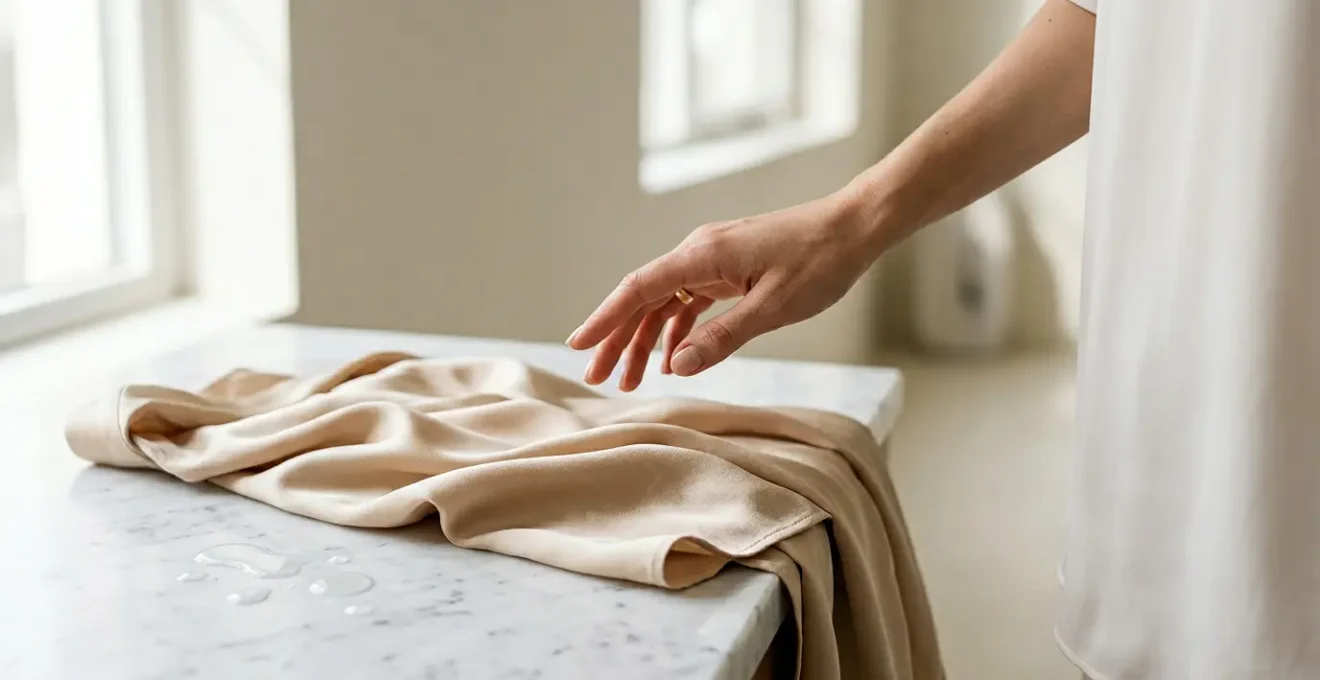
The belief that all silk requires expensive, chemical-laden dry cleaning is a myth that costs you a fortune.
- Understanding silk as a high-performance protein fiber—not a fragile flower—is the key to unlocking its true value and longevity.
- Strategic machine washing with the right technique is not only possible but also better for the fabric’s long-term health than the harsh solvents used in dry cleaning.
Recommendation: Ditch the dry cleaner. Embrace a cost-saving, strategic laundering approach to make silk an affordable, everyday luxury.
That silk blouse or pillowcase you love feels like a high-maintenance luxury, doesn’t it? The conventional wisdom screams « Dry Clean Only! »—a recurring tax on your favorite items, complete with a lingering chemical smell and a hit to your wallet. You’re told it’s too delicate, too precious, and one wrong move in the wash will lead to a shrunken, faded disaster. This fear keeps your best pieces either trapped in plastic bags or relegated to « special occasion » status, dramatically reducing their value.
But what if this narrative is fundamentally wrong? What if the key to caring for silk isn’t treating it like a fragile artifact, but understanding it as the high-performance natural fiber it truly is? The secret isn’t fear; it’s fiber intelligence. By learning the science behind its protein structure and adopting a few rebel techniques, you can break free from the dry-cleaning cycle forever. This isn’t just about cleaning your clothes; it’s about shifting your mindset from seeing silk as a cost to seeing it as a long-term investment in your comfort and style.
This guide will dismantle the myths and give you the confidence to take control. We’ll explore the science that makes silk so unique, provide a battle-tested method for machine washing, and reveal the wardrobe economics that prove investing in quality natural fibers saves you hundreds of dollars. It’s time to stop paying others to care for your clothes and start maximizing the life and value of every silk piece you own.
To navigate this journey from fabric fear to fiber freedom, we’ve broken down the essential knowledge into clear, actionable sections. Explore the full guide or jump directly to the topic that matters most to you right now.
Summary: A Rebel’s Guide to Silk Care and Wardrobe Economics
- Why silk keeps you cool in summer but warm in winter?
- How wearing natural fibers reduces daily stress levels in high-pressure jobs?
- Why Buying 100% Wool or Silk Saves You $500 a Year on Replacements?
- How to remove an oil stain from a silk blouse without leaving a water ring?
- The drying mistake that fades your silk colors in one hour
- Pillowcase vs. Hair Wrap: Which silk item reduces morning frizz best?
- Seamless vs. Shapewear: What works under sheer silk?
- 3 ways to style a silk camisole for casual weekends to justify the price
Why silk keeps you cool in summer but warm in winter?
The « magical » ability of silk to adapt to your body’s temperature isn’t magic at all—it’s pure science, rooted in the fiber’s unique structure. Unlike flat, synthetic fibers, each silk thread has a triangular prism shape. This structure is the secret to its power. These microscopic triangles create tiny air pockets within the fabric. In cold weather, these pockets trap your body heat, forming an incredibly lightweight, breathable layer of insulation. A scientific analysis of this effect shows these natural air chambers reduce heat loss by up to 25% compared to cotton, functioning like double-paned windows for your skin.
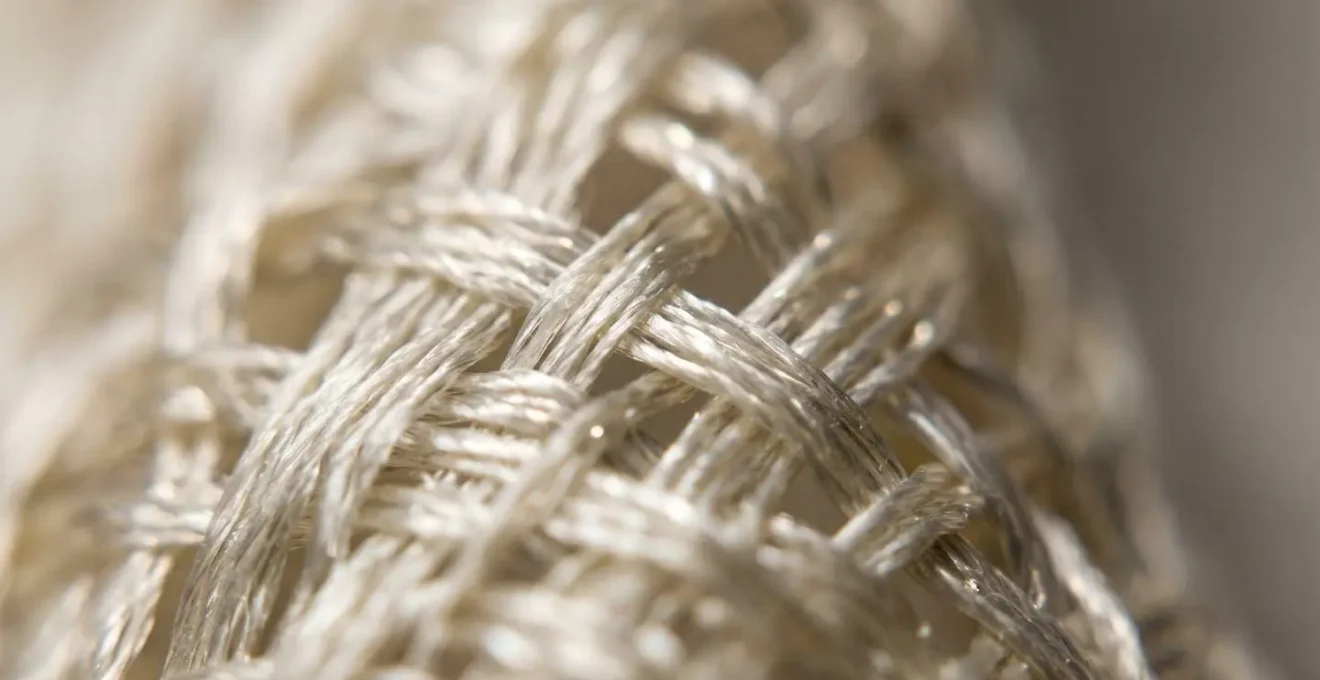
In hot weather, silk’s other superpower takes over: moisture management. The fibroin protein that makes up silk is highly absorbent, capable of holding up to 33% of its weight in moisture without feeling damp. Instead of trapping sweat against your skin like many synthetics, silk wicks it away and allows it to evaporate quickly, creating a cooling effect. This dual-action performance—insulating when it’s cold and breathing when it’s hot—is what makes silk a true all-season, high-performance fabric, far superior to materials that only serve one purpose.
How wearing natural fibers reduces daily stress levels in high-pressure jobs?
The link between your clothing and your mental state is far more direct than most people realize, especially in high-pressure environments. Your body’s effort to stay cool or warm, a process called thermoregulation, consumes a surprising amount of cognitive energy. When you wear non-breathable synthetic fabrics, your body works overtime to manage heat and sweat, diverting precious mental resources away from focus, decision-making, and problem-solving. This constant, low-level physical stressor contributes to mental fatigue and reduced performance throughout the day.
A comprehensive review published in the journal *Textiles* confirms this, finding that a fabric’s ability to manage temperature and moisture directly impacts mental acuity. The study highlights that natural protein fibers like silk excel at this. As a leading study on thermoregulation and cognitive performance notes, by providing superior moisture management and effortless temperature control, these fibers free up cognitive resources. This allows professionals to maintain better focus and mental clarity during demanding tasks. Essentially, wearing a silk blouse under a blazer isn’t just about aesthetics; it’s a strategic choice to optimize your cognitive performance by keeping your body in a state of thermal comfort.
Silk efficiently absorbs and disperses moisture from the skin’s surface, keeping it dry and mitigating skin issues associated with sweat accumulation
– PMC Research Study on Silk Properties, Silk Fabrics Modified with Photothermal Phase Change Microcapsules
This principle of « sensory comfort » reduces the background noise of physical discomfort, allowing your brain to fully engage with the task at hand. By eliminating the distraction of being too hot or feeling clammy, you lower your baseline stress level and conserve energy for what truly matters. Choosing natural fibers is a passive but powerful way to support your well-being in a high-stakes career.
Why Buying 100% Wool or Silk Saves You $500 a Year on Replacements?
The math of fashion is deceptively simple: you either pay for quality upfront, or you pay for it repeatedly through replacements. The high initial price of a 100% silk blouse or a merino wool sweater often causes sticker shock, pushing consumers toward cheaper, synthetic alternatives. However, this is a classic false economy. The concept of Cost-Per-Wear (CPW) reveals the truth. A $30 fast-fashion top that falls apart after five wears has a CPW of $6. A $150 silk camisole that you wear 50 times has a CPW of just $3, making it twice as affordable in the long run.
The longevity of natural fibers is the cornerstone of this equation. With proper care, a high-quality silk garment has a functional lifespan that can easily exceed a decade, a fact supported by fabric lifespan studies. In contrast, synthetic blends often pill, lose their shape, or degrade after just one season of wear, forcing you into a constant cycle of replacement. This cycle isn’t just costly; it’s also wasteful.
To illustrate this, let’s look at a simple five-year wardrobe analysis. As the following comparison shows, the initial savings from fast fashion are quickly erased by the relentless need for replacement, costing you hundreds of dollars more over time.
| Wardrobe Strategy | Initial Investment | Lifespan | Replacement Frequency (5 years) | Total 5-Year Cost | Annual Cost |
|---|---|---|---|---|---|
| 5 High-Quality Silk/Wool Pieces | $750 (5 × $150) | Over 10 years | 0 replacements | $750 | $150/year |
| 15 Fast-Fashion Synthetic Pieces | $450 (15 × $30) | 1 year | 5 full cycles | $2,250 | $450/year |
| Savings with Natural Fibers | +$300 upfront | — | — | $1,500 saved | $300/year saved |
Investing in a core wardrobe of durable, timeless natural fibers isn’t a luxury; it’s a financially sound strategy. It shifts your spending from a disposable model to an asset-building one, saving you money, reducing waste, and giving you pieces you’ll love for years, not just weeks.
How to remove an oil stain from a silk blouse without leaving a water ring?
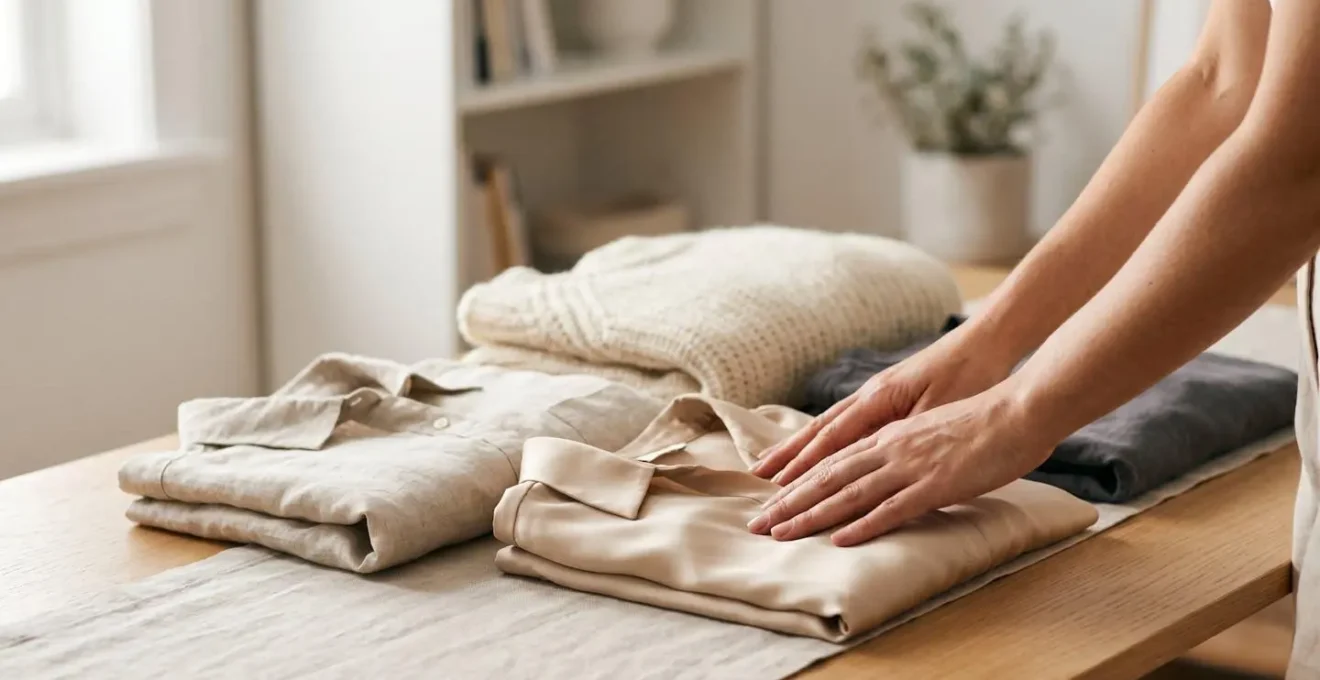
An oil stain on silk feels like a death sentence for the garment, but it doesn’t have to be. The key to successful removal is to act quickly and resist two disastrous impulses: rubbing the stain and drenching it with water. Rubbing grinds the oil deeper into the delicate fibers, causing permanent micro-damage. Drenching it often leads to a « water ring, » a visible demarcation line where minerals from the water have settled as it dried. The correct approach uses absorption first, followed by a targeted, gentle cleaning.
First, immediately lay the garment on a flat, clean surface. Do not apply water. Liberally sprinkle an absorbent powder like cornstarch, baby powder, or baking soda directly onto the oil spot. This powder will act like a sponge, drawing the oil out of the silk fibers. Let it sit for at least an hour, or even overnight for heavier stains. You will see the powder become clumpy and discolored as it absorbs the oil.
After the powder has done its work, gently brush it off with a soft cloth. Now, you can address any remaining residue. Mix a tiny drop of pH-neutral silk detergent with a small amount of cool water. Dip a clean, white cloth into the solution and gently dab—do not rub—the spot from the outside in to prevent it from spreading. As fabric care experts at Tide warn, focusing too much on one area can be risky.
Rubbing one spot too much can lighten the fabric
– Tide Fabric Care Guidelines, Tide – How to Wash Silk
Finally, to prevent a water ring, you must feather out the dampness. Use another clean cloth dampened with only plain cool water to gently blot the edges of the treated area, blending the moisture into the surrounding dry fabric. This eliminates any hard « wet line. » Allow the garment to air dry completely, away from heat or sunlight.
The drying mistake that fades your silk colors in one hour
You’ve successfully washed your precious silk, avoiding the pitfalls of harsh detergents and high temperatures. But the most critical moment is yet to come: drying. The single biggest mistake you can make is exposing wet silk to direct sunlight or high heat. The combination of water and UV rays acts as a powerful bleaching agent, causing vibrant colors to fade noticeably in as little as an hour. Similarly, putting silk in a tumble dryer, even on low heat, will cause the delicate protein fibers to shrink and become brittle, permanently damaging the garment’s luster and drape.
The professional method for drying silk is all about gentle water removal and patient air drying. Never wring or twist the fabric, as this stretches and breaks the fibers. Instead, use the « towel roll » technique. This method removes the majority of excess water without causing any stress to the fabric, dramatically speeding up air-drying time and preserving the garment’s shape.

Once the bulk of the water is removed, the final step is to let air do the work. Hang the garment on a padded hanger (to avoid shoulder bumps) or lay it flat on a mesh drying rack. The location is crucial: it must be in a well-ventilated area, away from direct sun, radiators, or heating vents. Patience is your greatest tool here. Letting the fabric dry naturally at room temperature is the only way to guarantee its color, shape, and softness remain intact for years to come.
Your Action Plan: The Professional Roll-Don’t-Wring Silk Drying Technique
- Immediate Removal: Take the silk garment out of the wash basin or machine as soon as the rinse cycle is complete to prevent creasing and waterlogging.
- Lay It Flat: Place a clean, thick, absorbent towel on a flat surface and lay the wet garment smoothly on top of it.
- The Gentle Squeeze: Gently roll the towel up with the garment inside, like a yoga mat. Press down lightly along the roll to squeeze excess water into the towel. Do not twist.
- Unroll and Reposition: Carefully unroll the towel. The garment should be damp, not dripping. Transfer it to a padded hanger or lay it flat on a dry towel or mesh rack.
- Choose the Right Spot: Place the garment in a well-ventilated room, far away from direct sunlight and heat sources like radiators or vents, to air dry completely.
Pillowcase vs. Hair Wrap: Which silk item reduces morning frizz best?
The promise of waking up with smoother, less-frizzy hair has made silk a bedtime staple. Both pillowcases and hair wraps work by tackling the same enemy: friction. Traditional cotton pillowcases have a rougher texture that grips and tugs at your hair cuticles as you toss and turn, leading to frizz, breakage, and « bed head. » Silk’s smooth surface provides a nearly frictionless glide. In fact, independent lab tests confirm that sleeping on silk can lead to a 34% reduction in hair friction compared to cotton. But whether a pillowcase or a wrap is better for you depends entirely on your hair type and sleep style.
A silk pillowcase is the universal starting point. It’s ideal for those with thick or coarse hair, as it reduces friction without compressing the hair and sacrificing natural volume. It’s also the best choice for calm sleepers or those with fine hair who don’t move much at night, as it provides sufficient protection without the feeling of being constricted. A silk hair wrap or bonnet offers a higher level of protection. By fully containing the hair, it’s the superior choice for restless sleepers, preventing hair from slipping off the pillowcase onto cotton sheets. It is also the undisputed champion for those with curly or textured hair, as it not only eliminates friction but also preserves delicate curl patterns and locks in moisture by preventing it from being absorbed by the surrounding air and bedding.
The choice is a strategic one based on your specific needs. The following matrix, based on textile research, can help you decide which tool will give you the best results for your morning hair.
| Hair Type | Sleep Style | Best Option | Key Benefit |
|---|---|---|---|
| Fine/Thin Hair | Restless Sleeper | Hair Wrap | Complete containment prevents slippage and breakage from movement |
| Fine/Thin Hair | Calm Sleeper | Pillowcase | Sufficient friction reduction without compression |
| Thick/Coarse Hair | Restless Sleeper | Pillowcase | Allows natural volume without wrap compression |
| Thick/Coarse Hair | Calm Sleeper | Pillowcase | Maintains moisture balance with gentle surface contact |
| Curly/Textured Hair | Any Style | Hair Wrap (22+ momme) | Preserves curl pattern and prevents moisture loss from friction |
Seamless vs. Shapewear: What works under sheer silk?
Wearing sheer or light-colored silk presents a unique challenge: what goes underneath? The wrong undergarment can ruin the fluid, graceful drape that makes silk so beautiful. Many people reach for standard seamless underwear, but this is often a mistake. The real secret to an invisible look lies not just in the absence of lines, but in mastering the physics of light refraction and texture.
The primary mistake is choosing matte-textured underwear, even if it’s seamless. The textural difference between the matte fabric of the undergarment and your skin creates a subtle but visible outline under sheer silk as light passes through it differently. The goal is to create a single, uninterrupted canvas beneath the silk. This is achieved by choosing laser-cut microfiber underwear with a satin or semi-gloss finish. This slight sheen more closely mimics the natural reflective quality of skin, allowing light to travel through both the silk and the undergarment more uniformly, rendering it virtually invisible.
Another common error is opting for traditional, high-compression shapewear. While it may smooth your silhouette, its rigidity works against silk’s natural fluidity. The stiff construction of shapewear causes the delicate silk to bunch, pucker, and hang awkwardly, destroying its intended drape. Instead, look for « second skin » pieces with bonded edges that prioritize a smooth glide over firm compression. Finally, color matching is non-negotiable. « Nude » is not a universal color. You must find an undergarment that precisely matches your specific skin tone to complete the illusion of invisibility.
- Avoid Matte Textures: They create a visible texture contrast under sheer fabric.
- Choose a Satin Finish: Microfiber with a slight sheen mimics skin for better light refraction.
- Skip High Compression: Rigid shapewear fights silk’s natural drape, causing bunching.
- Prioritize Precise Skin Tone Match: Select a color that disappears against your skin, not a generic « nude. »
- Look for Bonded Edges: These offer the smoothest transition from fabric to skin, ensuring no lines are visible.
Key Takeaways
- Silk is a high-performance fiber; its value comes from understanding its science (thermoregulation, protein structure), not from treating it like a fragile relic.
- Strategic machine washing on a cold, gentle cycle is safer and more cost-effective than dry cleaning, which uses harsh chemicals that degrade the fabric over time.
- The true cost of a garment is its Cost-Per-Wear. Investing in durable, versatile silk saves hundreds of dollars annually compared to the cycle of replacing cheap, synthetic fast fashion.
3 ways to style a silk camisole for casual weekends to justify the price
A silk camisole is the perfect case study in wardrobe economics. Its high initial price can seem indulgent for a « simple » top, but its versatility is what unlocks its value. The goal is to maximize its Cost-Per-Wear by integrating it into your everyday wardrobe, not just saving it for special occasions. A $150 camisole worn 30 times costs $5 per wear, while a $30 fast-fashion top worn twice before it’s discarded costs an astounding $15 per wear. Here are three strategies to dress down a silk camisole for a casual weekend, making it one of the hardest-working items you own.
First, master the Tough & Tender Contrast. Pair the fluid, lustrous silk with something rigid and raw, like sturdy denim jeans and a chunky leather belt. This textural clash is intentional and sophisticated. The roughness of the denim makes the silk appear even more luxurious and delicate by comparison, creating a look that is effortlessly cool and far from the boudoir.
Second, embrace Cozy & Chic Layering. For cooler days, wear the camisole as a base layer under an oversized, chunky-knit cardigan made from cashmere or merino wool. The smooth, sleek surface of the silk peeking out from beneath the textured knitwear adds a touch of refinement to an otherwise relaxed outfit. This play on textures creates visual depth and makes the entire ensemble look more expensive and thoughtfully put together.
Finally, use the Third-Piece Framing technique. A silk camisole on its own can sometimes read as lingerie. Adding a « third piece »—like an unbuttoned linen shirt, a lightweight trench coat, or a casual denim jacket—instantly frames it and signals intentional styling. This outer layer provides structure and context, transforming the camisole from a standalone item into a key component of a polished, layered look.
By adopting these cost-saving care techniques and versatile styling strategies, you transform silk from a high-maintenance luxury into a smart, sustainable, and empowering part of your daily life. Now is the time to audit your own wardrobe and identify which pieces you can rescue from the dry-cleaning pile and reintegrate with confidence.