The true cost of fast fashion isn’t the price tag; it’s the predictable structural failure of poorly engineered materials.
- Synthetic fabrics like polyester are non-absorbent, creating a breeding ground for odor-causing bacteria that cheap laundry cycles can’t eliminate.
- High-quality garments use long-staple fibers and superior construction (like canvassing) that resist pilling, shrinking, and bubbling, lasting years longer.
Recommendation: Stop calculating ‘cost per wear’ and start evaluating ‘material integrity’. Learning to spot the signs of quality construction is the single most effective way to cut your clothing replacement budget.
For the smart shopper, there’s a quiet frustration that bubbles up every few months. It’s the sight of a once-favorite sweater now covered in pills, a T-shirt that has lost its shape after three washes, or a blazer that has developed a strange, bubbly texture after a single trip to the dry cleaner. The common advice is to « buy less, choose well » and calculate the ‘cost per wear’. But this is a superficial fix that ignores the root cause. This cycle of disappointment and replacement isn’t bad luck; it’s a predictable outcome of material science and manufacturing shortcuts.
The fashion industry often focuses on aesthetics, trends, and brand names. However, the real conversation about value lies at a microscopic level: the length of a cotton fiber, the way a wool scale reacts to heat, or the difference between a glued and a stitched jacket lining. These are not just trivial details for textile nerds; they are the fundamental factors that determine whether a garment will last for a decade or a season. Understanding this hidden language of materials turns you from a passive consumer into an informed investor, capable of discerning true value beyond the price tag.
But what if the key to saving hundreds of dollars a year wasn’t about finding sales, but about understanding the science of structural failure in fabric? This guide abandons generic advice and instead provides a textile expert’s view on why quality materials are an economic necessity. We will dissect the technical reasons behind common clothing failures—from odor retention in synthetics to the irreversible shrinkage of wool—and equip you with the knowledge to identify garments engineered to last. By the end, you won’t just be buying clothes; you’ll be acquiring assets.
This article provides a detailed roadmap for identifying true quality. We will explore the specific scientific reasons behind common garment failures and provide actionable tests you can perform in-store to make smarter, more economical purchasing decisions.
Summary: A Shopper’s Guide to Material Science and Smart Savings
- Why synthetic blends cause body odor issues during 8-hour shifts?
- How to identify fake cashmere quality in under 30 seconds in-store?
- Cotton vs. Linen: Which summer fabric ages better over 5 years?
- The laundry mistake that shrinks your premium wool sweaters by two sizes
- 3 signs a $200 shirt is actually cheaper than four $50 alternatives
- How to rub test fabric in-store to ensure it won’t pill in a month?
- Why fused lining bubbles after dry cleaning unlike canvas construction?
- Can You Machine Wash Silk or Must You Pay for Dry Cleaning Forever?
Why synthetic blends cause body odor issues during 8-hour shifts?
The persistent problem of body odor clinging to synthetic garments, like polyester or acrylic tops, is not a failure of your deodorant or hygiene. It is a direct result of the fiber’s fundamental properties. Unlike natural fibers such as wool or cotton, which are hydrophilic (water-loving), synthetic fibers are hydrophobic (water-repelling). This means that instead of absorbing moisture and sweat, they allow it to sit on the surface of the fabric.
This moisture-rich surface environment becomes a perfect breeding ground for bacteria, specifically Micrococcus, which are responsible for producing the most pungent odors. The smooth, non-porous structure of synthetic fibers provides an ideal platform for these bacterial colonies to thrive. As you go through an 8-hour workday, the bacteria multiply unchecked, and the smell becomes more pronounced. Even after washing, these bacteria can embed themselves within the fiber structure, leading to a lingering odor that returns as soon as the garment is worn again.
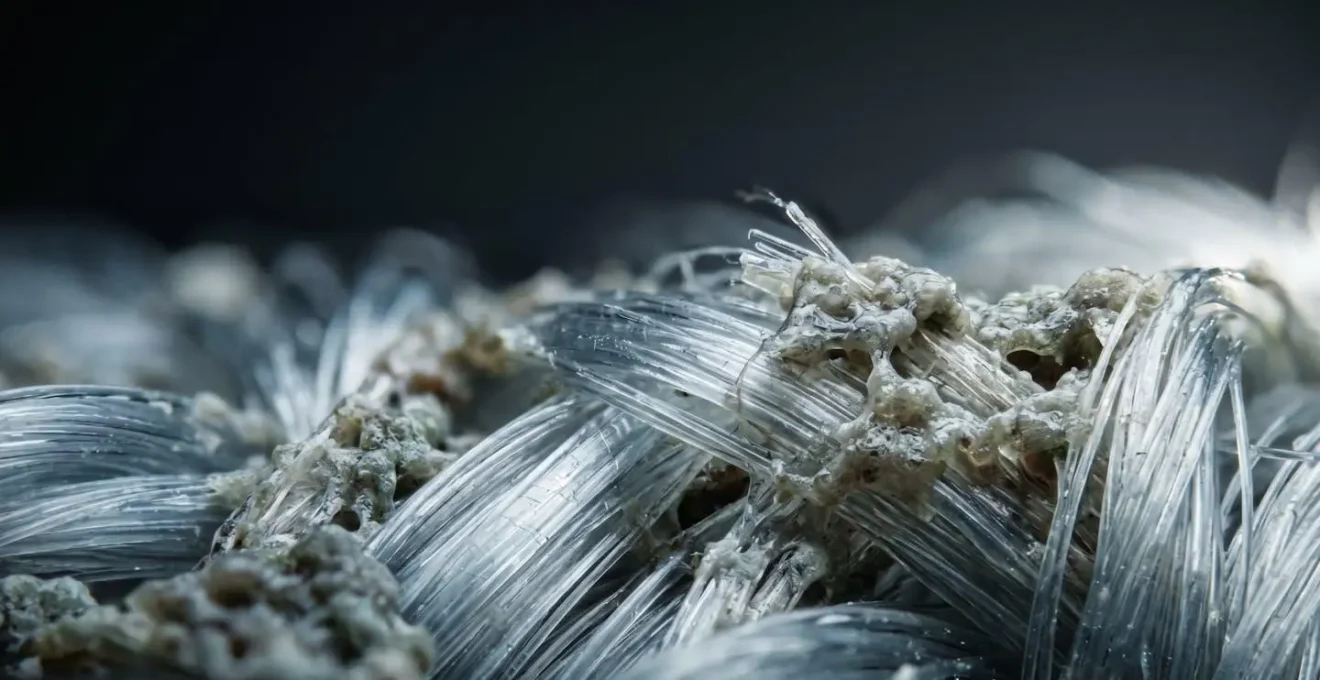
This image visually represents the smooth, non-absorbent surface of a synthetic fiber. This very structure is what prevents moisture from being wicked away from the skin effectively, trapping it and creating the microbial biofilm that generates odor. In contrast, natural fibers have a more complex, scaled, and porous structure that can absorb moisture, disrupting the bacterial growth cycle. This is why a 100% wool base layer can be worn for days without retaining odor, while a polyester shirt can smell after just a few hours of wear—a clear case of material integrity dictating performance.
How to identify fake cashmere quality in under 30 seconds in-store?
The word « cashmere » evokes a sense of softness and luxury, but the market is flooded with low-grade imitations that will pill and lose their shape almost immediately. True, high-quality cashmere is defined by the fineness and length of its fibers, typically sourced from the undercoat of specific goats. A high-grade fiber is around 14-15.5 microns in diameter. Lower-quality garments often blend cashmere with cheaper wool or use shorter, coarser cashmere fibers that are prone to breakage and pilling. Fortunately, you don’t need a microscope to spot the difference. A few simple, tactile tests performed in under 30 seconds can reveal a garment’s true quality.
The key is to test the fabric’s resilience and fiber integrity. A garment made from long, fine fibers will feel incredibly soft but also have a springiness and strength that fakes lack. According to insights from textile specialists, there are four key in-store tests you can perform. By systematically checking for stretch recovery, pilling tendency, feel, and the visual « halo, » you can quickly differentiate a worthy investment from a disposable imposter.
Here are the four essential tests you can perform right in the store, based on a guide for discerning cashmere buyers:
- Stretch Test: Gently stretch a small section (like a cuff or the hem) for a few seconds. High-quality cashmere, made with long fibers, will spring back to its original shape instantly. Lower-quality or blended versions will recover slowly or remain distorted.
- Pilling Test: Vigorously rub an inconspicuous area, such as the inside seam, with your palm for about 5-10 seconds. Top-grade cashmere will show minimal to no pilling. If small balls of fabric (pills) form immediately, it’s a clear sign of short, weak fibers.
- Touch Test: Rub the fabric against a sensitive area of your skin, like your forearm or neck. Premium cashmere feels exceptionally soft and smooth, never itchy. Any hint of scratchiness indicates thicker, lower-grade fibers or a blend with coarse wool.
- Light Test (Halo): Hold the sweater up to a light source. High-quality cashmere exhibits a delicate, fuzzy « halo » of very fine fibers. If you see no halo, or if the visible hairs are coarse and sparse, it suggests a poor-quality blend.
Cotton vs. Linen: Which summer fabric ages better over 5 years?
When choosing summer staples, both cotton and linen are praised for their breathability. However, their performance and appearance after five years of wear and washing are dramatically different. While a high-quality cotton shirt may serve you well for a time, linen is the undisputed champion of longevity and graceful aging. This superiority is not a matter of opinion but is rooted in the fundamental structure of the fibers themselves. Linen is derived from the long, strong stems of the flax plant, while cotton fibers are much shorter.
This difference in fiber staple length is the single most important factor in long-term durability. Linen’s long fibers mean there are fewer connection points within the yarn, resulting in fewer weak spots where breaks and pilling can occur. Cotton’s short fibers require more twists to form a thread, creating numerous potential points of failure that manifest over time as thinning fabric, pilling, and holes, especially at high-stress areas like collars and cuffs. As a result, linen garments not only last longer but their appearance actually improves with age, developing a unique softness and luster known as a patina. Cotton, conversely, tends to dull and look « washed out » over time.
The following table, based on a detailed comparison of fabric durability, breaks down how these two materials evolve over a five-year period.
| Property | Linen (5 years) | Cotton (5 years) |
|---|---|---|
| Fiber Length | 18-30 inches (long, fewer weak points) | 0.5-2.5 inches (short, more connection points) |
| Aging Characteristic | Develops patina, softens, increases luster | Thins, dulls, weakens at stress points |
| Wash Cycle Performance | Improves until ~100 washes, then maintains quality | Shows wear between 50-75 washes |
| Pilling Tendency | Smooth fibers resist tangling, minimal pilling | Short fibers tangle easily, forms fabric balls |
| Color Retention | Holds dye well, fades evenly for soft sun-washed look | Can fade unevenly, looks washed out over time |
| Structural Integrity | Long fibers distribute stress evenly, outlasts cotton by years | More prone to holes at collars, cuffs (abrasion points) |
The laundry mistake that shrinks your premium wool sweaters by two sizes
The fear of shrinking a beloved wool sweater is universal, but the disaster is often blamed on the wrong culprit. Many believe that simply using hot water is the mortal enemy of wool. While heat is a factor, the irreversible shrinkage known as felting is actually caused by a combination of three elements: heat, moisture, and mechanical agitation. Understanding this « felting triangle » is the key to preserving your premium knitwear for years, preventing the common laundry mistake that can shrink a sweater by two sizes in a single wash.
Wool fibers are not smooth; their surface is covered in microscopic, overlapping scales, similar to the shingles on a roof or the cuticles of human hair. When these fibers are exposed to the perfect storm of conditions, a catastrophic chain reaction occurs. This is not just a simple shrinking; it is a permanent structural change in the fabric.
Case Study: The Science of the Felting Triangle
The irreversible process of felting occurs when wool is subjected to the ‘felting triangle’: heat (especially above 30°C/86°F), moisture, and mechanical agitation. According to a scientific breakdown of the felting mechanism, the heat and moisture cause the microscopic cuticle scales on the wool fibers to open up. The mechanical agitation from a washing machine’s tumble cycle then forces these opened scales to interlock and tangle, like microscopic Velcro hooks. This matting process pulls the fibers tightly together, causing the garment to shrink dramatically and permanently. It’s a structural failure at the fiber level. Even a cold wash on a high-speed spin cycle can be disastrous; the intense centrifugal force stretches the water-heavy sweater, misshaping it permanently. For mildly shrunken items, a soak in lukewarm water with hair conditioner can sometimes help, as the conditioning agents smooth the scales, allowing for gentle reshaping.
The takeaway is clear: it’s the combination of forces that destroys wool. To avoid this, always wash wool in cold water, use a gentle or wool-specific cycle with minimal agitation, and never use a high-speed spin. Better yet, hand wash and lay flat to dry. This isn’t just a care instruction; it’s a scientific imperative to prevent the felting triangle from forming.
3 signs a $200 shirt is actually cheaper than four $50 alternatives
The logic of « investment dressing » can seem counterintuitive. How can a $200 shirt possibly be a better financial decision than four shirts at $50 each? The answer lies not in the initial price but in the garment’s lifespan, which is dictated by hidden indicators of quality construction. A well-made shirt is engineered to withstand years of wear and washing, while its cheaper counterparts are designed with built-in obsolescence. Over a five-year period, the single $200 shirt will still look impeccable, whereas the four $50 shirts will likely have been replaced, costing you the same amount or more while providing a lower-quality experience.
The difference comes down to construction logic. High-end shirtmakers invest in details that are invisible to the untrained eye but are critical for durability and graceful aging. These details include using superior materials like long-staple cotton, which is stronger and softer, and employing more labor-intensive construction techniques. Learning to spot these three key signs of quality can transform your shopping habits, enabling you to identify garments that offer true long-term value.
According to an expert guide on premium garment construction, these are the signs to look for:
- Sign 1 – Stitch Density: Examine the seams closely. A high-quality shirt boasts 18-20 stitches per inch. This dense stitching creates strong, flat seams that resist puckering and are far less likely to fail over time. Cheaper shirts often have as few as 10-12 stitches per inch, a clear cost-cutting measure that leads to future repairs and a shorter lifespan.
- Sign 2 – Button Quality: Inspect the buttons and buttonholes. Are the buttons thick, iridescent mother-of-pearl (which feels cool to the touch and has a unique grain) or cheap, flimsy plastic? The buttonholes on a quality shirt will be cleanly finished with dense stitching and no fraying. A manufacturer who invests in quality buttons and finishing is unlikely to have cut corners on more critical aspects of construction.
- Sign 3 – Fabric Hand and Drape: A shirt made from high-quality, long-staple cotton or premium linen has a beautiful « hand » (how it feels) and drapes elegantly. Hold the garment up by the shoulders and observe how it falls. A well-constructed shirt will hang smoothly and create a clean silhouette. Poor-quality fabric will appear stiff, limp, or lifeless, and will not maintain its shape after washing.
Your Action Plan: The 5-Point Wardrobe Quality Audit
- Points of Contact: List all high-friction points on your favorite garments (e.g., underarms of shirts, inner thighs of trousers, elbows of sweaters) where wear first appears.
- Collect Data: Inventory 3-5 of your most-worn items. Note their fiber content (e.g., 100% cotton, 60/40 poly-cotton blend) and where pilling or thinning has occurred.
- Check for Coherence: Compare your findings to the principles of material integrity. Does the pilling on your sweater align with short-fiber construction? Does the odor on your gym shirt match the properties of polyester?
- Assess Malleability: Perform the stretch test on the cuffs and hems of your knitwear. Identify which items spring back immediately (high-quality) versus those that stay stretched (low-quality).
- Plan for Integration: Based on your audit, create a priority list for your next purchase. Instead of replacing a failed poly-blend shirt with another, plan to invest in a well-constructed linen or long-staple cotton alternative.
How to rub test fabric in-store to ensure it won’t pill in a month?
Pilling, the formation of small, unsightly fuzzballs on a fabric’s surface, is the most visible sign of a garment’s premature decline. It’s a direct result of structural failure where short, weak fibers break, tangle together, and form knots. While many shoppers perform a gentle surface rub to check for quality, this is often insufficient. Manufacturers can apply temporary finishing agents to make a low-quality fabric feel smooth in the store, masking its true nature. To get an accurate prediction of how a garment will perform after a month of real-world wear, you need to conduct a more rigorous test that simulates high-friction conditions.
The goal is to assess the staple length and strength of the fibers. Garments made from long-staple fibers (like high-quality cotton, linen, or cashmere) are inherently resistant to pilling because the fibers are securely anchored within the yarn. Short-staple fibers, common in cheap blends and low-grade materials, have many more exposed ends that can easily work their way loose and tangle. A more aggressive in-store test helps you bypass the surface finish and directly challenge the fabric’s underlying integrity.
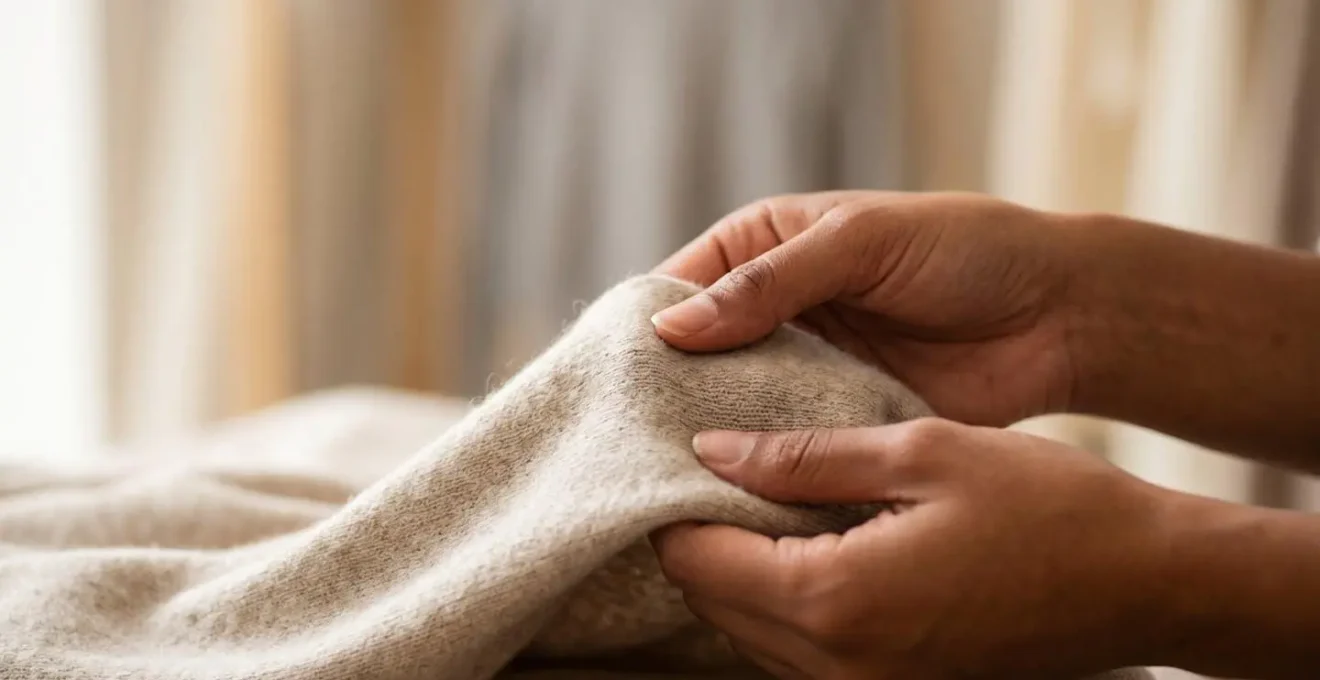
Instead of a gentle pass, you need to be more deliberate. Find two hidden parts of the garment, such as the inside of a cuff or the inner hem, and rub them together vigorously for 10 to 15 seconds. This action more closely mimics the friction a garment experiences under the arms, against a seatbelt, or from a crossbody bag. If you immediately see the fibers starting to loosen and form a « fuzz, » or if tiny pills begin to form, you have your answer. The fabric is constructed from short-staple fibers and will undoubtedly pill within a few wears. A high-quality fabric will show virtually no change under this stress test. This single, decisive action can save you the frustration and expense of buying a garment that’s destined to fail.
Why fused lining bubbles after dry cleaning unlike canvas construction?
The unfortunate phenomenon of « bubbling » on the lapels or chest of a suit jacket after dry cleaning is a tell-tale sign of cheap construction. This is not a failure of the dry cleaning process, but a predictable breakdown of a manufacturing shortcut known as fused construction. To give a jacket its shape and structure, a layer of interfacing material must be placed between the outer fabric and the inner lining. The method used to attach this interfacing is the critical difference between a jacket that will last for decades and one that may fail after a single cleaning.
In fused construction, a sheet of thermoplastic adhesive is used to essentially glue the outer fabric to the interfacing. This method is fast and inexpensive, making it the standard for most mass-market jackets. The problem arises when the jacket is exposed to the heat and chemicals of the dry cleaning process. These can degrade the adhesive, causing it to detach in certain spots. The outer fabric then pulls away from the interfacing, creating unsightly bubbles and ripples on the surface. This damage is irreversible and a clear indicator of low-quality manufacturing.
In contrast, high-quality jackets use a canvassed construction. Here, a « floating » canvas made of horsehair and wool is stitched, not glued, to the outer fabric. This traditional, labor-intensive method allows the jacket to drape naturally and conform to the wearer’s body over time. Because the layers are not adhered together, they can move independently, meaning there is no adhesive to degrade and no possibility of bubbling. A simple « Pinch Test » in-store can reveal the construction: pinch the lapel fabric between your thumb and forefinger. If you can feel three distinct layers (outer fabric, floating canvas, inner lining), it’s canvassed. If you only feel two layers stuck together, it’s fused—and best left on the rack.
Key Takeaways
- Garment failure (pilling, shrinking, odor) is not random; it’s a predictable result of poor material science and construction shortcuts.
- True long-term value is found in construction details like fiber length, stitch density, and canvassed linings, not in brand names or initial price tags.
- Empowering yourself with simple, tactile in-store tests is the most effective way to identify durable garments and avoid the hidden costs of replacement.
Can You Machine Wash Silk or Must You Pay for Dry Cleaning Forever?
The « Dry Clean Only » tag on a silk garment often feels like a life sentence to expensive, inconvenient upkeep. While this is sound advice for structured, high-value, or brightly colored pieces, it is not an absolute rule for all silk. The decision to machine wash silk depends on a calculated risk assessment based on the silk’s weave, finish, and value. Silk is a protein fiber, much like human hair, and can be damaged by harsh detergents and high heat. However, with the right protocol, certain types of silk can be safely washed at home, saving you a significant amount of money over the garment’s lifetime.
The primary risks of improper washing are loss of shine, color bleeding, and weakening of the fibers. Shiny weaves like Charmeuse are particularly vulnerable, as machine washing can dull their lustrous finish. Matte weaves, such as Crepe de Chine or sand-washed silk, are far more forgiving. A low-value, matte-finish silk blouse is a good candidate for a careful machine wash, whereas a $400 structured silk dress should always be entrusted to a professional to preserve its shape and finish.
The following risk matrix, adapted from guidance on washing delicate fabrics, provides a framework for making an informed decision.
| Silk Type & Garment Value | Machine Wash Safe? | Risk Level | Recommendation |
|---|---|---|---|
| Matte Crepe de Chine, under $100 | Yes, delicate cycle | Low | Safe to hand or machine wash with precautions |
| Sand-washed silk cami, $50-75 | Yes, delicate cycle | Low | Use mesh bag, cold water, lowest spin |
| Shiny Charmeuse blouse, $100-200 | Risky | Medium-High | Hand wash only or professional cleaning |
| Structured silk dress, $400+ | Never | Very High | Dry clean only to preserve structure and finish |
If you decide to machine wash a low-risk item, the protocol is strict: use a pH-neutral, enzyme-free detergent in a mesh bag on a cold, delicate cycle with the lowest spin setting. Never use a dryer; instead, roll the garment in a towel to absorb excess water and lay it flat or hang it to dry away from direct sunlight. This thoughtful approach allows you to enjoy the luxury of silk without the perpetual cost of dry cleaning.
By shifting your perspective from trend-chasing to understanding material integrity, you are not just buying clothes—you are building a functional, durable, and ultimately more economical wardrobe. Apply this expert knowledge on your next shopping trip, and you will transform a recurring expense into a series of smart, long-lasting investments.