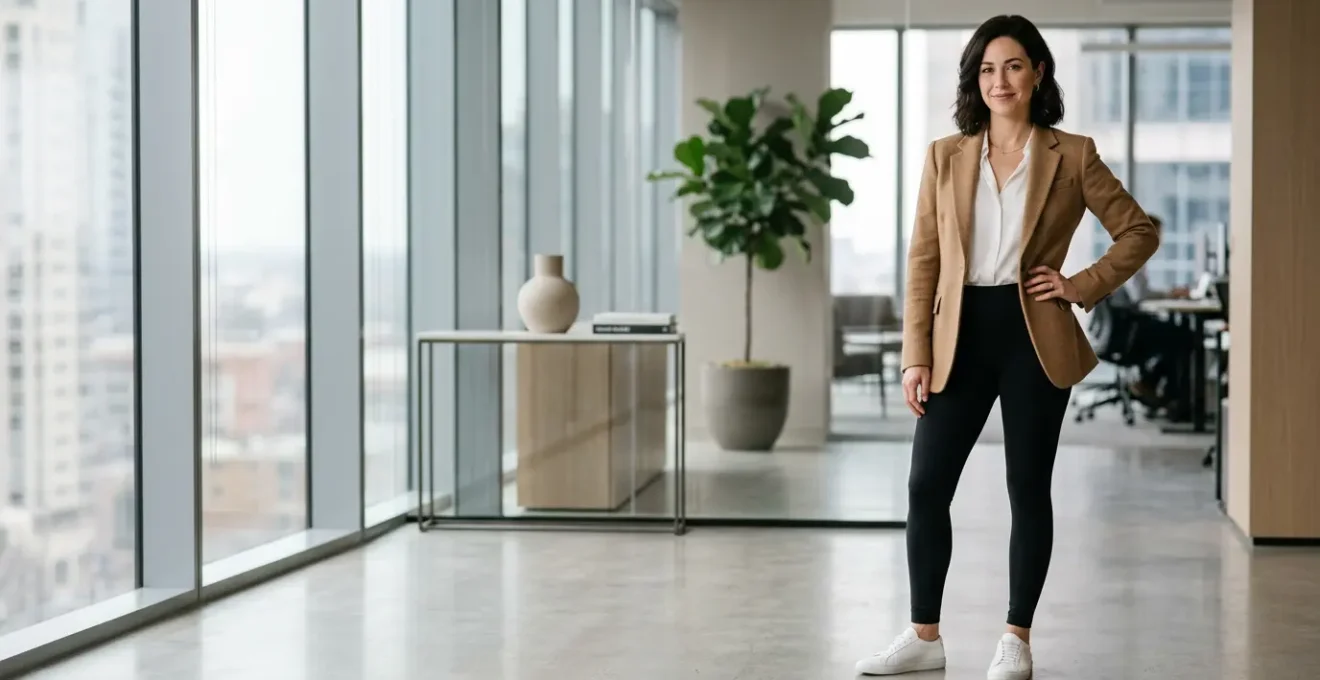
The secret to wearing leggings to the office is mastering the non-verbal cues of texture, silhouette, and context to signal ‘polished comfort,’ not ‘I just left the gym.’
- Prioritize matte, structured fabrics over shiny, athletic materials to elevate the entire look.
- Use strategic layering with a « third piece, » like a blazer or trench coat, to create intentional silhouette architecture.
Recommendation: Anchor your athleisure base with professional elements: pristine fashion sneakers (not running shoes), a structured bag, and polished grooming are non-negotiable.
The modern workplace is a landscape of sartorial confusion. With the rise of hybrid schedules and relaxed dress codes, the line between weekend comfort and office-appropriate attire has blurred into a gray area. Nowhere is this more apparent than with the ultimate comfort garment: leggings. The question echoes in offices every casual Friday: can you wear them without sacrificing professionalism or looking like you’ve given up? While many companies have relaxed their rules—indeed, workplace culture research shows over 95% of organizations relaxed dress codes post-pandemic—the fear of looking unkempt remains valid.
The common advice is often simplistic and unhelpful: « pair it with a long blazer » or « just wear black ones. » These rules treat leggings as something to be hidden or apologized for. They miss the fundamental point. Wearing athleisure successfully in a professional setting isn’t about camouflage; it’s about curation. It’s a deliberate act of styling that requires a deeper understanding of what your clothes are communicating. The goal is to project an image of intentional, polished comfort, and that requires moving beyond the basic rules.
This guide abandons the platitudes. Instead, we will deconstruct the semiotics of a successful office-ready athleisure look. We will explore the silent language of fabric textures, the architectural power of layering, the critical role of footwear, and the subtle cues that separate « chic » from « sloppy. » By mastering these principles, you can confidently embrace comfort without ever compromising your professional credibility.
To navigate this new terrain effectively, we’ve broken down the core components of a polished athleisure look. The following sections provide a clear roadmap, from choosing the right materials to adding the final, professionalizing touches.
Summary: Your Guide to Polished Office Athleisure
- Why Matte Finish Fabrics Look More Expensive Than Shiny Athletic Wear?
- How to Style a Trench Coat Over a Hoodie to Look Intentional?
- Running Shoes vs. Fashion Sneakers: Which Belongs in a Meeting?
- The Visible Logo Mistake That Cheapens Your Athleisure Look
- 3 Items to Keep in Your Car to Switch From Gym to Brunch Instantly
- Backpack vs. Crossbody: Which Shifts the Vibe From Student to Pro?
- How a Sleek Bun Elevates a Sweatshirt Instantly?
- How to Look Polished in Jeans and Sneakers for a Casual Client Meeting?
Why Matte Finish Fabrics Look More Expensive Than Shiny Athletic Wear?
The foundation of any successful office-appropriate legging outfit begins with the material itself. The visual and tactile difference between matte and shiny fabrics is the first and most critical form of contextual signaling. Shiny, high-sheen materials—like classic spandex or lycra—are intrinsically linked to high-performance athletic activity. Their reflective surface is designed to highlight muscle definition and movement, immediately screaming « gym » or « workout. » This is a signal that is difficult to override, no matter how you style the rest of the outfit.
In contrast, matte fabrics communicate a different, more sophisticated message. Materials like ponte knit, high-quality jersey, or even faux-suede leggings have a finish that absorbs light rather than reflecting it. This quality is inherently more formal and understated. According to research on fabric perception, matte finishes create light-diffusing surfaces that smooth silhouettes and subtly conceal imperfections, lending a more tailored and expensive appearance. This creates a « quiet luxury » effect, where the value is communicated through texture and quality rather than overt shine.
This principle of textural hierarchy is your most powerful tool. By choosing a matte legging as your base, you are starting with a piece that reads closer to a traditional trouser than athletic gear. It provides a neutral, elevated canvas that is far easier to dress up. Think of it as the difference between a silk blouse and a cotton t-shirt; both can be part of a great outfit, but one starts from a more formal baseline. For the office, starting with a matte finish is a non-negotiable first step.
How to Style a Trench Coat Over a Hoodie to Look Intentional?
Layering is where you build upon your fabric foundation to create silhouette architecture. The infamous « hoodie under a blazer » look often fails because the proportions are wrong, creating a lumpy, unintentional mess. A far more elegant and effective combination is pairing a hoodie with a classic trench coat. The trench’s longer lines and structured-yet-fluid nature provide the perfect counterbalance to the hoodie’s inherent casualness. However, success lies in the execution.
The key is to treat the hoodie not as a hidden, warm layer, but as an integrated design element. This is achieved through careful styling of the hood itself. Pulling the hood out and laying it flat over the trench coat’s collar and lapels transforms the entire look. It moves from being a sloppy afterthought to a deliberate, almost architectural feature that frames the face and neckline. This small move signals clear intent.
To ensure the combination reads as « fashion-forward » rather than « just got caught in the rain, » follow a few key principles:
- Color Harmony: Opt for a monochrome scheme (like a black hoodie under a black trench) for a sleek, urban feel. Alternatively, a neutral hoodie (grey, beige) under a classic camel trench creates a timeless, sophisticated pairing.
- Quality Disparity: The trench coat must be of a visibly higher quality than the hoodie. A well-structured trench in a quality twill or gabardine instantly elevates a simple cotton hoodie. The reverse is not true.
- Proportional Balance: Choose a classic-fit or slightly oversized trench rather than a tightly belted one. This allows room for the hoodie without creating bulk and maintains a balanced silhouette.
- Sharp Foundation: Keep the rest of the outfit minimal and sharp. Pair the combination with slim-fit dark leggings or jeans and clean, minimalist sneakers to avoid overwhelming the look.
By following these guidelines, you control the narrative. You are no longer just wearing a hoodie for warmth; you are using it as a textural and structural element in a thoughtfully constructed outfit. This is the essence of intentional styling.
Running Shoes vs. Fashion Sneakers: Which Belongs in a Meeting?
No element grounds an outfit—or undoes it—faster than footwear. When wearing leggings or other athleisure pieces to the office, your choice of sneaker is a critical moment of contextual signaling. It’s the decision that tells your colleagues whether you are coming from a workout or have adopted a modern, comfortable approach to business casual. The distinction between a « running shoe » and a « fashion sneaker » is paramount, and confusing the two is the most common mistake.
Running shoes are technical equipment. Their design is driven by function: breathable mesh uppers, sculpted foam soles for shock absorption, and aggressive treads for grip. They often feature prominent, colorful logos and a chunky, performance-oriented silhouette. Wearing these to a meeting sends one, unambiguous signal: « I am focused on fitness. » Fashion sneakers, on the other hand, are designed with aesthetics as the priority. They borrow the comfort of athletic footwear but translate it into a more refined, classic language.
The following table breaks down the key differences that determine office appropriateness. As an etiquette expert, my guidance is clear: only sneakers from the ‘Acceptable’ column should ever be worn in a professional or client-facing context.
| Feature | Running Shoes (Avoid) | Fashion Sneakers (Acceptable) |
|---|---|---|
| Upper Material | Breathable mesh, synthetic | Leather, suede, canvas |
| Branding | Prominent/colorful logos | Minimalist branding or none |
| Sole Design | Sculpted foam, aggressive tread | Clean cup soles, simple silhouette |
| Color Palette | Bold, multiple colors | Neutral: white, black, navy, brown |
| Silhouette | Chunky, technical appearance | Classic, streamlined (Stan Smith, Common Projects style) |
| Context Signal | ‘I am focused on fitness/activity’ | ‘I embrace contemporary polished comfort’ |
| Maintenance Requirement | Less critical for athletic use | Must be pristine – clean, no scuffs, fresh laces |
Ultimately, as the fashion editors at Marie Claire emphasize, condition trumps all. Their insight highlights the most crucial point for maintaining a professional image:
The single most important factor is not the brand, but the condition. Even a $500 fashion sneaker looks unprofessional if it’s dirty, scuffed, or has grimy laces. The look only works if the sneakers are impeccably clean, signaling care and attention to detail.
– Marie Claire Fashion Editors, The 20 Best Work Sneakers for Women in 2025
A pristine pair of simple leather sneakers from an affordable brand will always look more professional than a scuffed luxury pair. This attention to detail is non-negotiable.
The Visible Logo Mistake That Cheapens Your Athleisure Look
In the world of professional attire, sophistication is often whispered, not shouted. This principle is especially true when integrating casual elements like athleisure. One of the most common missteps that instantly cheapens an otherwise well-considered look is the overuse of visible branding. Large logos, prominent brand names, or recognizable athletic symbols act as a powerful form of contextual signaling, tying your outfit directly to the gym, a specific sports team, or a youth-oriented trend.
When you wear a sweatshirt emblazoned with a large swoosh or leggings with a three-stripe pattern down the leg, you are no longer just wearing a piece of clothing; you are wearing a billboard. This immediately undermines any attempt to create a polished, elevated aesthetic. The focus shifts from the quality of the fabric, the cut of the garment, and the intelligence of the styling to the brand itself. Professionalism, by contrast, is communicated through subtlety, quality, and fit—not brand affiliation.
The most elegant and successful athleisure looks embrace « quiet luxury. » They prioritize rich textures, impeccable fit, and a neutral palette. By choosing pieces with minimal or no visible branding, you force the viewer’s attention onto the craftsmanship and the overall silhouette you have created. A simple, well-made black legging in a matte fabric speaks of a more confident and mature style than one covered in logos, regardless of the price tag of the latter.
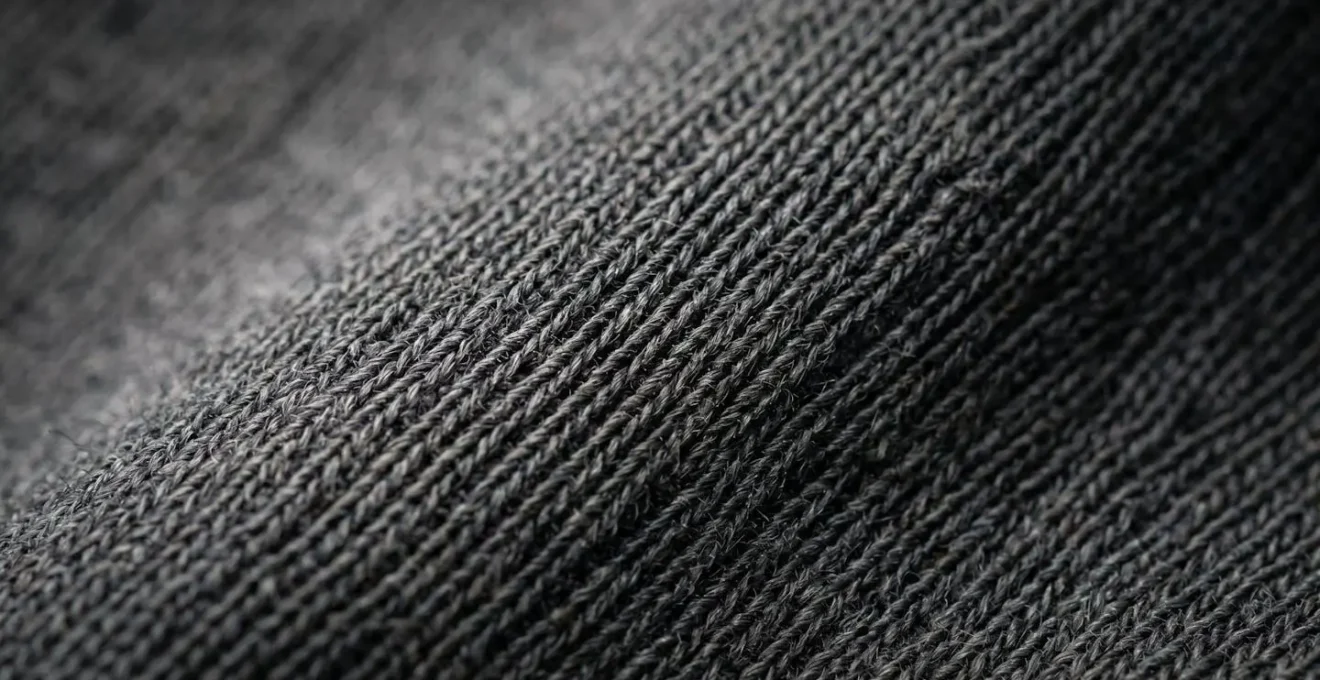
As the image above demonstrates, the richness of a high-quality matte fabric lies in its intricate weave and tactile structure. This is where true luxury and sophistication are found. When you eliminate the distraction of logos, you allow these more subtle—and more professional—qualities to take center stage. Always opt for anonymity in branding to maintain a polished and elevated look.
Action Plan: Auditing Your Professional Athleisure Look
- Points of Contact: List every piece of your outfit that sends a ‘casual’ signal (e.g., leggings, hoodie, sneakers) to identify your baseline.
- Collection: Inventory existing ‘professionalizing’ elements in your wardrobe that can elevate these pieces (e.g., blazers, structured bags, leather loafers).
- Coherence: Confront the casual items with your office’s dress code and your desired professional image. Ask yourself: does this pairing look intentional or lazy?
- Memorability/Emotion: Assess the overall look. Does it read as ‘chic and comfortable’ (unique and memorable) or ‘generic gym wear’ (generic and forgettable)?
- Integration Plan: Identify gaps and prioritize key actions. For example, determine if you need to replace shiny leggings with a matte pair or acquire one structured blazer to complete your looks.
3 Items to Keep in Your Car to Switch From Gym to Brunch Instantly
The modern professional’s life is a fluid transition between different contexts, from a morning workout to a client lunch or a casual Friday that blends into evening plans. While this article focuses on the office, the principles of rapid transformation are universal. Having a small, curated « emergency style kit » in your car or office drawer can be the key to navigating these shifts with polish and confidence. It’s about having transformative pieces that can instantly change your outfit’s contextual signal in under a minute. Here are three essential items:
- The Hard/Soft Transformer: A Structured Blazer. This is the most powerful tool in your arsenal. Draping a well-fitting blazer in a neutral color like black, navy, or camel over a simple workout tank and leggings instantly imposes professional structure. It changes the entire silhouette from relaxed to refined, creating a sharp shoulder line and adding a traditional business element that anchors the look. This is the « third piece rule » in its most effective form.
- The Face Framer: Red Lipstick & Chic Sunglasses. Never underestimate the power of grooming. These two items take less than 30 seconds to apply but create a major shift in intention. A bold red lip immediately signals « outing » rather than « workout, » drawing attention to your face and away from the simplicity of your athletic clothes. Sunglasses add an element of chic mystery and polish. Together, they are a powerful statement of purpose.
- The Grounding Element: Sleek, Non-Athletic Shoes. This is perhaps the most crucial swap. Changing from technical running shoes to a pair of sleek leather loafers, classic ballet flats, or even low block heels instantly re-grounds the entire outfit in a smart-casual context. It’s the definitive signal that your athletic activity is over and a new, more polished phase of your day has begun.
These three items work in concert to fundamentally alter the message your outfit sends. They replace the signals of « activity » and « casualness » with those of « structure, » « intention, » and « polish, » allowing you to move seamlessly between the different demands of your day.
Backpack vs. Crossbody: Which Shifts the Vibe From Student to Pro?
Just as footwear can define an outfit, your choice of bag is a powerful piece of contextual signaling. It’s an accessory that often gets overlooked but can single-handedly shift the perception of your entire look from « intern » to « executive. » When building a polished athleisure outfit, the debate often comes down to the backpack versus the crossbody, but this framing is too simplistic. The real determining factor isn’t the type of bag, but its structure.
A traditional, slouchy canvas or nylon backpack is inextricably linked to academia. It reads as « student » or « commuter, » suggesting a functional, informal purpose. It can drag down an otherwise polished look, adding a note of juvenilia. Similarly, a flimsy, unstructured nylon crossbody bag can read as purely utilitarian or touristy, undermining the sophistication you’ve worked to build with your clothing choices.
The key to selecting a professional bag, regardless of style, is choosing one with defined silhouette architecture. As noted by the style experts at High Latitude Style, this is the element that truly matters.
Structure is the deciding factor, not the type. A slouchy canvas backpack reads as ‘student,’ but a minimalist backpack in structured leather or nylon can look very professional. Similarly, a flimsy nylon crossbody is casual, while a structured leather crossbody is chic.
– High Latitude Style, Ultimate Guide to Styling Athleisure
A minimalist backpack crafted from structured leather or high-density, water-resistant nylon with clean lines can look incredibly sharp and modern. It projects an image of organized efficiency. Likewise, a crossbody bag with a defined shape, quality hardware, and made from polished leather or suede reads as intentional and chic. When paired with leggings and a blazer, it completes a look that is both practical and professional. The message is clear: a structured bag holds important things; an unstructured bag just carries stuff.
How a Sleek Bun Elevates a Sweatshirt Instantly?
The final, and perhaps most underestimated, element in making athleisure work-appropriate is grooming. Polished hair and makeup act as a grooming anchor, grounding the most casual of outfits in a context of intention and self-respect. A messy ponytail or a loose, frizzy bun might be fine for the gym, but in the office, it reinforces the « I just rolled out of bed » narrative. Conversely, a sleek, controlled hairstyle can instantly elevate even a simple sweatshirt or hoodie.
Consider the power of a sleek bun or a polished ponytail. By smoothing the hair back, controlling flyaways, and creating a clean, defined shape, you are sending a powerful non-verbal signal. It communicates that you have taken time and care with your appearance. This act of deliberate grooming creates a compelling juxtaposition with the casualness of your clothing. The sweatshirt says « comfort, » but the sleek hair says « I am put-together and in control. »
This contrast is what creates a sophisticated, high-fashion look. It’s a technique used by stylists for decades: pairing a very casual item with hyper-polished grooming. The sleekness of the hair exposes the neckline and jawline, creating an elegant silhouette that a messy hairstyle would obscure. It draws attention to your face and away from the potential shapelessness of a sweatshirt.
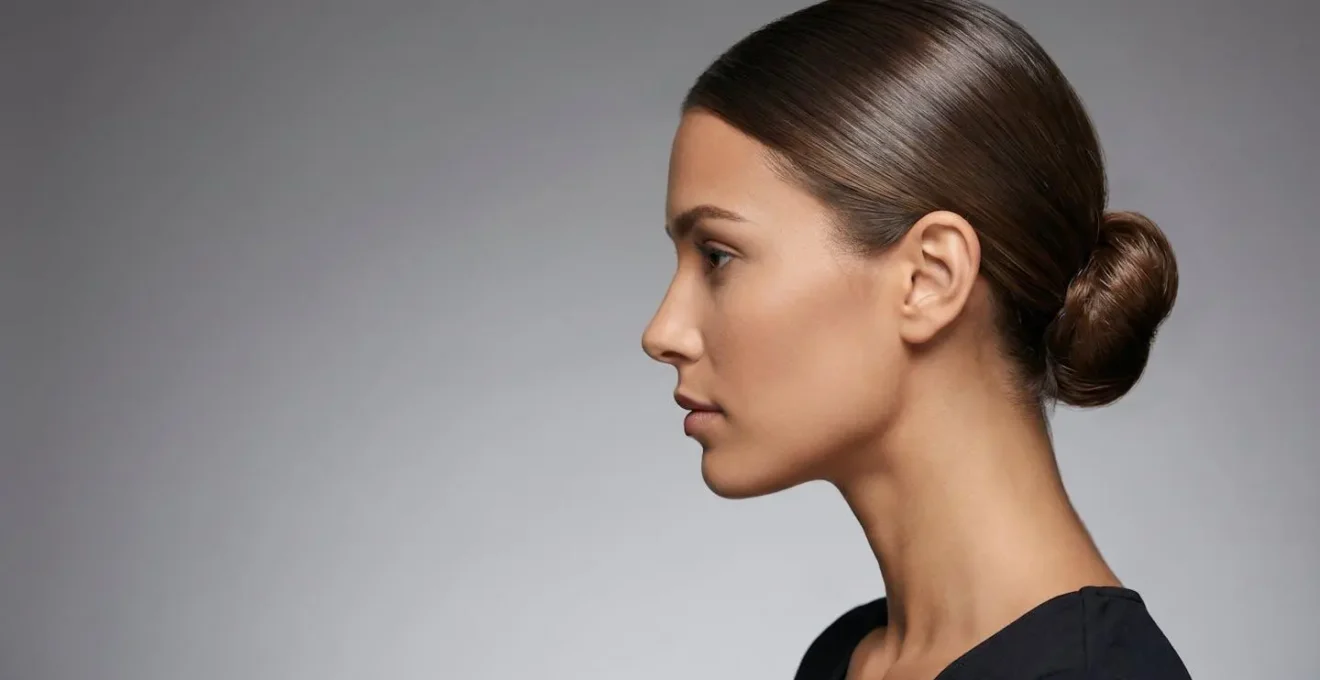
As this image illustrates, the clean lines of a well-executed updo create an air of elegance and refinement that can stand up to, and even elevate, the most basic clothing items. Paired with minimal, clean makeup, it is the ultimate anchor. It ensures that no matter how comfortable your clothes are, your overall presentation reads as sharp, deliberate, and unquestionably professional.
Key Takeaways
- Master the Material: Always choose matte, opaque fabrics like ponte knit over shiny athletic spandex to create a more expensive and professional foundation.
- Build a Silhouette: Use a « third piece, » such as a structured blazer, trench coat, or quality knit, to give your athleisure base intentional shape and architecture.
- Anchor with Details: The success of the look hinges on polished details. Pristine (non-athletic) sneakers, a structured bag, and intentional grooming are non-negotiable.
How to Look Polished in Jeans and Sneakers for a Casual Client Meeting?
The principles we’ve discussed for elevating leggings apply to the entire modern business-casual wardrobe, including the classic combination of jeans and sneakers. Once considered too informal for any client-facing situation, this pairing has become acceptable in many industries, provided it is executed with precision and intent. As Robin Fisher of Polished Image and Style told the Washingtonian, the key is intentionality; no one will object as long as you look the part. Looking « the part » involves applying the same concepts of textural hierarchy, silhouette architecture, and contextual signaling.
The formula for a polished, client-ready look built on jeans and sneakers is a masterclass in balance. You are deliberately mixing casual and formal codes to create a look that is approachable yet authoritative. Each element must be carefully chosen to contribute to the « polished » side of the equation, compensating for the inherent casualness of the base items.
Here is a proven formula for success:
- The Foundation: Impeccable Jeans. The jeans must be a dark indigo or black wash, with absolutely no rips, frays, or heavy distressing. The fit is critical: a modern straight-leg or a slim fit works best. Anything too baggy or overly skinny will skew too casual.
- The Footwear: Pristine Sneakers. As discussed, these must be minimalist fashion sneakers, not athletic trainers. Leather in a neutral white, black, or tan is ideal. They must be spotless, with clean laces and no scuffs.
- The Third Piece: The Professionalizer. This is the non-negotiable element that signals « business. » A well-fitting blazer is the classic choice. A high-quality, structured knit sweater or a sharp cardigan can also work. This piece adds traditional professional cues to the outfit.
- The Luxury Element: A Signal of Detail. Add one item that communicates sophistication and attention to detail. This could be a high-quality watch, a structured designer bag, a silk scarf, or a fine leather belt. This single element elevates the entire look disproportionately.
The art is in the balance. If your sneakers are on the more casual end of the spectrum (e.g., a clean canvas pair), your top half must be more structured (a pressed shirt and blazer). If your top half is softer (a cashmere knit), your footwear should be sharper (sleek leather sneakers). This constant, conscious balancing act is what defines a truly polished modern professional.
To put these principles into practice, the next logical step is to conduct a thorough audit of your own wardrobe. Evaluate your existing pieces against the criteria of fabric, structure, and branding to identify both your strengths and the key items you may need to build a versatile, polished, and comfortable professional wardrobe.