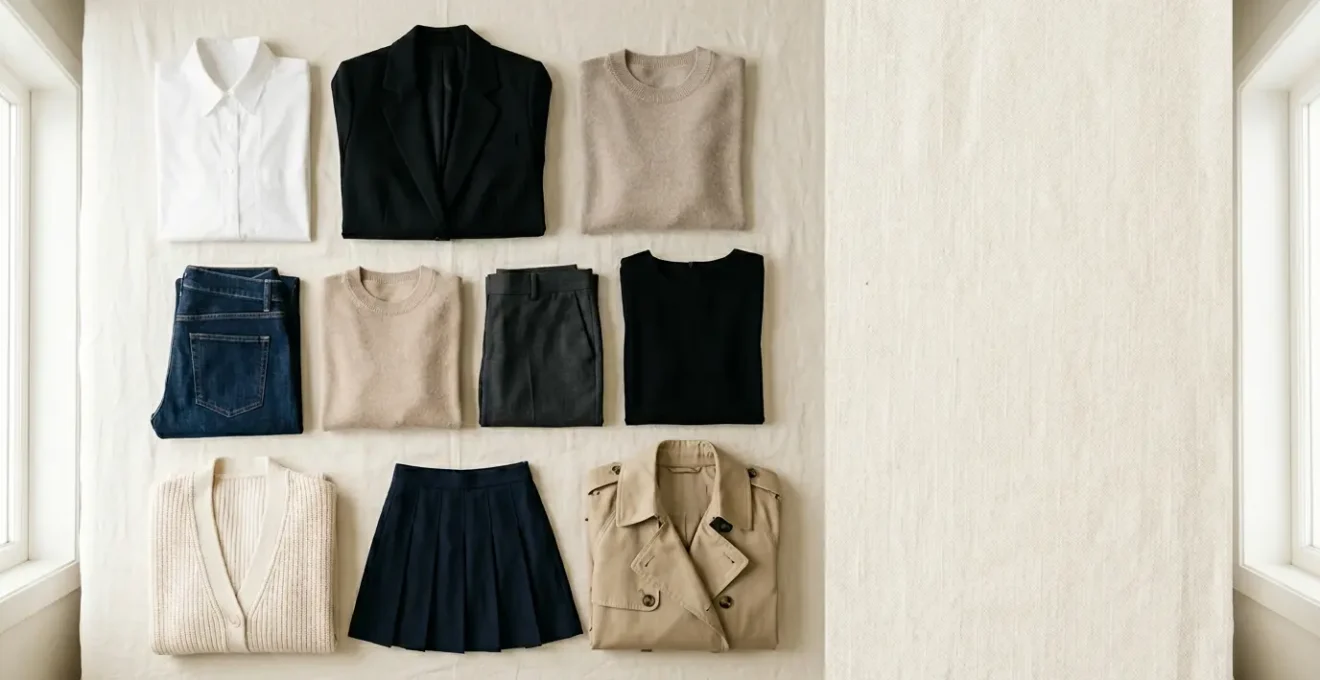
Generating dozens of outfits from a few items isn’t about having the ‘right’ clothes, but using the right ‘system’.
- Style is combinatorial: each look is a formula of item + layer + shoe + accessory. Changing one variable creates a new result.
- Radical layering (e.g., a dress over pants) and « genre-switching » with footwear are the fastest ways to multiply your options.
Recommendation: Stop thinking about individual outfits. Instead, deconstruct your wardrobe into variables and start experimenting with new combinations to unlock its hidden potential.
The question seems like a magic trick: how can 10 pieces of clothing possibly yield 30 distinct outfits? For many travelers and minimalists, the reality is a cycle of frustration. You pack what you believe to be a versatile selection, only to find yourself wearing the same three combinations on repeat. The common advice— »choose neutrals, » « pack basics, » « accessorize »—is not wrong, but it’s incomplete. It addresses the inventory but not the system. You end up with a small, boring wardrobe instead of a small, powerful one. The core problem isn’t the number of clothes; it’s the rigid, habitual way we pair them.
But what if the solution wasn’t in adding more items, but in applying a different kind of logic? What if creating outfits was less like painting and more like mathematics? The key to unlocking exponential variety lies in a combinatorial approach to styling. It’s a method that treats every piece of clothing, every shoe, and every accessory as a variable in an equation. By understanding how to systematically change these variables—through radical layering, high-low juxtaposition, and context-switching—you can deconstruct your wardrobe’s hidden potential. It’s about breaking the mental habit that says « this top only goes with those pants » and starting to see the infinite permutations available.
This guide will walk you through the practical, systematic principles of combinatorial styling. We will explore how digital tools can break your cognitive biases, how radical layering techniques can redefine the function of a garment, and how subtle shifts in footwear or grooming can completely alter an outfit’s genre. Prepare to stop seeing clothes and start seeing a system of infinite possibilities.
This article provides a systematic framework for maximizing your wardrobe. Below, you will find a detailed breakdown of the core principles, from leveraging technology to mastering the art of transformation with simple changes.
Summary: The Outfit Algorithm: A System for Unlocking 30+ Looks From a 10-Piece Wardrobe
- Why using a wardrobe app helps you see combos you never thought of?
- Shirt under dress vs. Dress over pants: Radical restyling techniques
- Sneakers vs. Heels: How shoes change the entire genre of a dress?
- The habit mistake of always pairing the same top with the same bottom
- 3 posing tricks to make the same outfit look different on Instagram
- How a sleek bun elevates a sweatshirt instanty?
- How to create a « day-to-night » outfit using just jewelry changes?
- How to Build a Visual Identity That Gets You Promoted in Creative Industries?
Why using a wardrobe app helps you see combos you never thought of?
The human brain is a creature of habit. We form neural pathways that make us reach for the same white shirt and blue jeans because it’s efficient. A wardrobe app short-circuits this cognitive laziness. By digitizing each item, it performs a crucial function: context deconstruction. The app removes your shirt from its mental hanger next to « the usual pants » and displays it as a standalone data point. This digital catalog forces you to see your clothes as independent variables, not as fixed pairs. It’s the first step in applying a combinatorial mindset to your wardrobe.
The true power, however, lies in features like an AI stylist or an outfit generator. These tools operate on pure logic, creating permutations you’d never consider because they bypass your ingrained style biases. They might pair that formal silk blouse with your casual cargo pants, a combination your brain dismisses as mismatched. Yet, seeing it on screen can trigger an « aha » moment, revealing a surprisingly chic, high-low look. As one user noted about their experience, the app’s AI stylist suggested combinations that would have never occurred to them. This external, unbiased perspective is invaluable for breaking creative ruts.
Many apps also provide advanced filtering and style statistics. You can ask it to « show all work-appropriate outfits with this skirt, » forcing it to generate novel pairings within set constraints. Furthermore, by tracking your most-worn items, it can identify « wardrobe orphans »—pieces you own but never wear—and challenge you to integrate them. This isn’t just about getting dressed; it’s about receiving data-driven feedback on your own inventory, turning your closet from a collection of clothes into a strategic, optimizable system.
Shirt under dress vs. Dress over pants: Radical restyling techniques
Radical restyling is about fundamentally challenging the prescribed function of a garment. A dress is not just a dress; it can be a tunic, a vest, or a longline top. The two most powerful techniques in this domain are layering a shirt *under* a dress and a dress *over* pants. These methods don’t just add warmth; they create entirely new silhouettes and textural dialogues, effectively doubling or tripling the utility of each piece. This is the core of combinatorial styling: viewing each item as a modular component, not a fixed entity.
Layering a crisp, collared shirt under a simple slip dress or sleeveless sheath transforms it from evening-wear to a polished, office-appropriate look. The key is playing with proportions and texture. A fine-gauge turtleneck under a silk camisole dress creates a sleek, continuous line. Conversely, a chunky knit under a utility dress introduces a deliberate, high-fashion contrast. This technique allows a single « occasion » dress to function across multiple contexts, dramatically increasing its cost-per-wear value.
This paragraph introduces the concept of textural contrast in layering. The illustration below highlights the tactile difference between a smooth, silky fabric and a chunky knit, demonstrating how such pairings create visual interest and depth.
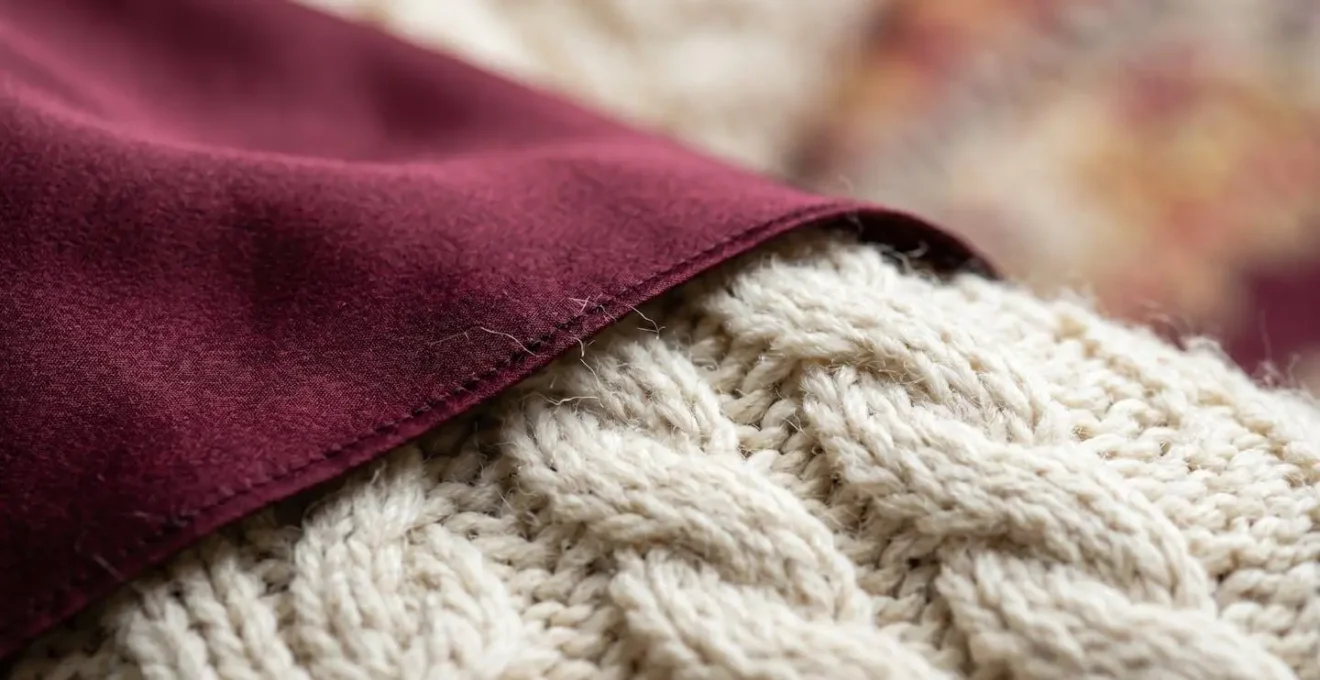
As the image shows, the interplay of different material weights is fundamental. Similarly, wearing a dress over pants—a technique popular in Scandinavian and Japanese street style—redefines its purpose. A button-down shirtdress worn open acts as a lightweight duster coat. A shorter slip dress layered over tailored trousers or straight-leg jeans becomes an elongated, tunic-style top. This move is not just practical; it’s a powerful style statement that signals a sophisticated understanding of shape and proportion. It breaks the binary choice of « dress or pants » and creates a third, more dynamic option.
Sneakers vs. Heels: How shoes change the entire genre of a dress?
A dress has no inherent genre. A simple black dress is a blank canvas, and footwear is the brush that paints its context. This concept of « genre-switching » is perhaps the most efficient tool in a minimalist’s arsenal. By changing only your shoes, you can take a single dress from a weekend brunch to a corporate boardroom to a formal event. This is the outfit algorithm at its simplest and most powerful: changing one variable (footwear) results in a completely different stylistic output. This strategic swap is the key to making one piece feel like five different garments.
Consider a simple slip dress. Paired with clean white sneakers, its genre becomes « casual weekend. » The message is approachable and comfort-focused. Swap the sneakers for classic pointed-toe heels, and the genre instantly shifts to « office formal » or « cocktail attire. » The message becomes one of authority and polish. Change again to edgy ankle boots, and the genre morphs into « artsy creative, » conveying an individualistic, fashion-forward sensibility. Each shoe type brings its own set of cultural codes and associations, effectively rewriting the story of the dress without altering the garment itself.
This principle of footwear-driven transformation can be systematically mapped. The following table breaks down how different shoe choices can redefine the purpose and message of a classic Little Black Dress, based on an analysis of footwear psychology.
| Shoe Type | Genre Created | Complementary Accessories | Message Conveyed |
|---|---|---|---|
| Sneakers | Casual/Weekend | Backpack, denim jacket | Approachable, relaxed, comfort-focused |
| Heels (Pumps) | Office/Formal | Structured bag, trench coat | Authority, professionalism, polished |
| Ankle Boots | Artsy/Creative | Crossbody bag, leather jacket | Edgy, individualistic, fashion-forward |
| Loafers | Intellectual/Preppy | Tote bag, blazer | Smart-casual, put-together, refined |
| Strappy Sandals | Date Night | Clutch, statement jewelry | Feminine, elegant, occasion-ready |
Understanding this matrix allows you to be highly strategic. You are no longer just choosing shoes; you are deploying a stylistic signal. For the traveler or minimalist, this means you don’t need five different dresses. You need one great dress and three to four carefully selected pairs of shoes that cover the genres you’ll need to inhabit. It’s an approach rooted in efficiency and maximum impact, turning footwear choice into a deliberate, powerful act of personal branding.
The habit mistake of always pairing the same top with the same bottom
The biggest obstacle to a versatile wardrobe isn’t a lack of clothes; it’s a lack of imagination, driven by a psychological phenomenon known as decision fatigue. Our brains are wired to conserve energy, and creating new outfit combinations requires cognitive effort. It’s simply easier to reach for the « proven » pairing of a specific top with its usual bottom. This creates style ruts, where 80% of your wardrobe goes unworn because you’re stuck in a 20% loop. In fact, some research on clothing decision fatigue shows that the sheer volume of choice can be paralyzing, leading us to default to the safest, most familiar options.
Breaking this habit requires a conscious and systematic intervention. You have to intentionally force your brain to see new possibilities. This isn’t about aimlessly trying things on; it’s about applying a structured exercise designed to rewire those habitual neural pathways. Instead of seeing a « blouse-and-skirt » combo, you must learn to see a blouse as one variable and a skirt as another, each capable of being paired with every other corresponding variable in your closet. This is the foundational logic that separates a static wardrobe from a dynamic, combinatorial one.
The goal is to move from passive dressing (grabbing what’s familiar) to active dressing (creating with intent). By dedicating a small amount of time to planned experimentation, you build a mental lookbook of new, pre-approved combinations. This reduces decision fatigue in the long run, as you’ll have a larger arsenal of « go-to » outfits to choose from, making your daily dressing routine both faster and more creative. It’s a short-term investment for a long-term style payoff.
Your Action Plan: The ‘One Item, Five Ways’ Method
- Select a Core Item: Choose one piece from your wardrobe you want to utilize more, like a white shirt or a specific skirt.
- Challenge and Document: Your task is to create and photograph five completely distinct outfits using that single core item as the foundation.
- Force New Pairings: Actively mix the core item with different tops, bottoms, layers, and shoes you would normally never consider pairing it with.
- Build Your Lookbook: Keep a digital album (on your phone or a wardrobe app) of the successful new combinations for quick reference on busy mornings.
- Systematize the Habit: Repeat this exercise weekly with a different core item to continuously break old patterns and expand your internal style library.
3 posing tricks to make the same outfit look different on Instagram
In the digital age, an outfit’s life extends far beyond its physical wearing. For content creators, travelers, or anyone documenting their style online, the challenge is making a limited wardrobe feel fresh and expansive. The secret isn’t owning more clothes; it’s mastering the art of photographic storytelling. The same outfit can appear dramatically different based on posing, cropping, and context. By strategically varying these elements, you can post the same blazer-and-jeans combo three times without your audience even noticing it’s a repeat.
The first trick is to shift the focus from the full look to its components. A single outfit contains multiple stories. Your first post can be a classic full-body shot. For the second « wearing, » use a detail-oriented pose: a close-up of you sitting, bringing the focus to your shoes and the cuff of your pants; a shot highlighting the texture of the fabric; or a composition centered on the interaction between your bag and jacket. The third trick is to introduce movement or structure. A walking shot captures the flow of a skirt, while leaning against a wall emphasizes the sharp silhouette of a blazer. Each pose tells a different story about the same clothes.
This image demonstrates how placing a styled outfit in a minimalist environment with significant negative space can change its narrative, making the context as important as the clothes themselves.
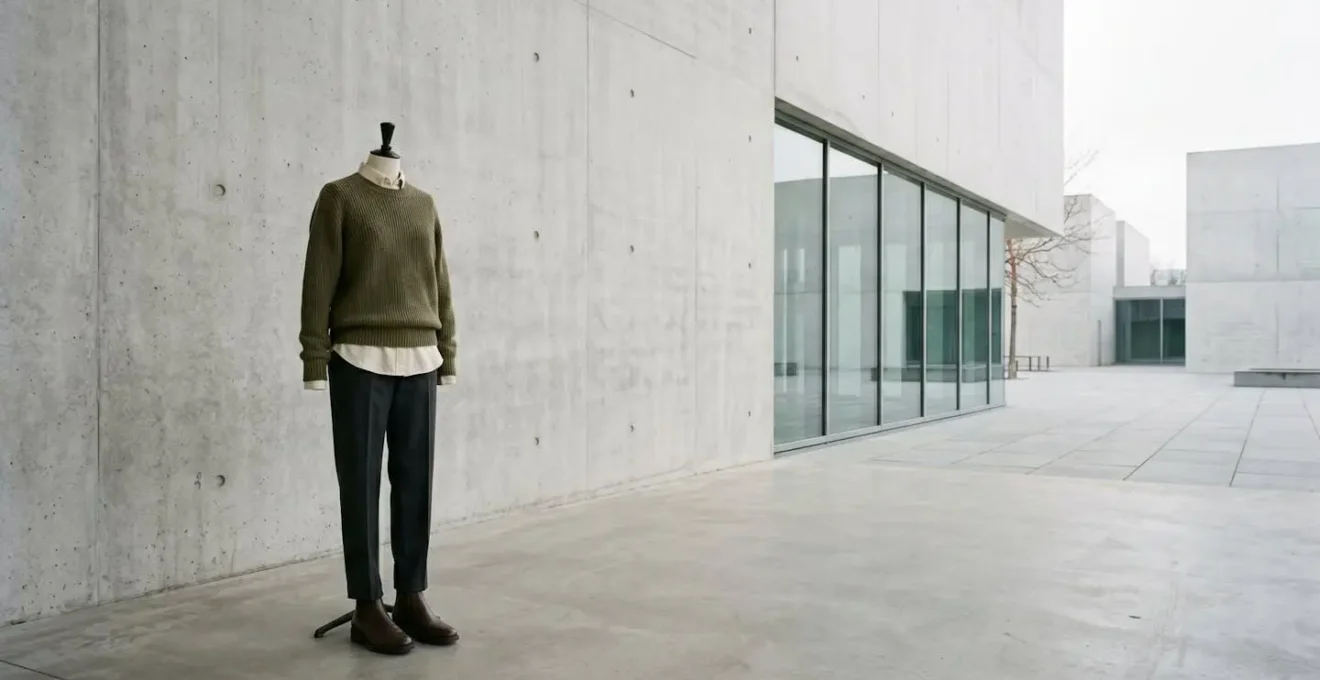
Finally, the most powerful tool is context variation. As seen above, the environment dramatically influences an outfit’s mood. The same simple dress shot against a gritty, urban brick wall tells a story of edgy street style. Photograph that exact same dress in a sun-drenched, natural landscape, and it speaks to a soft, romantic narrative. You haven’t changed the outfit, but you’ve completely changed its context and, therefore, its perception. A carousel post can masterfully combine these: slide one shows the full look, slide two is a texture detail, and slide three is a shot of the shoes in a new environment.
How a sleek bun elevates a sweatshirt instanty?
The secret to looking intentionally stylish, rather than simply comfortable, often lies in the principle of high-low juxtaposition. This is the deliberate pairing of elements from opposite ends of the formal-to-casual spectrum. A prime example is combining a « low » item, like a basic cotton sweatshirt, with a « high » element, such as a polished, sleek hairstyle. A sleek bun or a sharp, low ponytail acts as a powerful stylistic counterpoint. It signals that your relaxed attire is a conscious choice, not a lazy default. It’s a non-verbal cue that says, « I am put-together, even in my comfort. »
This concept is an equation: Basic Outfit + One Polished Element = Intentional Look. The polished element doesn’t have to be hair. It could be a bold, classic red lip paired with a simple t-shirt and jeans. The lipstick elevates the entire look from « running errands » to « casually chic. » Similarly, adding a structured blazer over a worn-in band tee and joggers creates a dynamic tension between formal tailoring and relaxed streetwear. The blazer’s sharp lines provide a framework that makes the casualness of the other pieces feel deliberate and cool.
The power of this technique lies in its efficiency. It requires minimal effort for maximum impact. You don’t need a whole new outfit to look more polished; you just need to change one or two key grooming or accessory variables. Adding a pair of delicate gold hoop earrings and a clean manicure to a simple sweatsuit immediately refines the overall impression. It draws the eye to polished details, creating a holistic sense of intention and care. This is the ultimate minimalist style hack: using grooming as a transformative accessory.
How to create a ‘day-to-night’ outfit using just jewelry changes?
The « day-to-night » transition is a classic style challenge, especially for travelers or professionals with after-work plans. The most efficient solution doesn’t involve a change of clothes, but a strategic change of jewelry. The core principle is a shift in scale and shine. Daytime jewelry is typically smaller in scale and lower in shine—think delicate chain necklaces, small stud earrings, or a simple leather-strap watch. Nighttime jewelry, conversely, is larger in scale and higher in shine, incorporating reflective metals, crystals, or statement designs.
The transformation can be pre-planned with a small « transformation pouch » kept in your bag. Inside: a pair of statement earrings, a bold cocktail ring, or a layered necklace. The process is a simple swap. At the end of the workday, remove the delicate daytime studs and replace them with the statement earrings. This single move instantly shifts the outfit’s focal point upward, frames the face, and catches the light in a way that feels distinctly more « evening. » The rest of your outfit—be it a simple sheath dress or a blouse and trousers—is immediately re-contextualized for a more formal or festive setting.
This image captures the intimate, intentional moment of using jewelry to transform a look. The focus on the hands and the delicate piece conveys the personal and powerful nature of this simple style adjustment.

As the photo suggests, this is a moment of intentional styling. To amplify the effect, you can add a second layer of transformation. A bolder lipstick shade complements the shift in jewelry. If you wore a single delicate necklace during the day, adding a second, perhaps longer or more ornate, necklace creates a layered, high-shine effect perfect for evening. The key is that you are not just adding more; you are swapping and scaling up. This method is the epitome of the combinatorial approach: by changing just one or two small variables, the entire « outfit equation » yields a new, context-appropriate result.
Key takeaways
- Stop thinking in outfits, start thinking in systems. Your wardrobe is a collection of variables (tops, bottoms, shoes, layers) that can be combined in near-infinite ways.
- Genre is not inherent to a garment; it is assigned by context. A dress can be casual, professional, or formal depending on the shoes, hair, and accessories paired with it.
- High-low juxtaposition (pairing polished elements with casual ones, like a sleek bun with a sweatshirt) is the most efficient way to create an intentional, modern look.
How to Build a Visual Identity That Gets You Promoted in Creative Industries?
In creative industries, your work portfolio is only half the story. Your personal visual identity—how you present yourself—is a non-verbal portfolio that communicates your taste, attention to detail, and point of view before you even speak. A strategic capsule wardrobe is the most powerful tool for building this identity. It’s not about boring repetition; it’s about curated consistency. By defining a cohesive color palette and a set of signature silhouettes, you create a recognizable and memorable personal brand that reinforces your professional credibility.
This approach turns your wardrobe into « Work Uniform 2.0. » Unlike a traditional uniform that erases individuality, this is a self-authored uniform that expresses it. It demonstrates discipline, creative confidence, and a strong aesthetic vision—all highly valued traits in creative fields. A 10-piece capsule, for example, forces you to make deliberate choices, honing your aesthetic into a clear and consistent message. This consistency builds recognizability, a cornerstone of any strong brand identity.
Case Study: The 10-Piece Capsule as a Professional Branding Tool
As detailed in an analysis by Uniqistic’s style guide, a 10-piece capsule wardrobe framework is an excellent tool for professional branding. Imagine a creative director candidate who builds their interview wardrobe around a minimalist-but-edgy 10-piece capsule. The palette is monochromatic (black, white, grey) with a single bold accent color (e.g., cobalt blue), and the silhouettes are strong and architectural. Before they even present their design portfolio, their clothing has already communicated key brand attributes: discipline (cohesive palette), a strong point of view (architectural shapes), and meticulous attention to detail (the strategic use of an accent color). Their capsule becomes a non-verbal testament to their creative philosophy, signaling professionalism and confidence.
Ultimately, a strategic visual identity shows that you apply the same level of creative rigor to yourself as you do to your work. It eliminates the guesswork and decision fatigue from getting dressed, freeing up mental energy to focus on what truly matters: your creative output. It’s a silent, powerful signal that you are not just a participant in your industry, but a thoughtful, deliberate creator who understands the power of a consistent and compelling brand message.
By adopting a combinatorial mindset and applying these systematic techniques, you can transform a limited selection of clothes into a dynamic and expressive wardrobe. Start today by choosing one item and challenging yourself to create five new looks—the first step to unlocking your closet’s true potential.