
True virtual authority isn’t about wearing your best office attire on camera; it’s about understanding how your webcam translates color, pattern, and shape into a language of leadership.
- Your physical outfit is not what colleagues see. They see a digital interpretation heavily influenced by camera sensors and compression.
- Strategic use of « visual anchors » like jewelry and « sensor-safe » colors can direct attention and build a non-verbal narrative of competence.
Recommendation: Shift your mindset from ‘dressing up’ to ‘dressing for the sensor.’ Start by choosing one element—color, accessory, or background—to deliberately engineer your presence in your next high-stakes video call.
As a remote leader, you’ve likely felt it: that subtle erosion of authority, the feeling that your presence doesn’t quite land with the same impact through a small rectangle on a screen. The standard advice floods in—wear a blazer, find good lighting, tidy your background. While well-intentioned, this counsel misses the fundamental truth of our digital-first work life. It treats the webcam as a passive mirror, when in reality, it’s an active translator, with its own rules and biases.
The problem isn’t that your favorite suit has lost its power; it’s that its power doesn’t translate directly into pixels. We’ve been taught to dress for the room, but we haven’t been taught to dress for the sensor. This is the critical missing link for leaders who need to command attention, foster trust, and drive decisions without the benefit of physical presence. The conversation must evolve beyond simply replicating office attire at home.
But what if the key to reclaiming your virtual authority wasn’t in wearing more formal clothes, but in wearing smarter ones? What if you could strategically use color, texture, and accessories to speak the technical language of the camera? This guide is built on that premise. We will move beyond the platitudes and dive into the mechanics of visual influence in a virtual world. You’ll learn how to make deliberate choices that build your non-verbal narrative, ensuring your leadership presence is not just seen, but felt.
This article provides a detailed roadmap for mastering your on-screen presence. Explore the sections below to learn the specific techniques that will transform how you appear, and are perceived, in every virtual interaction.
Summary: A Leader’s Guide to Mastering On-Screen Presence
- Why jewel tones perform better than pastels on webcam sensors?
- How to use necklaces to frame your face during presentations?
- Hoodie vs. Knit Blazer: Where is the line for startup founders?
- The busy pattern mistake that causes moiré effect on camera
- When to switch from casual to formal during a hybrid work week?
- 3 ways to translate your physical style into your Zoom background and avatar
- Bold prints vs. Neutrals: Which signals authority without aggression?
- Why does your outfit impact your negotiation success more than you think?
Why jewel tones perform better than pastels on webcam sensors?
The advice to « wear solid colors » on camera is common, but it misses a crucial technical detail: not all solid colors are created equal in the eyes of a webcam. Your camera’s sensor doesn’t see color the way your eye does. It compresses a vast spectrum of light into a limited digital format, a process that can wash out subtle shades and flatten your appearance. This is why pastels and very light neutrals, which look soft and sophisticated in person, can make you appear faded and less defined on screen.
Jewel tones—such as emerald, sapphire, ruby, and amethyst—are the solution. Their high saturation provides a strong, clear signal for the camera sensor to lock onto. This creates a crisp, defined silhouette that separates you from your background, instantly giving you more presence and visual weight. Unlike neons, which can « bloom » or create color casts on your skin, jewel tones offer the perfect balance of richness and stability. They project an image of grounded, confident authority.
The science behind this is linked to how cameras process information. Research on camera color accuracy reveals that digital cameras produce device-dependent colors that don’t map linearly to human visual perception. By choosing a saturated jewel tone, you are essentially giving the technology a better, less ambiguous dataset to work with. This results in a truer, more powerful digital translation of your presence. Think of it as speaking the camera’s native language.
How to use necklaces to frame your face during presentations?
In a virtual meeting, your face is the focal point of all communication. Your goal as a leader is to keep your audience’s attention centered there. A strategically chosen necklace is one of the most effective tools for this, acting as a « visual anchor » that frames your face and subtly reinforces your message without causing a distraction. It creates a clear boundary at the base of your neck, preventing the viewer’s gaze from wandering down to your torso or the background.
The key is to select the right kind of necklace. Avoid anything too intricate, shiny, or noisy, as it will compete with your face for attention. The most effective pieces are often simple, structured, and have some visual weight. A clean collar-style necklace, a simple pendant on a short chain, or a strand of medium-sized pearls creates a stable horizontal or « U » shaped line. This line acts as a subconscious pointer, directing focus back up towards your chin, mouth, and eyes—the sources of your communication.
This accessory choice is not about decoration; it’s about directorial control over your personal frame. The right necklace helps to create a contained, professional, and polished composition within the confines of the Zoom window, enhancing your perceived authority and focus.
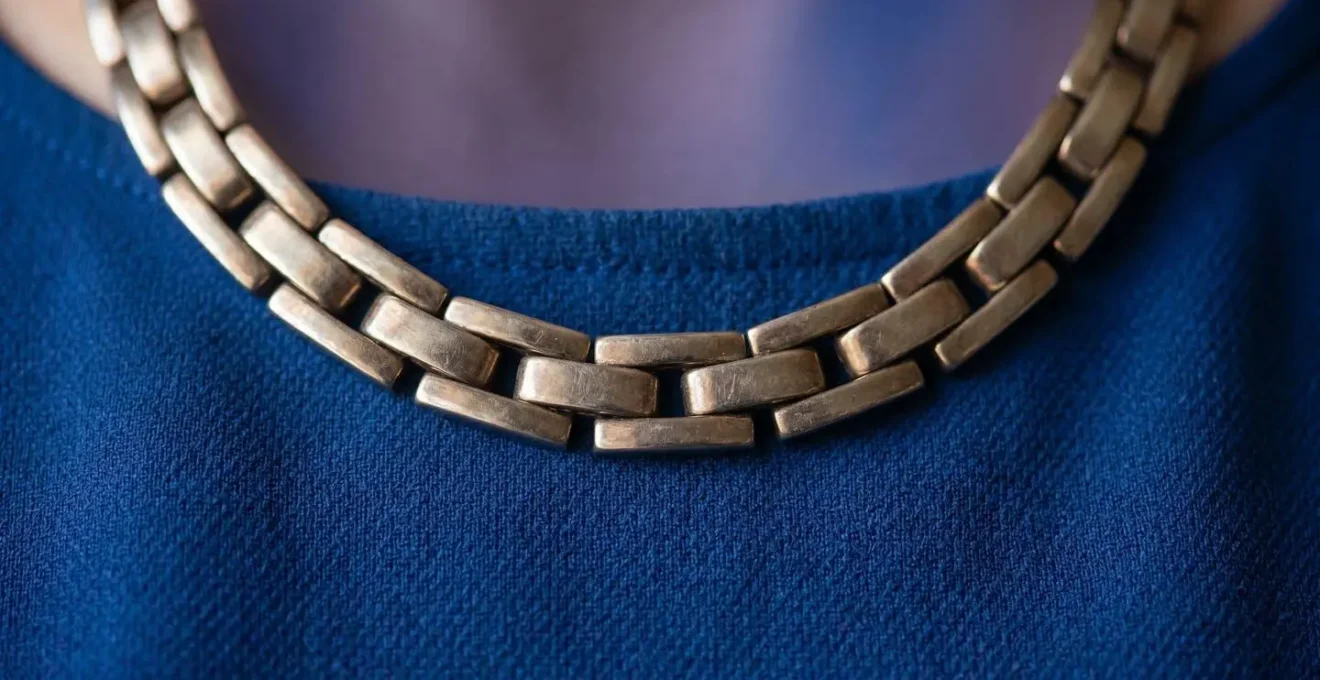
As you can see, the necklace establishes a clear termination point for your outfit, which is crucial in a « top-up » dressing context. It completes the visual picture, signaling intention and polish. Without this anchor, the neckline of a simple top can appear abrupt, leaving the composition feeling unfinished. It’s a small detail that crafts a powerful non-verbal narrative of completeness and control.
Hoodie vs. Knit Blazer: Where is the line for startup founders?
For startup founders and leaders in less traditional industries, the « blazer rule » can feel inauthentic and out of touch with company culture. The challenge is to project authority and credibility to external stakeholders (investors, clients) while maintaining an approachable, innovative vibe with your internal team. This requires a nuanced approach to your wardrobe, a form of « contextual code-switching. » The line between a hoodie and a knit blazer is not fixed; it moves depending on the audience and the objective of the meeting.
A high-quality, structured hoodie in a solid, neutral color can be perfectly appropriate for internal meetings, daily stand-ups, or creative brainstorming sessions. It signals that you are in « builder mode »—approachable, collaborative, and focused on the work. However, the moment the meeting’s objective shifts to securing trust or resources from an external party, the code must switch. A knit blazer is the modern leader’s most valuable asset here. It combines the structure of a traditional blazer (signaling authority) with the comfort and softness of a sweater (signaling approachability).
This is not about being a different person, but about speaking a different non-verbal language. For an investor pitch, the knit blazer says, « I am a credible and serious leader. » For a client presentation, it says, « I am professional and reliable. » For an all-hands with your team, a well-fitting crew neck or high-end hoodie says, « I am one of you, focused on our shared mission. » The mistake is not in wearing a hoodie; it’s in wearing it in the wrong context.
Deciding which to wear can be simplified by mapping your attire to the meeting’s context, as demonstrated in a wardrobe decision matrix for founders. The following table provides a clear framework for these choices.
| Meeting Context | Internal/Creative Meetings | External/Strategic Meetings |
|---|---|---|
| Development Team Sync | High-quality hoodie (structured fabric, solid color) | N/A |
| Investor Pitch/Board Meeting | N/A | Knit blazer or structured jacket |
| Client Presentation | Smart casual knit | Knit blazer (formal but approachable) |
| Networking Event | Quality polo or structured knit | Blazer with open collar (accessible authority) |
The busy pattern mistake that causes moiré effect on camera
While a bold pattern can seem like a great way to express personality, it’s one of the biggest technical traps in virtual communication. Fine, repetitive patterns like tight stripes, small checks (gingham), or herringbone are the primary culprits behind a distracting visual artifact known as the moiré effect. This occurs when the dense pattern of your clothing clashes with the grid of pixels on the camera’s sensor. The result is a bizarre, shimmering, wavy distortion that makes you difficult to look at and instantly undermines your professional image.
The moiré effect is a perfect example of why « sensor-first dressing » is so critical. An outfit that looks sharp and sophisticated in person can become a visual distraction on screen. The camera sensor struggles to resolve the competing lines, creating a new, artificial pattern that isn’t actually there. This digital noise pulls the viewer’s attention away from your face and your message, projecting an image of technical amateurism, even if the issue is entirely subconscious for the viewer.
This doesn’t mean you must avoid patterns altogether. The key is scale. Large-scale patterns—where the individual elements are at least two inches wide—are generally safe. Think bold, abstract prints, large floral designs, or wide color blocks. These patterns are simple enough for the camera’s sensor to interpret correctly without generating interference. When in doubt, the safest choice is always a solid, saturated color.
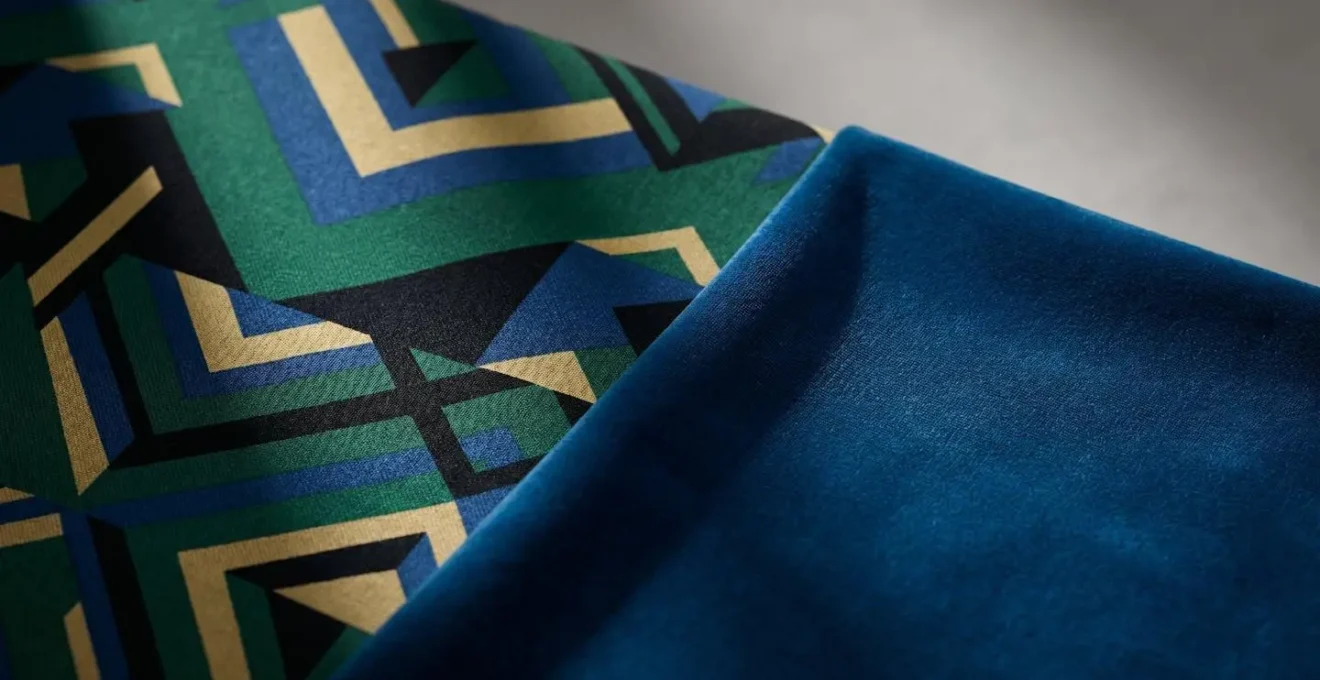
The contrast between a camera-safe, large-scale pattern and a solid color illustrates the principle of clarity. Your goal is to send a clean, unambiguous signal to the sensor. By avoiding fine, busy patterns, you eliminate the risk of digital distortion and maintain full control over your visual narrative. You ensure that you are the subject of the meeting, not the unintended special effects created by your shirt.
When to switch from casual to formal during a hybrid work week?
In a hybrid work model, the question of « what to wear » becomes even more complex. The temptation is to remain in casual attire on remote days and « dress up » for the office. However, this binary approach overlooks a powerful psychological tool: « enclothed cognition. » This is the scientifically-backed idea that the clothes we wear have a direct impact on our own thoughts, feelings, and performance. Dressing with intention, even when no one else will see you, can fundamentally alter your mindset and effectiveness.
The decision to switch from casual to formal should not be dictated by location (home vs. office), but by the demands of your task. If your morning is filled with deep work, analysis, or routine emails, comfortable, high-quality casual wear is perfectly fine. However, if you have a high-stakes virtual negotiation, a critical presentation to the board, or a difficult conversation with a direct report, switching into more formal attire acts as a mental trigger. Putting on the knit blazer or a structured top signals to your own brain that it’s « game time. » It primes you for a more focused, authoritative, and strategic mindset.
This internal effect is as important as the external perception. In fact, the two are linked; when you feel more powerful and confident, you project that non-verbally. This is confirmed by a comprehensive 2023 meta-analysis of 40 enclothed cognition studies, which found that the effect of clothing on our internal state is a small to moderate, but real and replicable, phenomenon. Using your wardrobe as a tool for self-manipulation is a core tenet of modern leadership.
3 ways to translate your physical style into your Zoom background and avatar
Your authority on screen is not just about what you wear from the waist up. It’s about the entire composition within your video frame, including your background and even your avatar when the camera is off. A cohesive visual identity, where your digital space is an extension of your personal brand, creates a powerful and memorable impression of intentionality and control. Mismatched signals—like a sharp blazer against a chaotic or generic background—can subtly undermine your credibility.
Translating your physical style into your digital environment is a strategic move to build a holistic non-verbal narrative. Instead of a random virtual beach, your background should be curated as a « wardrobe extension. » This doesn’t require a professional studio; it’s about making deliberate choices that reinforce the image you want to project. There are three key tiers to creating this cohesive presence.
First, create harmony between your outfit and your space. Second, treat your background as a curated signal. Third, ensure your authority persists even when your camera is off. By aligning these elements, you present a unified, professional front that communicates competence and attention to detail before you even speak.
Your Action Plan: Aligning Your Digital and Physical Presence
- Create Color Harmony: Link your authority outfit palette to your digital space. If you favor blues and greys in your clothing, incorporate a complementary accent color (like a warm wood tone or a single piece of art) into your background to create a visually pleasing and professional composition.
- Curate Your Background as a Wardrobe Extension: Use elements that reinforce your professional identity. A thoughtfully organized bookshelf signals intellectual weight, much like a structured blazer. A healthy plant can signal growth and vitality, akin to quality accessories. The key is that every item should feel intentional.
- Design an Authority-Projecting Avatar: Your profile picture is your representative when your camera is off. Use a professional headshot where you are wearing a « high-stakes » outfit (e.g., your knit blazer). This ensures you project authority and seriousness even in a list of participants.
Bold prints vs. Neutrals: Which signals authority without aggression?
The choice between a bold print and a solid neutral is a delicate balancing act. As a leader, you need to project authority, but you also need to remain approachable and avoid signaling aggression. Neutrals—like charcoal grey, navy blue, and muted earth tones—are the safest foundation for authority. They are visually stable, universally perceived as professional, and create a calm canvas that allows your face and your message to be the primary focus.
However, an endless sea of neutrals can sometimes read as overly conservative or lacking in dynamism. This is where a bold, large-scale print can be strategically deployed. As we discussed regarding the moiré effect, the key is scale and simplicity. A large geometric pattern or an abstract color block design on a simple silhouette (like a shell top under a blazer) can add a touch of personality and visual interest that signals creativity and confidence. This is authority with a modern edge.
The line is crossed when the print becomes a distraction. Small, busy patterns are visually aggressive on camera. Similarly, animal prints or loud, chaotic florals can be misinterpreted as overly assertive or even unprofessional depending on the corporate culture. The goal is to choose a print that complements your authority, not one that competes with it. A good rule of thumb: if you question whether the print is « too much, » it probably is. Stick to a solid jewel tone or a classic neutral for high-stakes meetings.
Key Takeaways
- Dressing for virtual meetings is a technical skill; prioritize « sensor-first » choices like jewel tones over pastels.
- Use structured accessories like necklaces as « visual anchors » to frame your face and command attention.
- The formality of your attire should match the meeting’s context, not just your physical location (a concept known as « contextual code-switching »).
Why does your outfit impact your negotiation success more than you think?
In the final analysis, every element of top-up dressing—color, pattern, accessories, and context—converges in high-stakes moments like negotiations. It’s easy to dismiss clothing as a « soft » factor, but in a virtual setting where non-verbal cues are already limited and distorted, your visual presentation carries disproportionate weight. It becomes a primary source of data for the other party to assess your seriousness, preparation, and authority.
Negotiating virtually is inherently challenging; it often leads to poorer outcomes and less trust compared to face-to-face interactions. Your attire is one of the few variables you can fully control to counteract this deficit. A strategically chosen outfit—one that is sensor-friendly, contextually appropriate, and projects grounded authority—builds a crucial foundation of credibility before the negotiation even begins. It’s a non-verbal opening statement that says, « I am prepared, I am serious, and I am in control. »
This is not speculation; it is a measurable dynamic. The choices you make about your appearance directly influence how you are perceived and, consequently, the trajectory of the interaction.
Case Study: The MIT Study on Virtual Negotiation Cues
A 2021 study in the MIT Negotiation Journal explored how altering nonverbal cues, including appearance, impacts outcomes in virtual settings. The research highlighted that experienced negotiators classify counterparts based on visual signals like clothing and that these perceptions significantly influence how the interaction unfolds. As the researchers noted: « A person’s appearance, identity, and other nonverbal cues can substantially influence how one is perceived by a negotiation counterpart, potentially impacting the outcome of the negotiation. » This confirms that strategically managing your on-screen appearance is not vanity—it is a core negotiation tactic.
Ultimately, your outfit is a tool of influence. By mastering the principles of top-up dressing, you are not just improving your image; you are sharpening a critical instrument in your leadership toolkit. You are ensuring that in every virtual room you enter, your authority is not just assumed, but actively and strategically projected.
Start today by auditing one upcoming meeting in your calendar. Instead of reaching for your default choice, strategically select one element—a specific jewel tone, a visual anchor necklace, or a background object—to intentionally shape your virtual presence and observe the impact.