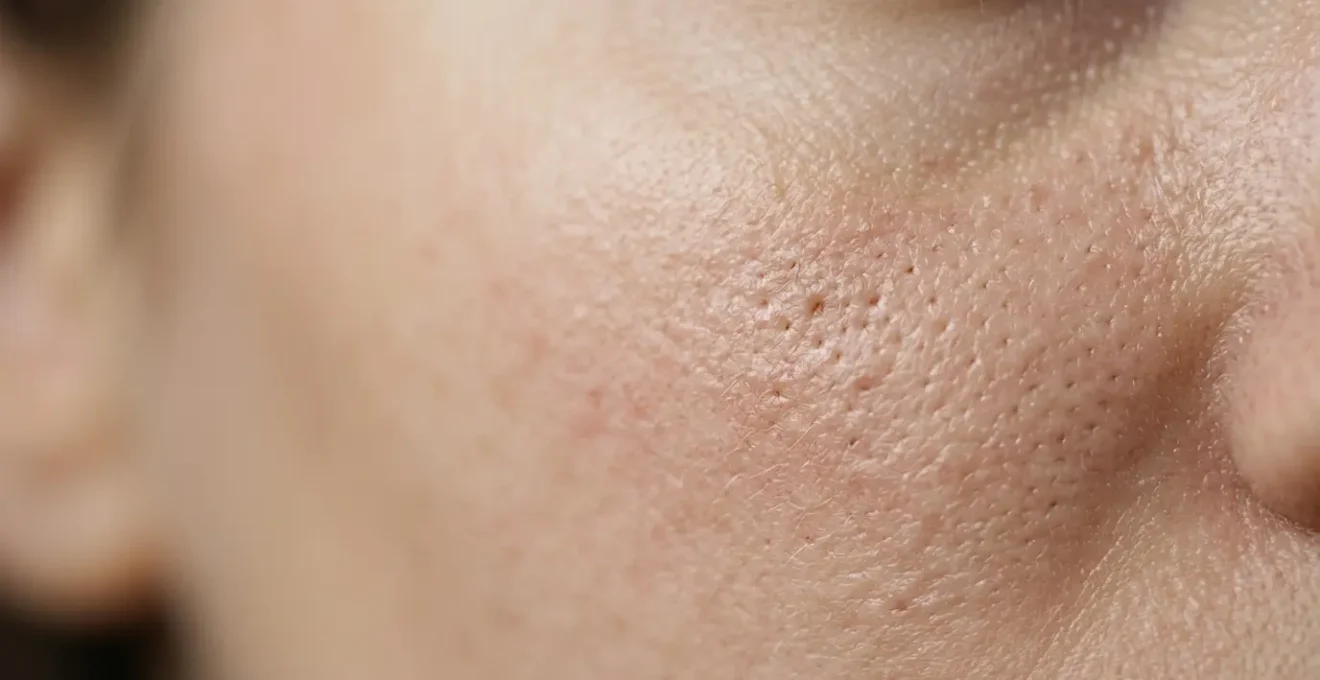
The frustrating truth is that your diligent cleansing is likely being neutralized by invisible skincare saboteurs hiding in your daily routine.
- Pore-clogging ingredients from your hair care and even « good » habits like exercise can transfer to your face, causing congestion.
- Over-exfoliation and irritation create an inflammatory response that paradoxically leads to more clogged pores.
Recommendation: Shift your focus from simply washing your face to investigating and eliminating the hidden sources of comedogenic residue and inflammation in your entire lifestyle.
You follow the rules. You diligently wash your face every morning and every night, convinced that this fundamental act of skincare hygiene should grant you clear, smooth skin. Yet, the frustration is palpable. You look in the mirror only to find the same stubborn blackheads and clogged pores staring back at you. It feels like a betrayal. You’re doing the « right thing, » so why isn’t it working? The common advice to « just wash your face » or « use salicylic acid » feels hollow when you’re already doing it all.
This is where the real investigation begins. As an acne detective, you must look beyond the obvious. The problem isn’t a lack of effort; it’s the presence of stealthy saboteurs. These are the hidden culprits in your hair products, your gym habits, and even in the very skincare products meant to help you. They create a « comedogenic footprint » that your simple cleansing routine cannot overcome on its own. The illusion of a « clean » face is shattered when you realize it’s being constantly exposed to a film of pore-clogging residue.
The solution isn’t to wash more aggressively—in fact, that can make things worse. The key is to become a savvy investigator of your own environment. It requires a shift in perspective: from focusing on the 2 minutes you spend cleansing, to considering the other 23 hours and 58 minutes of exposure. This guide is your investigative file, designed to help you identify and neutralize these hidden enemies one by one.
This article will delve into the specific, often overlooked factors that contribute to persistent clogged pores. By understanding these mechanisms, you can finally move from frustrated cleansing to strategic, effective skincare.
Summary: Uncovering the Real Culprits Behind Persistent Blackheads
- Why coconut oil is a disaster for acne-prone skin types?
- How to sleep so your hair conditioner doesn’t clog your cheek pores?
- Dimethicone: Barrier friend or pore-clogging enemy?
- The gym mistake of letting sweat dry that breeds bacteria
- 3 signs you are over-exfoliating and causing more clogs via inflammation
- Methylisothiazolinone: Why this common preservative causes contact dermatitis?
- Why high sugar intake accelerates skin sagging via glycation?
- Is Double Cleansing Necessary If You Don’t Wear Heavy Makeup?
Why coconut oil is a disaster for acne-prone skin types?
Coconut oil has been hailed in many wellness circles as a natural do-it-all wonder, but for an acne-prone individual, it’s a primary suspect in any breakout investigation. The core of the problem lies in its comedogenic rating. On a scientific scale of 0 to 5 (where 5 is the most likely to clog pores), pure coconut oil scores a definitive 4 out of 5. This isn’t just a theoretical risk; it’s a well-documented characteristic that makes it a disaster for skin susceptible to congestion.

As Blue Nectar Skincare Research aptly puts it, « Coconut oil is thick and occlusive, causing a blocking of pores. It can trap sweat, bacteria, excess sebum and dead skin cells inside the pores. » Unlike other oils with smaller molecular structures that can be absorbed more readily, coconut oil’s large fatty acid chains sit on top of the skin, forming an impermeable film. This film effectively suffocates the pores, creating the perfect anaerobic environment for acne bacteria to thrive and for blackheads to form.
It’s crucial to distinguish between raw coconut oil and its derivatives. Ingredients like Caprylic/Capric Triglyceride, which are derived from coconut oil, have been fractionated and processed to remove the large, pore-clogging long-chain fatty acids. These derivatives are generally considered non-comedogenic and are often found in well-formulated products for acne-prone skin. The detective’s takeaway is clear: while derivatives can be safe, pure coconut oil has no place in your facial skincare routine.
How to sleep so your hair conditioner doesn’t clog your cheek pores?
You’ve meticulously cleansed your face, applied your serums, and you’re ready for a night of skin renewal. But you may be overlooking a major saboteur: your hair. Many hair conditioners, masks, and styling products are formulated with heavy silicones, oils, and butters designed to smooth the hair cuticle. While great for your strands, these ingredients are often highly comedogenic. As Avinichi Skincare Experts note, « The last thing you want is for that product residue to end up on your face, yet this is exactly what happens if it rubs onto your pillowcase. »
This phenomenon, known as product residue transfer, is a common cause of breakouts along the hairline, temples, and cheeks—exactly where your hair rests at night. Your pillowcase acts like a sponge, absorbing these products from your hair and then transferring them directly onto your clean skin, where they clog pores for eight hours straight. To prevent this nightly sabotage, you need a defensive strategy. Adopting a protective sleep routine is non-negotiable for anyone with both long hair and acne-prone skin.
Your Action Plan: The Protective Sleep Arsenal
- Wash Order: Wash and condition hair first in your shower routine. Then, clip it up securely before washing your face and body to remove any residual product film.
- Containment: Use a silk or satin bonnet, sleep scarf, or a high, loose bun to keep your hair completely off your face and neck overnight.
- Pillowcase Protocol: Switch to silk or satin pillowcases. Their smooth surface has lower absorbency, preventing them from becoming a reservoir for product residue and reducing friction on your skin.
- Laundry Check: If breakouts persist near the ears, side-neck, or upper back, investigate your fabric softener, as its waxy residue can also be a major pore-clogging culprit.
- Regular Changes: Change your pillowcase at least twice a week to minimize the buildup of any oils, sweat, and product residue.
By treating your hair care with the same suspicion as your skincare, you can eliminate a significant source of unseen comedogenic exposure and finally allow your facial skin to reap the full benefits of your nightly routine.
Dimethicone: Barrier friend or pore-clogging enemy?
Dimethicone, a form of silicone, is one of the most misunderstood ingredients in skincare. For many, the word « silicone » immediately triggers alarms of clogged pores and trapped debris. However, the scientific evidence paints a very different picture, positioning dimethicone more as a misunderstood friend than an outright enemy. The key to this investigation lies in understanding its molecular structure and function. Dimethicone molecules are large, which prevents them from penetrating the skin’s surface and getting inside the pores.
Instead, they form a mesh-like, breathable barrier on the skin. According to dermatologist Dr. Peterson Pierre, MD, « Dimethicone is non-comedogenic and does not block pores. Its molecular structure is too large to penetrate the skin, allowing it to create a breathable barrier without causing acne flare-ups. » This barrier is exceptionally good at two things: locking in moisture to keep the skin hydrated and giving products a smooth, elegant feel. For this reason, it’s a staple in many oil-free moisturizers and makeup primers.
The Dimethicone Investigation: The Expert Panel Verdict
The « is it or isn’t it comedogenic » debate was thoroughly examined by the Cosmetic Ingredient Review Expert Panel. Their findings, supported by the FDA, concluded that dimethicone is non-comedogenic and non-sensitizing. However, the investigation revealed a crucial condition: this is true only when the skin is properly cleansed. If dimethicone-containing products are not washed off after heavy sweating or exercise, the silicone barrier can potentially trap sweat and bacteria against the skin. This doesn’t mean the dimethicone itself clogged the pore, but that it contributed to an environment where a clog could form. Therefore, the real culprit isn’t the ingredient, but the failure to properly cleanse it away.
So, the verdict is in: dimethicone is not the pore-clogging villain it’s often made out to be. It’s a protective agent that, like any other product, requires proper cleansing hygiene. For the acne detective, this means you don’t need to fear dimethicone, but you must respect the rule of thorough, consistent cleansing, especially after you sweat.
The gym mistake of letting sweat dry that breeds bacteria
You finish a great workout, feeling accomplished and healthy. You’re busy, so you let the sweat dry on your skin as you run errands or head home. This is one of the most common and critical mistakes in the acne investigation. While the workout itself is beneficial for your overall health, the aftermath can be a disaster for your skin. The misconception is that sweat itself is « dirty. » As noted by Apollo Dermatology, « Sweat itself is sterile and cleansing… » It’s your body’s natural cooling system.

The problem arises when that sterile sweat mixes with the oils, dead skin cells, and bacteria already present on your skin’s surface. This creates a warm, moist, and nutrient-rich « soup » that is the ideal breeding ground for bacteria, including P. acnes, the primary bacterium involved in acne. Furthermore, fitness centers are teeming with microbes. In fact, a 2014 study found 42 different bacterial families and groups on various gym surfaces. Letting this potent mix dry on your skin essentially gives these microorganisms a head start in colonizing your pores.
This risk is compounded by acne mechanica, a type of acne triggered by heat, friction, and pressure on the skin. Tight-fitting workout clothes, headbands, and helmet straps trap heat and sweat, while the rubbing motion irritates hair follicles, making them more susceptible to clogging. Allowing this sweat and bacteria to remain on the skin long after the workout is over is a direct invitation for inflammation and breakouts. The rule for the acne detective is absolute: cleanse your skin as soon as possible post-workout. Even a simple wipe-down with a gentle cleansing cloth is better than letting sweat dry.
3 signs you are over-exfoliating and causing more clogs via inflammation
In the quest for clear skin, it’s easy to adopt a « more is more » mentality with exfoliation. If a few blackheads are bad, scrubbing them away must be good, right? This is a dangerous trap. Over-exfoliating—whether with harsh physical scrubs or too-frequent use of chemical exfoliants like acids—damages your skin’s protective barrier. This triggers an inflammatory cascade that, paradoxically, leads to even more clogged pores. Your skin is trying to tell you it’s in distress. Here are the three critical signs you’re doing more harm than good:
- Sign 1: ‘The Deceptive Shine’. Your skin develops a tight, stretched, almost plastic-like sheen. This is not a healthy « glow. » It’s a sign that you’ve stripped away the essential lipids that make up your moisture barrier. Your skin is now dehydrated and unable to retain water effectively, leaving it vulnerable and irritated.
- Sign 2: ‘Products Suddenly Sting’. Products that were once gentle and soothing, like your favorite moisturizer or even just water, suddenly cause a burning or stinging sensation. This indicates that you’ve created microscopic tears in your skin. Its defenses are down, and its nerve endings are more exposed and reactive to stimuli.
- Sign 3: ‘A Rebound of Tiny Bumps’. You notice an increase in small, red, inflamed bumps that aren’t quite pustules or blackheads. This is a classic sign of a compromised barrier. In an emergency response to the constant stripping, your skin goes into overdrive, producing excess oil and thickening its outer layer (a process called hyperkeratinization) to protect itself. This combination of excess oil and thickened skin is the perfect recipe for more clogs.
If you recognize these signs, the immediate course of action is to stop all forms of exfoliation for at least two to four weeks. Focus entirely on gentle cleansing, hydration, and barrier repair using soothing ingredients like ceramides, niacinamide, and hyaluronic acid. Only once your barrier is healed can you consider re-introducing a gentle exfoliant, no more than one to two times per week.
Methylisothiazolinone: Why this common preservative causes contact dermatitis?
As you scan the ingredient lists of your shampoos, body washes, and even some « rinse-off » facial cleansers, you might encounter Methylisothiazolinone (MI). This ingredient is a powerful preservative, highly effective at preventing the growth of bacteria, yeast, and mold in water-based products. Its purpose is to keep products safe and stable. However, for a significant portion of the population, MI is a potent skin sensitizer and a primary cause of allergic contact dermatitis. This is a critical distinction for the acne detective: the reaction to MI is not a clogged pore, but an immune system response.
The mechanism is different from a typical breakout. When a person sensitized to MI comes into contact with it, their immune system mistakenly identifies it as a threat. It launches an inflammatory attack, releasing chemicals like histamines that cause the characteristic symptoms of contact dermatitis: intense itching, redness, swelling, and sometimes small, fluid-filled blisters or a dry, scaly rash. The reaction can appear anywhere the product was used, often a day or two after exposure.
This is why it’s a skincare saboteur. A person might mistake the red, bumpy rash on their face for an acne flare-up and respond by using more acne treatments, which only further irritates the sensitized skin. If you experience sudden, widespread, itchy, rash-like breakouts after introducing a new shampoo, cleanser, or laundry detergent, MI should be a prime suspect. The solution is strict avoidance. You must become a vigilant label-reader, eliminating all products containing Methylisothiazolinone or its partner-in-crime, Methylchloroisothiazolinone (MCI), from your routine.
Why high sugar intake accelerates skin sagging via glycation?
While the previous clues have focused on external factors, a true investigation must also look inward at internal saboteurs. One of the most significant is a high-sugar diet. The link between sugar and skin health goes far beyond the general advice to « eat healthy. » The specific mechanism at play is a destructive process called glycation. When you consume excess sugar, the sugar molecules in your bloodstream can attach themselves to proteins and fats, forming harmful new molecules called Advanced Glycation End-products, or AGEs.
The proteins most vulnerable to this process are collagen and elastin—the very building blocks that give your skin its firmness, structure, and elasticity. When collagen and elastin become glycated, they lose their resilience. They become stiff, brittle, and weak. Visually, this translates to accelerated signs of aging: fine lines, wrinkles, and a loss of firmness, or sagging. The flexible, springy collagen of youthful skin effectively becomes « caramelized » and rigid.
How does this relate to blackheads? While glycation is not a direct cause of clogged pores, it creates a compromised skin environment. A skin structure weakened by AGEs has an impaired barrier function, reduced healing capacity, and is more prone to inflammation. This means that when breakouts do occur, they may be more severe and take longer to heal. Furthermore, a high-sugar diet can spike insulin levels, which in turn can increase sebum production and inflammation, directly contributing to the acne cycle. Thus, managing sugar intake isn’t just about preventing wrinkles; it’s a foundational strategy for maintaining overall skin resilience and health.
Key takeaways
- The source of clogged pores often lies outside your skincare, in hair products, pillowcases, and post-workout habits.
- Irritation is your enemy. Over-exfoliation and allergic reactions trigger an inflammatory response that makes clogged pores worse.
- Effective cleansing is about more than removing makeup; it’s about dissolving a daily buildup of oil-based impurities like sebum and sunscreen.
Is Double Cleansing Necessary If You Don’t Wear Heavy Makeup?
The concept of double cleansing—using an oil-based cleanser first, followed by a water-based cleanser—is often dismissed by those who don’t wear heavy makeup. This is a critical investigative error. The necessity of the first cleanse has very little to do with makeup and everything to do with the fundamental principle of chemistry: « like dissolves like. » Throughout the day, your skin accumulates two types of impurities: oil-based and water-based.
Oil-based impurities include your skin’s own sebum, sunscreen (which is formulated to be water-resistant), and airborne pollutants. Water-based impurities include sweat and dirt. A traditional water-based foaming cleanser is effective at removing water-based grime, but it struggles to break down the stubborn, waxy, oily layer. Trying to wash off sunscreen and sebum with water and a foamer is like trying to wash greasy hands with water alone—it just smears the oil around.
This is where the oil cleanser comes in. It is the only tool that can effectively latch onto and dissolve the oil-based impurities, lifting them from your pores without stripping your skin’s natural moisture barrier. Once the oil-based grime is broken down, the second, water-based cleanse can then easily wash everything away, leaving your skin truly clean and prepped for your treatment products. For an acne-prone individual, failing to remove this daily film of sebum and sunscreen is a primary cause of congestion. So, yes, double cleansing is necessary even if you don’t wear makeup. It is the most effective method for thoroughly cleansing the skin of all modern-day impurities.
Now that you’ve uncovered the hidden saboteurs and understood the tactics to neutralize them, you can move beyond the frustrating cycle of cleansing without results. The key is to adopt this investigative mindset permanently. Question every product and habit, look for patterns, and listen to the clues your skin is giving you. True skin health isn’t about one magic product; it’s about building a comprehensive strategy that protects your skin from all angles.