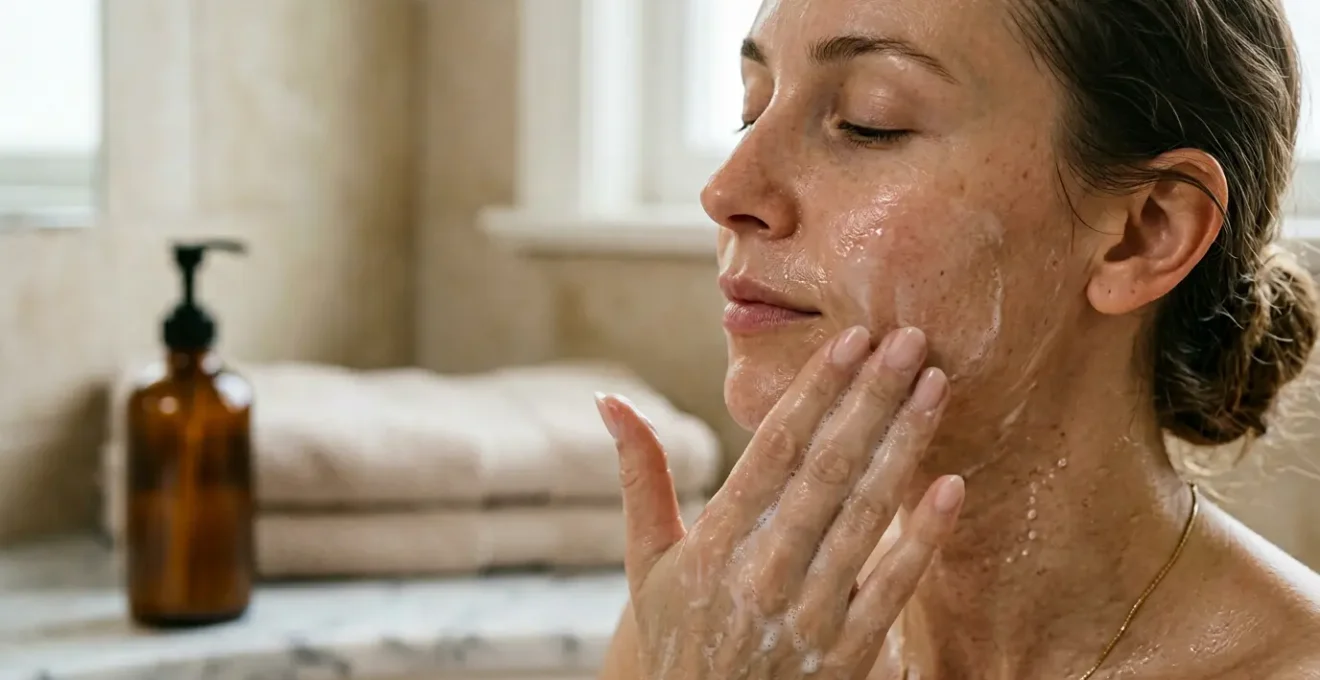
The biggest misconception is that double cleansing is about makeup; in reality, it’s a non-negotiable step for removing invisible, oil-based impurities that single cleansers leave behind.
- Oil cleansers dissolve what water-based cleansers can’t: sunscreen, excess sebum, and environmental pollution.
- A proper second cleanse with a pH-balanced syndet removes residue and respects the skin’s protective acid mantle.
Recommendation: The key isn’t cleansing *more*, but cleansing *smarter* by matching your cleanser type to the impurity type.
The question of whether double cleansing is necessary for those who wear minimal or no makeup is a constant debate. Many dismiss it as a marketing-driven trend, an unnecessary step for anyone not caking on foundation. As an esthetician, I see the fallout from this misunderstanding daily. The truth is, viewing cleansing through the lens of makeup is a fundamental error. We’ve been taught to think about what’s visible, but the real threat to skin health is often invisible.
The most stubborn impurities your skin faces are not water-soluble. They are lipophilic, meaning they are « fat-loving » and can only be effectively broken down by other oils. This category includes your daily sunscreen (the single most important product you use), your skin’s own sebum, and the microscopic pollutant particles that settle on your face throughout the day. A single, water-based foaming cleanser simply cannot dissolve this layer of grime. It’s a question of basic chemistry, not marketing hype.
But if it’s so essential, why do so many people report dryness or irritation? The problem isn’t the two-step concept; it’s the execution. A poorly formulated oil cleanser or a harsh, stripping second cleanser will absolutely compromise your skin’s delicate moisture barrier. This guide will cut through the noise. We will analyze the science of solubility, the correct techniques to preserve barrier integrity, and the specific product types that respect your skin’s biology. We will move beyond the superficial debate about makeup and into a technical understanding of what true skin hygiene requires.
To navigate this topic with clarity, this article is structured to address the core technical questions. The following summary outlines each critical stage of mastering the double cleanse, from understanding the chemical principles to choosing the right tools for the job.
Summary: Mastering the Science of Double Cleansing
- Why oil dissolves oil better than foaming soap ever can?
- How to double cleanse without stripping your moisture barrier?
- Balm vs. Oil: Which is less messy for bathroom sinks?
- The hairline mistake that causes forehead breakouts
- When to double cleanse: Morning, Night, or Post-Gym?
- Micellar Water or Wipes: Which actually cleans pores?
- Soap vs. Syndet: Which bar respects the acid mantle of your skin?
- Why Sleeping in Mascara Causes More Than Just Raccoon Eyes?
Why oil dissolves oil better than foaming soap ever can?
The core principle of effective cleansing is « like dissolves like. » Foaming, water-based cleansers are powered by surfactants that excel at removing water-soluble impurities like sweat and surface dust. However, they face a significant challenge when confronted with oil-based substances. This creates a solubility mismatch. Sunscreen, sebum, and many pollutants are lipophilic (oil-soluble), meaning a water-based solution struggles to break them down effectively.
An oil cleanser works differently. It uses beneficial oils to bond with and dissolve the « dirty » oils on your skin without stripping its natural lipids. When you massage it in, it melts away sunscreen, makeup, and excess sebum. A well-formulated oil cleanser also contains emulsifiers, which allow it to mix with water and rinse away cleanly, taking all the dissolved impurities with it. The difference in efficacy is not subtle. For instance, when removing waterproof sunscreen, one study found that a foaming cleanser left behind 36.8% of residue, whereas cleansing oil left only about 5.8% residue.
This is especially critical in urban environments. As the Colorescience Research Team notes, modern pollutants are a major concern: « PM2.5 particles are small enough to infiltrate the pores of your epidermis and disrupt the health of your skin. » These microscopic particles are often suspended in an oily film on the skin’s surface, making an oil-based first cleanse the only truly effective method for their removal. For those with oily skin, this is particularly beneficial; properly removing excess sebum can help regulate oil production, rather than stripping the skin and causing it to overcompensate.
How to double cleanse without stripping your moisture barrier?
The fear of « stripping » the skin is valid, but it stems from improper technique and product choice, not the double cleansing method itself. A healthy skin barrier, or stratum corneum, is a matrix of lipids and skin cells that locks in moisture and keeps irritants out. The goal is to remove unwanted impurities while preserving this crucial layer. The key lies in two factors: gentle application and effective emulsification.
First, always apply your oil cleanser to dry skin with dry hands. This allows the oil to directly engage with the lipophilic impurities without water getting in the way. Massage it in gently for about 60 seconds, using your fingertips. There is no need for harsh rubbing. Second, introduce a small amount of lukewarm water to emulsify the cleanser. It should turn into a milky, thin lotion. If it doesn’t, your cleanser lacks proper emulsifiers and will leave a greasy film. This milky stage is critical; it’s when the oil encapsulates the dirt and prepares to be rinsed away without leaving residue.
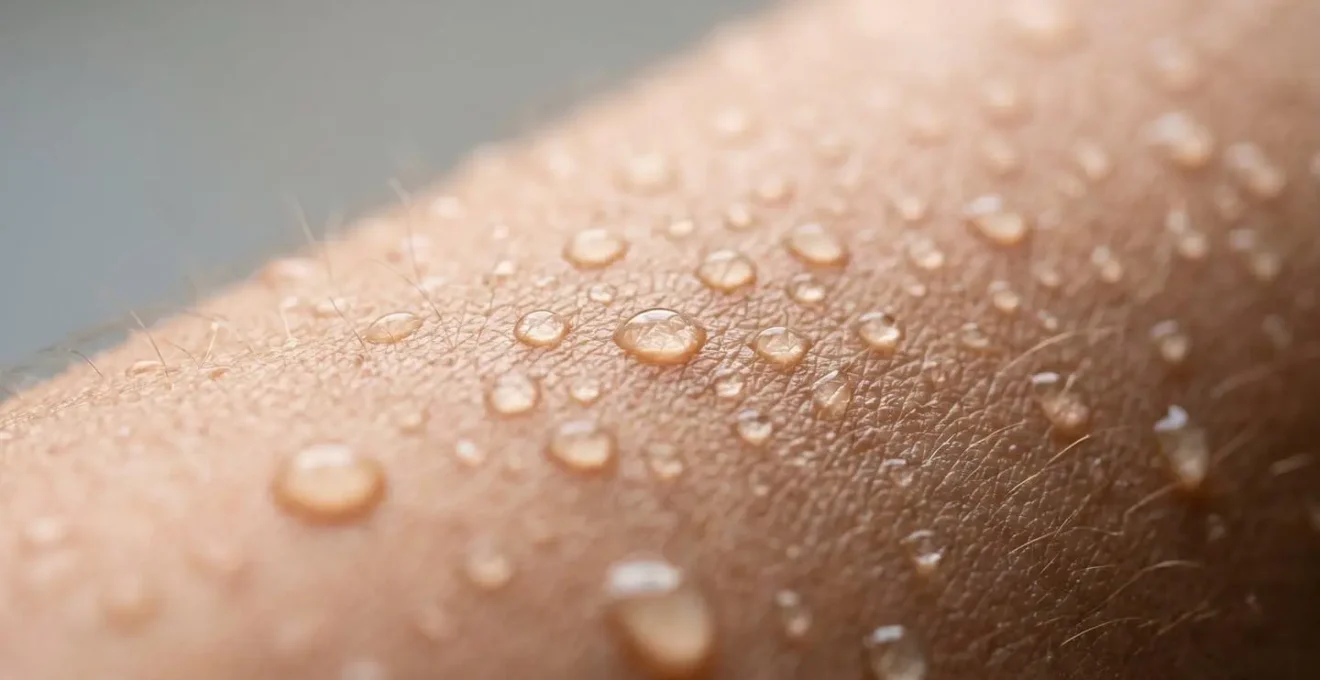
The importance of maintaining this barrier is confirmed by robust scientific evidence. A 2024 study in Frontiers in Medicine on damaged skin models demonstrated that applying barrier-repairing formulas significantly improved skin integrity and reduced inflammatory markers. Double cleansing correctly is a proactive way to prevent this damage in the first place, ensuring your second, water-based cleanse works on a clean canvas without having to be overly aggressive.
Balm vs. Oil: Which is less messy for bathroom sinks?
Once you’ve committed to an oil-based first cleanse, the next choice is texture: a liquid cleansing oil or a solid-to-creamy cleansing balm. While both operate on the same « like-dissolves-like » principle, their formulation and user experience differ significantly, particularly when it comes to practicality and mess. For the minimalist who values an uncluttered sink, this is a key consideration.
Cleansing oils are liquid and offer superior slip, making them easy to spread. However, they are prone to dripping down your arms and can be messy to dispense from a pump bottle. Cleansing balms, being solid or semi-solid in the jar, are inherently less messy and are excellent for travel. You scoop out a small amount, and it melts upon contact with your skin’s warmth, transforming into an oil. They often provide a more sensorial, cushioned massage experience. The following table breaks down the technical differences between these two formats.
| Characteristic | Cleansing Oil | Cleansing Balm |
|---|---|---|
| Formulation Type | Liquid oil-based with emulsifiers | Anhydrous (waterless) with waxes |
| Texture | Lightweight, superior slip | Solid to creamy, sensorial massage experience |
| Emulsification | May lack advanced emulsifiers | Designed to turn into milky lotion with water |
| Best For Skin Type | Oily skin (lighter feel) | Dry skin (occlusive ingredients) |
| Makeup Removal | Extremely heavy makeup, superior efficiency | Moderate to heavy makeup |
| Travel-Friendly | Risk of spills | No spill risk, solid form |
| Rinse-Off | May require more thorough rinsing | Rinses cleaner due to built-in emulsifiers |
Ultimately, the choice depends on personal preference and skin type. Those with very oily skin might prefer the lighter feel of a liquid oil, while those with dry skin may appreciate the richer, more occlusive nature of a balm. However, for a clean, controlled application, balms generally have the edge in preventing drips and spills, making them a tidier option for the bathroom counter.
The hairline mistake that causes forehead breakouts
One of the most common yet overlooked causes of persistent forehead acne, especially along the hairline, is improper cleansing. Many people focus their cleansing efforts on the center of their face—cheeks, nose, and chin—while neglecting the periphery. Sunscreen, sweat, and hair products accumulate at the hairline and temples. When an oil cleanser isn’t massaged all the way to the edge and, more importantly, isn’t rinsed thoroughly from this area, it can lead to clogged pores and breakouts, a condition sometimes called « pomade acne. »
This isn’t to say double cleansing causes acne; rather, incomplete double cleansing does. The residue of an oil cleanser, if not fully emulsified and removed with the second cleanse, can be comedogenic. It’s crucial to pay deliberate attention to the entire circumference of your face, including behind the ears and under the jaw. When rinsing, use a washcloth or your hands to ensure every trace of the first and second cleanser is gone. Remember, you’re not just removing makeup. As the ZENUE Beauty Research team highlights, « Tiny particles of pollution can be 20 times smaller than your pores. Once they settle on your face, they mix with sweat and oil, clogging pores and triggering comedones. »
These invisible aggressors don’t just stop at your T-zone. They cover every exposed surface. The efficacy of a proper double cleanse in removing these substances is remarkable; studies demonstrate that double cleansing removed about 96% of sunscreen residue compared to a single cleanse. To achieve this level of cleanliness, you must be meticulous. Pull your hair back completely and treat your hairline with the same diligence as the rest of your face.
When to double cleanse: Morning, Night, or Post-Gym?
Applying the double cleanse method isn’t an all-or-nothing affair. Its use should be strategic, tailored to what your skin has been exposed to. Over-cleansing is a real risk to barrier health, so understanding when this two-step process is necessary—and when it’s overkill—is fundamental to a balanced skincare routine. The answer isn’t a simple « always » or « never »; it’s about context.
The only non-negotiable time to double cleanse is in the evening (PM). Throughout the day, your skin accumulates a layer of sunscreen, sebum, and environmental pollutants. As we’ve established, only an oil-based cleanser can effectively dissolve this lipophilic film. Following it with a gentle, water-based cleanser removes any remaining residue and prepares your skin for nighttime treatments, allowing them to penetrate more effectively.
In the morning, however, a double cleanse is almost always unnecessary. Overnight, your skin has only produced some sweat and sebum. A single, gentle cleanse or even just a rinse with lukewarm water is sufficient to freshen the skin without stripping its protective oils. Similarly, after a gym session, a modified approach is often best. The primary concern is removing sweat and bacteria, which can be done effectively with a gentle, single cleanse. Knowing when to apply the full routine is key to maximizing benefits while protecting your skin barrier.
Your Action Plan: When to Double Cleanse
- PM Double Cleanse (Non-negotiable): Required if you wore sunscreen or were exposed to urban pollution. The first cleanse breaks down SPF and oil-soluble pollutants; the second removes remaining impurities.
- Morning Cleanse (Minimal): A single gentle cleanse or water rinse is sufficient. You only need to remove sweat and residual overnight products. Skip the double cleanse.
- Post-Gym Cleanse (Modified): An ideal scenario for a single, effective cleanse. A gentle gel cleanser is perfect for removing sweat and bacteria without over-stripping.
- Indoor Days (Single Cleanse): On days spent entirely indoors without SPF application, a single gentle cleanse is adequate to maintain skin health without compromising the moisture barrier.
- Heavy Makeup Days (Full Double Cleanse): The classic scenario. Use the oil/balm to melt everything, then follow with your second cleanse to ensure a perfectly clean canvas.
Micellar Water or Wipes: Which actually cleans pores?
In the quest for convenience, many people turn to makeup wipes or micellar water as a first-cleanse step. However, from a technical standpoint, these are not created equal, and one is significantly inferior for true pore hygiene. Makeup wipes are, to be blunt, mostly ineffective. They primarily smear dirt, oil, and makeup across the face rather than lifting it away. They also often contain high concentrations of fragrance, preservatives, and drying alcohols, which can irritate the skin and damage the moisture barrier with the physical act of rubbing.
As holistic esthetician Courtney Joy O’Connor states, « Wipes can’t cleanse and purify your skin in the same way. There’s no replacement for a nourishing, skin-specific cleansing oil and the power of physically rinsing away debris. » Micellar water is a much more sophisticated option. It consists of « micelles »—tiny spheres of oil molecules—suspended in soft water. When applied with a cotton pad, these micelles attract and trap oil-soluble impurities, lifting them from the skin. For days with very light makeup or no makeup but still wearing a light SPF, micellar water can be a viable first cleanse. Clinical observations show it can lift away significantly more debris than single cleansing, especially in polluted areas.
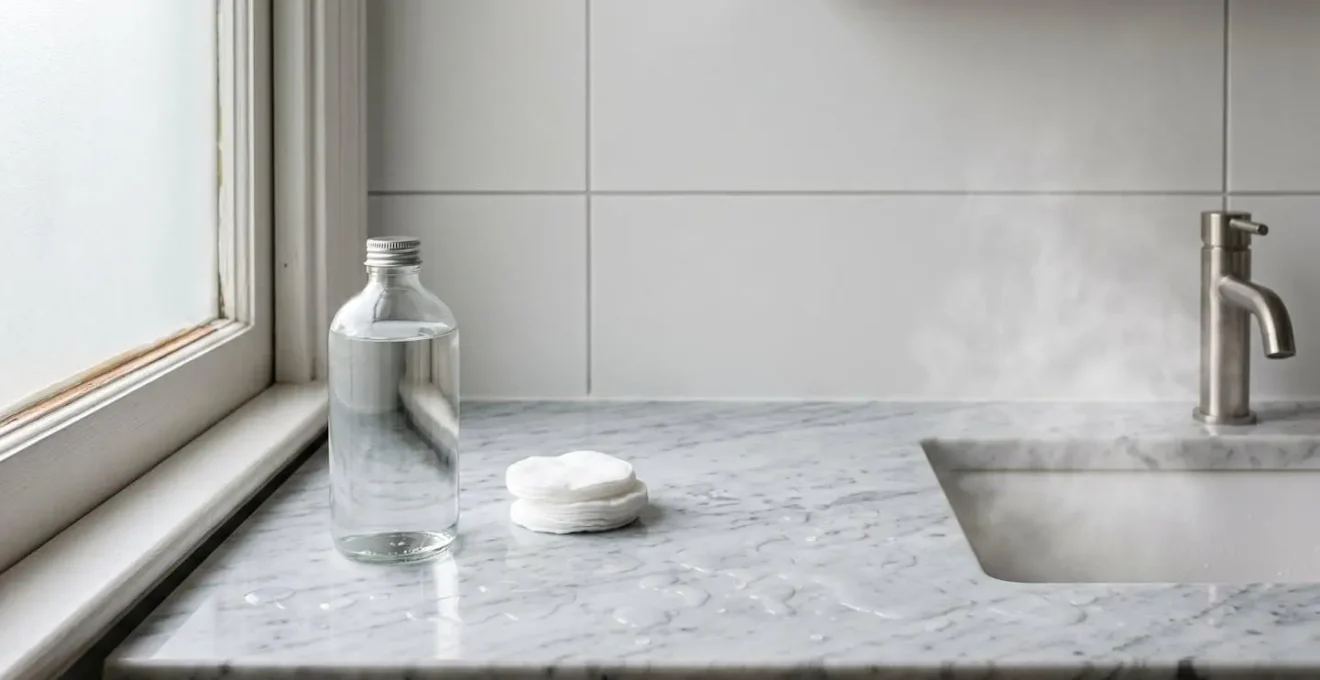
However, it has its limits. For heavy or waterproof makeup and mineral-based sunscreens, the dissolving power of a pure oil or balm remains superior. Micellar water is a good tool for a specific job, but it is not a direct replacement for a proper oil cleanse in all situations. It cleanses the surface well, but for a deep pore cleanse of stubborn, lipophilic material, a dedicated oil or balm followed by a water rinse is the gold standard.
Key Takeaways
- Double cleansing’s purpose is to dissolve oil-soluble impurities (SPF, sebum, pollution), not just makeup, making it relevant for everyone.
- A successful double cleanse hinges on two steps: an oil-based cleanser to dissolve grime, followed by a pH-balanced syndet cleanser to rinse it away without stripping the skin.
- Consistency is less important than context; double cleanse in the evening after SPF/pollution exposure, but a single cleanse is sufficient in the morning or on indoor-only days.
Soap vs. Syndet: Which bar respects the acid mantle of your skin?
The second step of a double cleanse is as important as the first. Its job is to whisk away the emulsified oil and any remaining impurities without disrupting the skin’s protective barrier. A crucial component of this barrier is the acid mantle, a very fine, slightly acidic film on the skin’s surface with a pH of around 4.7 to 5.75. This acidity is vital for keeping out bacteria, viruses, and other contaminants. Using a cleanser that is too alkaline can violently disrupt this mantle, leaving the skin vulnerable and irritated.
This is where the distinction between traditional soap and a syndet bar becomes critical. True soap is made through a process called saponification, which results in a highly alkaline product with a pH between 9 and 10. This alkaline pH is extremely harsh on the acid mantle, stripping it away completely. A syndet, or « synthetic detergent » bar, is different. It’s a « soap-free » cleansing bar formulated with gentle, synthetic surfactants. Crucially, syndets are pH-balanced to match the skin’s natural acidity, cleansing effectively without causing disruption. As a 2024 paper in the Journal of Investigative Dermatology states, « The acid mantle contributes to the regulation of the microbiome, structural stability, and inflammation. Skin pH is pivotal in maintaining the integrity of the epidermal barrier. »
For your second cleanse, choosing a syndet (or a gentle liquid cleanser with a stated pH of around 5.5) is non-negotiable. It completes the cleansing process initiated by the oil or balm while fully respecting your skin’s biology. Using an alkaline soap bar as your second step would completely negate the gentle, barrier-protecting work of your first cleanse.
Why Sleeping in Mascara Causes More Than Just Raccoon Eyes?
Of all the « don’t sleep in your makeup » warnings, the one about mascara is perhaps the most critical. While the immediate consequence is smeared « raccoon eyes » on your pillowcase, the long-term health risks are far more serious and extend beyond simple aesthetics. Leaving mascara on overnight creates a cascade of problems for the delicate eye area and lashes themselves.
As a holistic esthetician, I’ve seen patients develop chronic eyelid inflammation (blepharitis) from inadequate eye makeup removal. The buildup creates an environment where Demodex mites thrive, feeding on mascara residue and sebum. Patients report increased lash breakage, sparser lash growth over time, and in severe cases, corneal abrasions from hardened mascara flakes scratching the eye surface during sleep. The transformation after switching to proper oil-based cleansing is remarkable – inflammation reduces, lash health improves, and the delicate eye contour area shows fewer premature wrinkles.
– Clinical observation note
The formulation of mascara, especially waterproof versions, is designed to be tenacious. It forms a hard film around each lash. During sleep, this film can flake off into the eye, causing mechanical irritation and even scratching the cornea. Furthermore, the blocked follicles at the base of the lashes can become inflamed, leading to styes and blepharitis. The constant weight and stiffness also make lashes brittle and prone to breaking.
This is where an oil or balm cleanser demonstrates its absolute necessity. It is the only thing that can effectively dissolve these stubborn, waxy, and pigment-filled formulas without requiring harsh rubbing. A good oil cleanser « melts » the mascara, allowing you to gently wipe it away without pulling on the delicate skin of the eye contour or tugging on your lashes. It’s not just about makeup removal; it’s about preserving lash health and preventing serious eye complications.
Armed with this technical knowledge, you can now build a cleansing routine based on science, not marketing. By matching your cleanser to the type of impurity and respecting your skin’s pH, you can achieve a level of clean that supports long-term skin health, whether you wear makeup or not.
Frequently Asked Questions About Cleanser Formulations
How can I identify true soap on an ingredient list?
Look for the first ingredients listed as ‘Sodium Tallowate’ or ‘Sodium Palmate’ – these indicate traditional soap created through saponification, which typically has a high alkaline pH of 9-10 that can strip the skin’s protective acid mantle.
What ingredients indicate a syndet (synthetic detergent) bar?
Syndet bars contain gentle non-soap surfactants like ‘Sodium Cocoyl Isethionate’ or ‘Disodium Laureth Sulfosuccinate’ as primary ingredients. These are specifically pH-formulated to be skin-compatible, usually around pH 5.5 to match the skin’s natural acid mantle.
Why is a syndet bar better for double cleansing routines?
A syndet bar is an excellent low-waste option for the second cleanse because its pH 5.5 formulation preserves the gentle, barrier-protecting benefits established by the first oil-based cleanse. In contrast, true soap’s high pH (9-10) aggressively strips the skin, completely negating the protective work of oil cleansing.
What packaging claims should I look for?
Look for packaging that explicitly states ‘soap-free,’ ‘pH 5.5,’ or ‘pH-balanced.’ These claims indicate the product is formulated to respect the skin’s natural acid mantle rather than disrupt it with alkaline pH levels.